Space heater placement rules that stop most fires (and the one spot to avoid)
Most space heater fires do not start because the device is faulty, but because it is parked in the wrong place at the wrong time. With a few clear placement rules, you can keep the extra warmth you want while sharply cutting the odds that a knocked-over unit, overloaded outlet, or nearby blanket turns into a 911 call. Think of these guidelines as a simple map for where your heater can safely live in a room, and the one location you should treat as off-limits every single time.
Used correctly, a compact heater can take the edge off a drafty bedroom or home office without putting your family at risk. The key is to treat it like any other piece of heating equipment: it needs space, a stable base, and a clear escape route for you if something goes wrong. Once you build those habits into how you set it down and plug it in, you stop most of the common fire scenarios before they ever have a chance to start.
The golden rule: give your heater three feet of clear space
The single most important placement rule is distance. You should keep at least three feet of clearance between your heater and anything that can burn, including furniture, curtains, bedding, clothing piles, cardboard boxes, and upholstered pet beds. Fire agencies and safety groups consistently stress that heating equipment is a leading cause of home fires, and that a generous buffer around the unit sharply reduces that risk by keeping radiant heat away from materials that can smolder and ignite. Guidance on Additional Tips for space heaters specifically calls for keeping the heater at least 3 foot away from anything flammable, a simple rule that works in cramped apartments and large living rooms alike.
That three-foot zone should be treated as a no-storage, no-draping, no-drying area. You might be tempted to aim the heater directly at a cold sofa or hang damp gloves nearby, but that is exactly how a cozy setup turns into a fire scene. Local fire guidance on Heating Safety Tips to Prevent House Fires warns that one of the most dangerous mistakes is placing heaters too close to combustibles, and urges you to inspect the area around the unit before operating the space heater. If you cannot walk a full circle around the heater without brushing against something that could burn, it is too crowded.
Always on the floor, never on furniture or soft surfaces
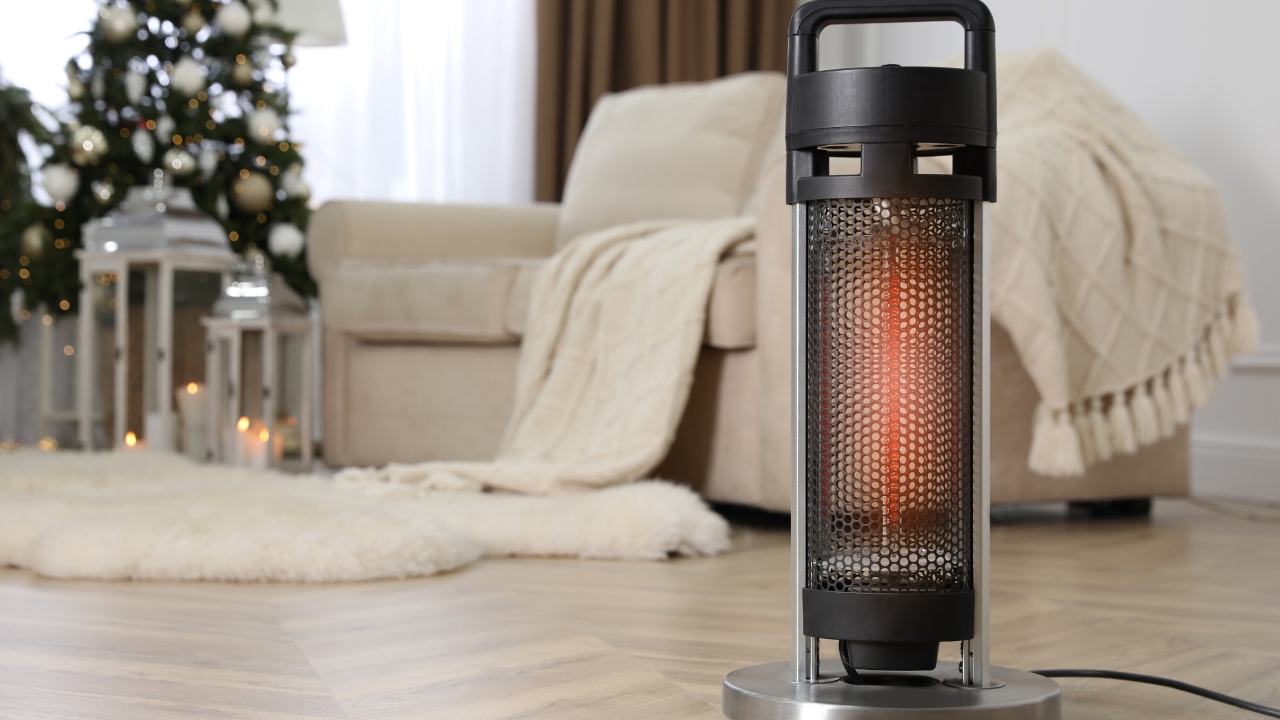
Once you have cleared the area, the next decision is where the heater actually sits. It should always go on the floor, on a hard, level, nonflammable surface such as tile, hardwood, or a solid, low-pile floor protector. Safety checklists on Space Heater Safety Tips to Prevent House Fires emphasize that you should always place the unit on the floor, both to keep it stable and to prevent it from becoming a tripping hazard for those walking in the area. A heater perched on a stool, ottoman, or cardboard box is far more likely to tip, and a tipped heater is exactly the scenario built-in safety switches are designed to handle, but you should not rely on them as your first line of defense.
Soft or uneven surfaces are especially risky. Guidance on Know the most common space heater mistakes warns against placing a unit on a thick carpet or area rug, because the soft surface can block vents, trap heat, and make tipping more likely. HVAC pros echo that advice, urging you to put the heater on a level surface so it cannot wobble and so heat can rise up to the top of the room instead of baking the floor, a point reinforced in guidance on how to Put It on a Level base. If you feel tempted to move the heater onto a table to “get it closer,” that is your cue to rearrange your seating instead.
The one spot to avoid: your bedroom while you sleep
Even if you follow every clearance and surface rule, there is one placement that safety officials consistently flag as too risky: running a space heater in the room where you are sleeping. Fire departments that publish Heating Safety Tips to Prevent House Fires explicitly warn you to Never use a space heater overnight in the room where you are sleeping, because you will not be awake to notice a burning smell, a tripped cord, or a blanket that has slipped onto the unit. If something goes wrong while you are asleep, the fire has a head start before anyone can react.
National safety guidance reinforces that you should turn off and unplug heaters when you leave a room or go to sleep, rather than trusting a thermostat or timer to manage the risk. Advice on how to Turn off a space heater correctly stresses that you should not leave a space heater unattended and that you should shut it down before leaving the room. The American Red Cross echoes this, urging you to unplug space heater power cords when you leave the room or go to sleep and to Place it on a level, hard and nonflammable surface away from bedding and drapes, as outlined in its cold weather safety steps that advise you to Place heaters carefully. If your bedroom is chronically cold, a better solution is to adjust central heating, add insulation, or use extra blankets rather than relying on a portable heater while you are unconscious.
Smart positioning: traffic patterns, kids, pets, and escape routes
Once you have ruled out the bedroom at night and picked a solid floor spot, you still need to think about how people move through the room. A heater should never block a doorway, hallway, or any path you would use to get out in an emergency. Guidance on Where To Use and Not Use a Space Heater warns you to Never block a doorway or escape route and to avoid placing the unit where someone could trip over it, which can lead to burns and other injuries. Think of the heater as something that should sit off to the side of the room’s natural traffic lanes, not in the middle of them.
Children and pets add another layer of planning. Safety officials caution that children and pets can knock over a heater or adjust the controls if it is within easy reach, a risk highlighted in guidance that lists how Children and pets can interfere with a unit. To reduce that risk, place the heater where a toddler cannot easily toddle into it and where a dog’s wagging tail will not brush against the grille. Some safety checklists recommend models with a THERMOSTAT AND A PLASTIC FACE and tip-over shutoffs, features that can turn the unit off in the event of overheating, as described in advice on Top Tips For Being Safe Around A Space Heater, but even with those protections you should ALWAYS PLACE IT ON A stable surface and never leave your heater unattended around kids or animals.
Power sources, inspections, and the “plug-in” danger zone
Placement is not just about where the heater sits, it is also about where and how you plug it in. Safety regulators are blunt on this point: Always plug electric space heaters directly into a wall outlet and never into an extension cord or power strip, because Portable Heaters can cause fires if the wiring is overloaded. That warning appears in federal guidance that urges consumers to be cautious when using space heaters and to allow units to cool down before refueling or moving them, as detailed in a notice that stresses how Portable Heaters can cause fires. HVAC pros echo that advice, urging you not to plug anything else into that outlet while the space heater is on and to keep the cord where no one will trip over it, as outlined in guidance on Space heater safety.
Before you even plug in, you should inspect the unit and cord. Fire safety checklists on Space heater Tips advise you to Inspect the heater immediately before use and to Always Make sure the cord is not frayed, cracked, or pinched under furniture. Financial institutions that publish seasonal safety reminders urge you to Carefully consider space heater placement and to pay Careful attention to wiring so you do not set the unit near flammable products like paint and gasoline, as noted in guidance that highlights how Carefully considering placement can prevent fires. If you see any damage, the safest move is to replace the heater rather than gamble on a compromised cord.
Follow the manufacturer, then layer on best practices
Every model is a little different, which is why you should Follow the manufacturer’s instructions first, then add the broader safety rules on top. Insurance safety libraries remind you to Follow the manual and to Follow the specific clearance and placement guidance for your unit, and they also stress that you should always place the space heater on a stable, level surface where it cannot easily be knocked over and cause a fire, as outlined in resources that urge you to Follow these precautions. Other insurers frame it as part of a broader strategy for How to Use an Electric Heater Safely, noting that Safe electric heater use involves more than just plugging one in and turning it on, and that Smart Portable Heater Placement leads to more efficient heating and reduced fire risk, as explained in guidance on how to How to Use an Electric Heater Safely.
Professional HVAC services also publish seasonal reminders that Properly positioning your heater is essential for both warmth and safety. They advise you to keep the unit on a level surface, away from foot traffic, and to avoid running the cord under rugs or furniture, guidance that appears in advice on Positioning Your Space Heater for Maximum Safety and on Power Sources and Electrical Safety. Some also recommend choosing models that are Safety Certified by a qualified testing laboratory, a point highlighted in seasonal reminders that urge you to Make Sure That It is Safety Certified before you bring it home, as described in advice on how to Make Sure That It is properly rated. When you combine those product-specific instructions with the universal rules of clearance, stable floors, direct wall outlets, and no overnight bedroom use, you give yourself the warmth you want without inviting the kind of fire that starts with a small glow and ends with a siren.
Like Fix It Homestead’s content? Be sure to follow us.
- Man Says He Found Out the Fence He Paid For Wasn’t Actually on His Property
- Woman Says Her Neighbor Started Taking Mulch From Her Delivery Pile Before She Could Even Spread It
- I made Joanna Gaines’s Friendsgiving casserole and here is what I would keep
- What Caliber Works Best for Groundhogs, Armadillos, and Other Digging Pests?
*This article was developed with AI-powered tools and has been carefully reviewed by our editors.