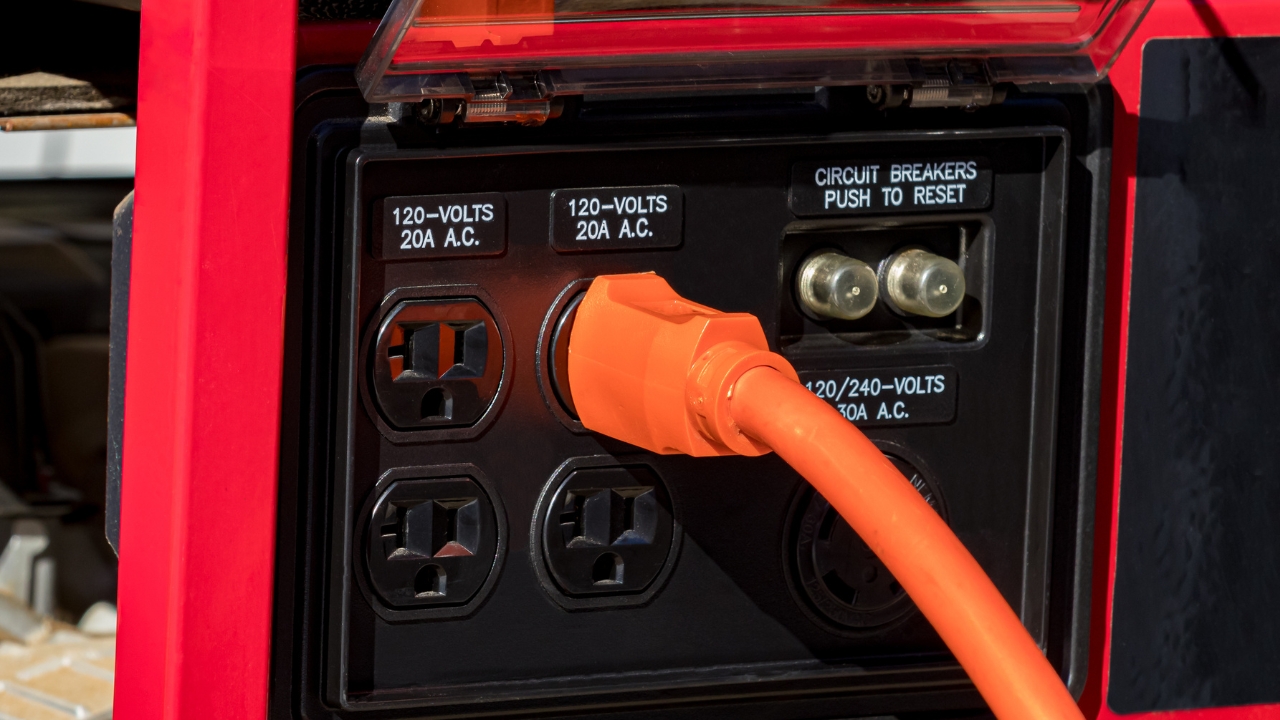
The extension-cord setup that’s safer during an outage and the one that isn’t
When the lights go out, the way you string together a few cords can quietly decide whether your home stays safely powered or turns into a hazard zone. The difference between a safe, temporary setup and a dangerous one often comes down to how you connect your generator, which cords you choose, and where that power ultimately flows. If you plan ahead, you can keep essentials running without putting your family, your neighbors, or the crews working outside at risk.
The safest approach treats your generator as a separate, temporary power source, feeding only what you intentionally plug into it. The riskiest approach tries to “shortcut” that process by backfeeding your house through improvised extension cords, especially male‑to‑male designs that can energize exposed metal prongs. Understanding that contrast before the next storm hits gives you time to buy the right gear and retire the setups that could turn a blackout into an emergency.
What a safe extension‑cord setup actually looks like
The safest way to use a portable generator in an outage is to keep it completely separate from your home’s wiring and run only a few essential loads through properly rated cords. You start by placing the generator outside, far from doors and windows, then plug heavy‑duty extension cords directly into the generator’s outlets and run them to individual appliances like a refrigerator, a sump pump, or a modem. That approach keeps the generator isolated, avoids energizing your panel, and lets you prioritize only the devices you truly need for temporary usage, which is exactly what guidance that says to Follow these tips is designed to reinforce.
To make that setup safer, you need cords that are built for the job, not the skinny indoor line you normally use for a lamp. You should choose adequately rated, heavy‑duty cords with a grounding connector so the cord can handle the generator’s output without overheating and so the equipment you plug in stays grounded. Safety guidance that urges you to Follow proper extension cord safety is pointing you toward cords with three prongs, thick insulation, and clear wattage or amp ratings that match or exceed the load you plan to run.
The generator rules you cannot bend
Even the best extension cord cannot fix a generator that is used in the wrong place or in the wrong way. You should Never run a generator inside your home or garage, because Generators give off deadly carbon monoxide that can build up quickly in enclosed or even partially enclosed spaces. Safety officials are blunt that you must keep the machine outside and away from openings, and local emergency planners now urge you to Keep generators 20 feet away from the house, use outdoor‑rated cords, and rely on a working alarm to detect carbon monoxide inside.
Before you ever pull the starter cord, you also need to know exactly how your specific unit is meant to be used. The Energy Education Council stresses that you should Read and follow the manual before operating a generator, including instructions on fuel, maintenance, and load limits. Practical guides echo that advice and spell it out in plain language, urging you, Here, to Read the Manual and Familiarize yourself with your generator’s specific outlets, grounding requirements, and safe operating procedures so you are not improvising in the dark.
Why backfeeding your house is the setup that is not safe
The most dangerous extension‑cord setup during an outage is the one that tries to turn your generator into a secret whole‑house backup by feeding power backward through a receptacle. With backfeeding, the generator is wired directly into the home circuit, often through a dryer outlet or another large receptacle, so the power flows into your panel and then out to the neighborhood grid. Electrical experts warn that this practice can send current out of your house and onto lines that utility crews assume are de‑energized, which is why guidance updated in Updated August explains that backfeeding can cause a tremendous amount of harm to workers and equipment.
Even if you never see the power lines outside your window, backfeeding can still be deadly inside your own walls. Safety regulators warn that Shock and Electrocution risks rise sharply when you tie a portable generator into your home’s wiring without the right equipment, because a generator that is directly connected to a building circuit can energize wires you think are off and overload circuits that were never designed for that kind of feed. Official guidance that bluntly says Don and Connecting a generator directly to your home’s wiring without proper transfer equipment is not just a legal issue, it is a life‑safety one.
The male‑to‑male “suicide cord” problem
Backfeeding often shows up in its most reckless form as a homemade male‑to‑male extension cord, sometimes called a suicide or widowmaker cord. Instead of having a plug on one end and a receptacle on the other, these cords have two male ends, so when one side is plugged into a live generator outlet, the exposed prongs on the other end become energized metal waiting to be touched. Consumer safety experts describe how Male to male cords are not only a shock risk to anyone who brushes against them, they are also a fire hazard because they bypass the protections built into normal wiring.
Electrical professionals have been increasingly blunt about this design, warning that Why Using a Male Extension Cord Can Be Deadly is not an exaggeration but a literal description of what can happen if someone grabs the wrong end or if the cord energizes a circuit unexpectedly. Technical breakdowns of the design explain Why Are Male Male Extension Cords Dangerous, pointing to how they violate basic electrical safety principles, create overloading and fire hazards, and can suddenly re‑energize appliances when power is restored, catching you off guard.
The safer way to power circuits: transfer switches, interlocks, and proper cords
If you want your generator to feed part of your home’s panel, the safe path is to install the right hardware instead of relying on improvised cords. Transfer Switches and Generator Interlocks are designed so that when the generator breaker is engaged, the main utility breaker is mechanically locked out, which prevents your generator from sending power back onto the grid. Professional guidance is clear that Transfer Switches and Generator Interlocks are the legal way to connect a portable generator to your house, because they create a dedicated, controlled path for that power instead of relying on a receptacle and a risky cord.
Even with that hardware in place, you still need the right cable between the generator and the inlet. Manufacturers explain that Simplifying the choice between power cords and extension cords starts with understanding that a generator power cord is built to carry the full output of the machine and to lock securely into both the generator and the inlet. Guidance from Generac extension cords stresses that it is crucial to follow safety practices, choose cords with the correct amperage and plug configuration, and inspect them so they are undamaged, including checking for cuts and frays before every use.
How to choose and use extension cords without creating new hazards
Even if you never connect a generator to your panel, the cords you run across your living room or driveway can quietly become the weak link in your outage plan. The Electrical Safety Foundation International reminds you that extension cords are meant for temporary use and should match the load and environment, which is why The Electrical Safety Foundation International, ESFI urges you to pick cords rated for the wattage of the devices you plug in, avoid running them under rugs or through doorways, and use outdoor‑rated cords in wet or exposed areas. That kind of basic discipline keeps cords from overheating, fraying, or turning into trip hazards in the dark.
Electricians also warn that the cord’s rating has to match the circuit and the device, not just whatever is on sale at the hardware store. One practical rule of thumb is that Unless an extension cord comes with its own internal circuit breaker or fuse, you should always use one rated the SAME as the circuit or higher, because a cord that is undersized for the breaker can overheat before the breaker ever trips. That advice, shared in a discussion on Unless SAME, is a reminder that the cord is part of the electrical system, not an afterthought, and it needs to be chosen with the same care you would give to a breaker or an outlet.
The outage setup you should retire now
If your current blackout plan involves “just plugging the generator into an outlet,” it is time to retire that idea before the next storm. When a male‑to‑male cord is used to feed power from a generator into a wall receptacle, the exposed plug blades can be live, the home’s wiring can be energized in unpredictable ways, and the neighborhood lines can be backfed without any warning to crews. Detailed explanations of What Male Male Cord Actually Is walk through how a male‑to‑male cord defeats the safety design of outlets and panels, which is exactly what makes that setup so dangerous at home.
The safer alternative is not complicated, but it does require a bit of planning and, in some cases, a licensed electrician. For many households, the best move is to keep the generator outside, run a few heavy‑duty cords directly to critical appliances, and stop there. If you want a more seamless solution, you can invest in a proper inlet, a transfer switch or interlock, and a generator power cord that is matched to your equipment. That way, when the next outage hits, you are not scrambling to improvise with risky hardware, you are simply following a plan that keeps your family, your neighbors, and the people working to restore power out of harm’s way.
Like Fix It Homestead’s content? Be sure to follow us.
- Man Says He Found Out the Fence He Paid For Wasn’t Actually on His Property
- Woman Says Her Neighbor Started Taking Mulch From Her Delivery Pile Before She Could Even Spread It
- I made Joanna Gaines’s Friendsgiving casserole and here is what I would keep
- What Caliber Works Best for Groundhogs, Armadillos, and Other Digging Pests?
*This article was developed with AI-powered tools and has been carefully reviewed by our editors.