The Most Overrated Calibers for Homestead Pest Control (And What to Use Instead)
On a working homestead, the wrong caliber is more than an inconvenience, it can mean wounded animals, damaged buildings, and neighbors who are suddenly very interested in your backstop. You are not trying to win a long‑range match, you are trying to keep rats out of the feed room, foxes away from the coop, and coyotes off the lambing pasture. That calls for tools matched to distance, target size, and safety, not whatever cartridge happens to be trending at the gun counter.
Some popular calibers are excellent in their lane yet badly mismatched to day‑to‑day pest work around barns, gardens, and livestock. By looking at how experienced hunters, farmers, and ballistics experts actually use these rounds, you can separate marketing hype from practical utility and build a small, efficient battery that does the job without overkill, overspend, or unnecessary risk.
Right tool, wrong job: how calibers get overrated on the homestead
When you choose a caliber for homestead pest control, you are really choosing a compromise between power, noise, cost, and risk to everything behind the target. Many of the cartridges that dominate hunting magazines and gun shop conversations are optimized for open‑country shots on larger game, not for dispatching raccoons in a tree above your coop or rats in a metal‑roofed barn. A round that carries flat and hard at 300 yards can be a liability when you are shooting across a garden or toward a neighbor’s fence line.
Experienced landowners often talk about having “a tool for each scenario,” pairing a high caliber rifle with a smaller caliber rifle, a pistol, and a shotgun so they can match the firearm to the task instead of forcing one cartridge to do everything. One homesteader described exactly that mix, saying they like to keep a high caliber rifle, a smaller caliber rifle, a pistol, and a shotgun available on a large property, a setup that reflects how different pests and distances call for different solutions rather than a single do‑it‑all round for each scenario.
Why tiny speed‑demons like the .17s disappoint in real‑world pest work
Fast, tiny bullets have a certain appeal, especially when you see glossy charts of velocity and flat trajectories. In practice, though, the .17 caliber family tends to be far more finicky than its fans admit, particularly in the inconsistent winds you get across open pastures and around buildings. Light projectiles shed energy quickly, drift badly, and can behave unpredictably on impact, which is the opposite of what you want when you are trying to make clean, repeatable kills on small pests.
Even dedicated varmint shooters have called out the .17s as overrated, grouping “All of Them” together as cartridges that look impressive on paper but do not always deliver reliable terminal performance on live targets. One shooter described how their first .17, a wildcat called the .17 O’Brien Mach IV, impressed on steel yet left them unconvinced once they saw how the tiny bullets behaved on animals, noting that when the bullet does not match the size and toughness of what is being shot, it does not perform as advertised on the .17s.
Big‑game darlings like .243 are more rifle than your pests require
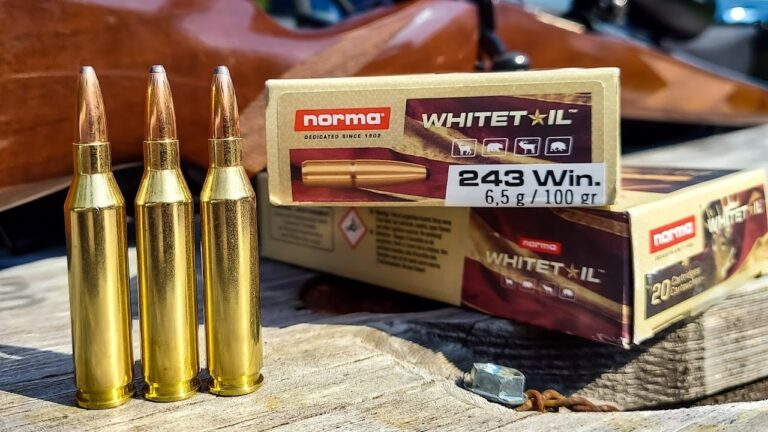
Cartridges such as .243 Winchester have earned their place as versatile hunting rounds, but that does not automatically make them smart choices for homestead pests. The .243 is designed to push relatively light bullets at high speed for deer‑size game and longer shots, which means significant recoil, muzzle blast, and over‑penetration risk in close quarters. When you are shooting around barns, corrals, or a farmhouse, that extra power is not a bonus, it is a safety problem.
Hunters praise the 243 because the cartridge is easy to shoot accurately on deer and can even stretch to “bigger stuff in a pinch,” and it has been offered in a wide range of rifles and platforms. Those same traits, however, make it excessive for raccoons in the compost pile or foxes near the barn, where a miss or pass‑through can send a high‑energy bullet far beyond your intended target. For most homesteads, a .243 belongs in the safe for seasonal big‑game hunts, not as a first‑line tool for daily pest duty.
The myth of the one‑rifle solution and the temptation of trendy cartridges
It is tempting to believe that one centerfire rifle and a stack of ammunition boxes can handle everything from coyotes to garden rabbits. Marketing often reinforces that idea, presenting certain cartridges as miracle solutions that flatten anything you point them at. In reality, a cartridge that is optimized for open‑country predators or medium game will usually be loud, expensive to feed, and unnecessarily destructive when you are shooting near buildings, equipment, or livestock.
Some shooters talk about particular rounds as if they are “miracle‑wrought‑in‑brass‑and‑lead,” boasting about performance that sounds more like legend than field report. One critic of this mindset pointed out that many profess a favorite cartridge to be almost magical, even when its recoil, blast, and cost make it a poor fit for routine work on smaller animals, a reminder that reputation can easily outpace practical value when shooters boast.
When .22 centerfires and hot varmint rounds are simply too much
High‑velocity .22 centerfires like .22‑250 and similar cartridges are legendary for long‑range varmint shooting, but that does not mean they belong in the barnyard. These rounds are loud, hard on barrels, and send bullets that can travel a very long way if you miss or if they fragment unpredictably on impact. On a small or even medium homestead, that combination is more liability than asset, especially when you are shooting at night or in tight quarters.
Homesteaders who have tried these cartridges often advise others to steer clear for routine pest work, with one discussion of the “best gun for varmint control” including a blunt warning to “Stay away from 22 .250” in favor of more manageable options that still get the job done on predators. In that same conversation, people emphasized trying a few different small‑caliber setups and sticking with the one that balances accuracy, noise, and safety, rather than chasing raw velocity for its own sake as They make clear.
Smarter rimfire choices: quiet .22s, shotshells, and the humble CB
For many homesteads, a thoughtfully loaded rimfire does more real work than any flashy centerfire. Subsonic .22 Long Rifle, .22 Short, and specialty loads give you enough energy for rats, snakes, and small birds while keeping noise and risk manageable. The key is to match bullet type and velocity to the specific pest and backdrop, rather than defaulting to the hottest hollow point on the shelf.
Specialty ammunition such as CCI shotshells and reduced‑power loads expand what a rimfire can do around buildings. One detailed guide to these options highlights how a 22 Short CB is described as “Perfect for” snakes, rats, and birds in barns or sheds with “Very” low recoil, while .22 WMR shotshells offer “More” power for slightly larger pests yet remain relatively quiet compared with centerfire options. Broader overviews of CCI’s pest‑control line show how these shotshells and quiet loads are designed specifically for close‑range use in and around structures, giving you a safer pattern instead of a single high‑risk projectile for pest control.
Air rifles: where .177 shines, where .22 Calibre is the better call
Modern air rifles have quietly become some of the most useful pest‑control tools on a homestead, especially when you need discretion and minimal risk of over‑penetration. The choice between .177 and .22 Calibre pellets is not just a matter of taste, it is about trajectory, energy, and the size of the animals you are targeting. Lighter .177 pellets fly flatter and are easier to place precisely at typical backyard distances, which is ideal for small pests like sparrows or mice.
Specialists in airgun hunting point out that 177 is one of the most popular and widely used calibers for air rifles because of that flat trajectory and ease of accurate shooting, while 22 Calibre is known for its heavier pellet that travels a bit slower but delivers more stopping power on impact. Newer pre‑charged pneumatic designs, including the Gamma Arrow PCP, show how far this technology has come, offering consistent power and accuracy without the noise and backstop concerns of a firearm. In many homestead settings, that makes a quality PCP air rifle in .22 Calibre a first‑line tool for everything from starlings in the rafters to squirrels in the orchard.
Centerfire workhorses that actually fit homestead predator control
When you do need a centerfire rifle for coyotes, foxes, or other larger predators, the goal is not maximum blast, it is a balance of reach, accuracy, and manageable recoil. Classic varmint and predator rounds like .22 Hornet, .204 Ruger, and .223 Remington have earned their place because they deliver enough energy on target without the excessive recoil and muzzle report of bigger game cartridges. That makes them easier to shoot well and safer to deploy on the edges of fields or pastures.
One overview of varmint calibers notes that the Hornet, dating back to the 1930s, has a long history as a small‑game and varmint round, known for its accuracy, light recoil, and modest report, and that it has even seen use with military and police forces across the globe. Broader discussions of predator cartridges highlight how rounds like .223 Remington and .22‑250 sit in a sweet spot for open‑country coyotes, combining flat trajectories with bullet designs that fragment reliably on impact, which reduces the risk of long‑distance ricochets when used with proper backstops among predator cartridges.
Shotguns, farm cats, and other underrated pest‑control allies
Not every pest problem calls for a rifle at all. For close‑range predators and surprise encounters, a shotgun loaded appropriately is often the most forgiving and effective tool you can carry. A 12 gauge with light shot can handle everything from raccoons in the trash to foxes near the coop, and with the right choke and load it can do so without sending a single projectile hundreds of yards past your target.
Farmers who live with these decisions every day often single out the 12 gauge as their most useful all‑around predator gun, with one describing how they own many firearms but find that a 12 gauge, with its “Huge” variety of different loads, is the best option for predators on their farm for predators on my farm. At the smallest end of the spectrum, some firearm owners even joke that an “American Shorthair (standard issue cat)” can be a surprisingly effective first line of defense against mice, a reminder from one discussion of small calibers for pest control that sometimes the best solution is not another cartridge at all but better barn management and natural predators like an American Shorthair.
Building a practical, not flashy, homestead battery
When you step back from the hype, a practical homestead battery for pest control looks refreshingly modest. A quiet rimfire with access to subsonic and shotshell loads, a capable air rifle in the right pellet size, a mid‑range centerfire for true predators, and a shotgun with flexible loads will cover almost every realistic scenario. The calibers that tend to be overrated are the ones that try to stretch into roles they were never designed for, or that bring far more power and blast than your property actually requires.
Discussions among homesteaders and shooters show a consistent pattern: people who have lived with these choices for years gravitate toward simple, proven tools and away from cartridges that are expensive, loud, or finicky. In one thread about small calibers for pest control, shooters compared everything from suppressed rimfires to CCI quiet loads, emphasizing reliability and controllability over raw speed, while another homesteader described keeping a mix of rifles, a pistol, and a shotgun so each job has an appropriate tool rather than forcing a single “do‑it‑all” caliber into every role from supers to CCI quiet. If you prioritize clean kills, safe backstops, and affordable practice, you will naturally avoid the most overrated calibers and end up with a kit that quietly does exactly what your homestead needs.
Like Fix It Homestead’s content? Be sure to follow us.
Here’s more from us:
- I made Joanna Gaines’s Friendsgiving casserole and here is what I would keep
- Pump Shotguns That Jam the Moment You Actually Need Them
- The First 5 Things Guests Notice About Your Living Room at Christmas
- What Caliber Works Best for Groundhogs, Armadillos, and Other Digging Pests?
- Rifles worth keeping by the back door on any rural property
*This article was developed with AI-powered tools and has been carefully reviewed by our editors.