The one-bedroom heater decision that feels harmless until you learn the hard way
In a small one-bedroom, the choice of heater can feel like a minor comfort upgrade, the kind of decision you make on a cold night and forget about by morning. The hard lessons arrive later, when a “temporary” fix quietly drives up your bills, degrades your air, or turns into a genuine fire or carbon monoxide emergency. If you understand how these devices really behave in tight spaces, you can keep the convenience while stripping out most of the risk.
The real story of that seemingly harmless heater is not just about one appliance, but about how you size it, where you put it, and what you plug it into. With a little planning, you can turn a vulnerable one-bedroom into a space that stays warm without flirting with the kinds of hazards that the U.S. Consumer Product Safety Commission and fire officials warn about every winter.
The cozy shortcut that quietly raises the stakes
When you live in a compact apartment, it is tempting to treat a plug-in heater as a harmless shortcut, something you can tuck beside the bed and forget. The problem is that in a one-bedroom, you have less margin for error: furniture is closer, outlets are limited, and you are often sleeping within arm’s reach of whatever you plug in. The U.S. Consumer Product Safety Commission has repeatedly warned that portable heaters, furnaces, fireplaces and chimneys are involved in a significant share of winter home fires, which is why its guidance from WASHINGTON stresses that consumers should treat these devices as potential ignition sources, not background appliances.
That risk is amplified when you use a heater as your primary heat source rather than a supplement. The agency’s advice on Portable Heaters is blunt: treat them with caution, keep them away from anything that can burn, and remember that a small room can fill with smoke or flames far faster than a larger home. In a one-bedroom, that means your “harmless” heater decision is really a choice about how much risk you are willing to bring within a few feet of where you sleep.
Fire hazards in tight quarters
The most immediate danger in a one-bedroom is fire, because there are simply more flammable surfaces per square foot. Guidance on Fire Risk from Overheating or Poor Positioning notes that high-wattage space heaters can quickly overheat and ignite nearby materials if they are too close. In a small room, that might mean a comforter draped over the side of the bed, a laundry basket, or even a curtain that brushes the heater when a window is opened. Once those items catch, a confined layout can turn a small flame into a room-engulfing fire in minutes.
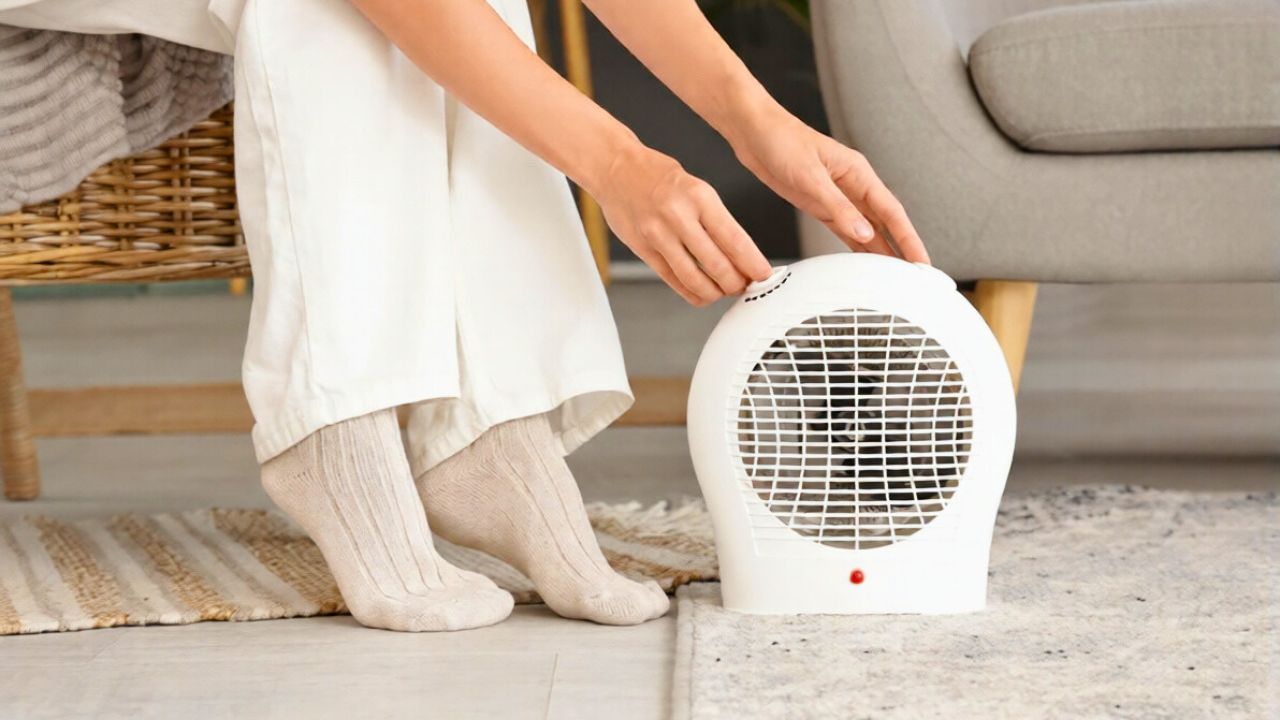
Fire officials emphasize that Proper placement and Positioning are non-negotiable, especially where you Safely Use a Space Heater near sleeping areas. Recommendations on Proper placement call for at least three feet of clearance from anything that can burn and a stable, level surface so the unit cannot tip. In a one-bedroom, that often means rethinking your furniture layout so the heater is not on a carpet, rug, or improvised stand, and so you are not tempted to push it closer to the bed just to feel more heat.
The cord mistake that turns deadly fast
Even if you respect that three-foot buffer, the way you power a heater can quietly undo all your other precautions. Many one-bedrooms have only one or two convenient outlets, which makes it tempting to run a heater through a power strip or an old extension cord. Safety guidance from Jan on Portable Heaters is explicit that you should Always plug electric space heaters directly into a wall outlet, because extension cords and power strips can overheat and start fires behind furniture where you will not see the damage until it is too late.
Fire safety experts describe Utilizing Unsafe Cords as one of the most dangerous habits, because space heaters draw a significant amount of power that can easily overload extension cords, especially when they are coiled or run under rugs. Reporting on Utilizing Unsafe Cords notes that this kind of misuse can melt insulation and ignite dust or flooring long before a breaker trips. In a one-bedroom, where cords often snake under a bed or couch, that hidden failure point can be just inches from where you are sleeping.
Why “just one room” heat is not as simple as it sounds
Part of the appeal of a portable heater in a one-bedroom is the idea that you only need to warm a small footprint. Guidance on small space heaters notes that capacities generally range from units designed for a single room to larger models, and that Safety is a top consideration when you choose among them. The Consumer Product Safety Commission estimates that more than a thousand fires and dozens of deaths each year are linked to these devices, and it also warns that some heaters can worsen asthma and other respiratory problems if they dry out the air or emit pollutants.
Even when you size the heater correctly, you are still dealing with a tool that can only heat one room at a time. Advice on alternatives to gas boilers points out that space heaters are typically limited to a single zone and that They cannot provide heat outside of the space they occupy. In a one-bedroom, that can leave your bathroom or kitchen cold, which tempts you to move the heater around or run multiple units, multiplying both the electrical load and the number of hot surfaces in a small home.
Health impacts you feel before you smell smoke
Even if you never experience a fire, the wrong heater can quietly erode your health in a compact apartment. Reporting on indoor heating notes that Nov is a reminder that Here are several drawbacks associated with various indoor heating units, including dry air, dust circulation, and irritation of the respiratory tract. One analysis warns that Space heaters often cause very dry air that can aggravate asthma, chapped skin, and nosebleeds, and that this is especially concerning for younger children or pets who spend more time close to the floor where the air is warmest and dustiest.
The risks are even sharper if you rely on gas-powered or fuel-burning units in a small, sealed room. Safety guidance on winter heating warns that Gas-powered or fuel-burning heaters can release carbon monoxide, a toxic gas that is especially dangerous in enclosed spaces where ventilation is poor. In a one-bedroom, where you may close doors to keep heat in, that can allow CO to build up quickly without any obvious warning until symptoms like headache, dizziness, or confusion appear.
Choosing the right heater for a one-bedroom
Once you accept that a heater is not a trivial gadget, the next decision is which type makes sense for your space. Guidance on Choosing the Right Space Heater for Your Needs Selecting the appropriate unit stresses that you should consider room size, insulation, and safety certifications, and that you should verify the heater meets high safety standards before you bring it home. Fire officials recommend looking for models with overheat protection, tip-over shutoff, and clear instructions on Choosing the Right Space Heater for Your Needs Selecting the so you are not improvising in a cramped bedroom at midnight.
For a small room, So for a small room, such as a 150-square-foot bedroom, you will need a 1,500-watt-rated heater, and Fifteen-hundred watts translates to about 5,118 BTUs per hour. That rule of thumb aligns with advice from Sylvane that a solid rule of thumb is about 10 watts of power per square foot of space you need to heat, as summarized in guidance on Sylvane. In a one-bedroom, that means you rarely need to go above 1,500 watts, and chasing higher wattage can simply add risk without meaningful comfort gains.
Placement, surfaces and the three-foot rule
Once you have the right size, where you put the heater in a one-bedroom matters just as much. Fire safety guidance on Space Heater Mistakes That Put Your Home at Risk highlights Placing It Close to Flammable Objects as One of the most dangerous errors, because bedding, clothing, and upholstered furniture can ignite even without direct contact if they are within the heater’s radiant zone. In a small bedroom, you may need to rearrange your nightstand or move a hamper to maintain that buffer, but that inconvenience is minor compared with the risk of a blanket slowly scorching while you sleep, as outlined in Space Heater Mistakes That Put Your Home.
Surface choice is just as critical. Advice on Space Heater Safety Mistakes That Could Burn Down Your House warns that you should not place a heater on a carpet or area rug, because soft surfaces can trap heat, block vents, and make tipping more likely. The same guidance notes that you should Give your heater a level spot to prevent tipping, ideally on a hard floor or sturdy table that is not easily bumped. In a one-bedroom, that might mean dedicating a specific corner with a clear floor patch and treating it as off-limits for storage so you are not tempted to crowd the heater when space gets tight.
When “safest ever” still is not safe enough
Manufacturers increasingly market units as the “world’s safest” heater, and some even invite dramatic demonstrations. In one viral example, a reviewer described how a company encouraged them to try to catch its unit on fire, saying they had just got the world’s safest space heater and showing how Sep footage of direct flame contact did not immediately ignite the casing. That kind of marketing can lull you into thinking you can ignore basic rules in a one-bedroom, because the device seems almost fireproof.
In reality, even the best-engineered heater is only as safe as the way you use it. Guidance on Space Heater Fire Safety and The Ductless Alternative stresses that you should Never place a space heater near water, never leave it unattended, and avoid extension cords to prevent overheating. In a one-bedroom, that means you still need to turn the unit off when you leave, keep it away from the bathroom and kitchen sink, and resist the urge to run it overnight on a crowded power strip, no matter how many safety badges are printed on the box.
Smarter alternatives and long-term fixes
If you find yourself relying on a portable heater every night, it may be time to rethink your overall heating strategy. Some HVAC specialists argue that The Dangers of Space Heaters include Fire Hazards, burns, and Inconsistent Heating, and they recommend zoned systems that distribute warmth more evenly without hot surfaces in the middle of a room. Analysis of The Dangers of Space Heaters notes that thousands of house fires each year are linked to these devices, which is a strong argument for exploring building-level solutions with your landlord if you can.
Even if you cannot overhaul the system, you can choose more efficient and less intrusive options. Some ceramic tower models, such as the Dreo Atom Core Portable Oscillating Ceramic Space Heater, are designed to distribute heat evenly while incorporating multiple safety features, and you can Find detailed specifications before you buy. Bladeless designs like the Lasko Bladeless Remote-Control Heater AW300 reduce the risk of contact burns and tip-over injuries, and you can also Find those details before committing. For some renters, ductless mini-splits or radiant floor systems promoted as alternatives to gas boilers can also reduce reliance on portable units, especially when The Ductless Alternative is available in the building.
Energy, efficiency and the bill that arrives later
Beyond safety, the heater you choose for a one-bedroom can quietly reshape your utility bills. Some manufacturers push high wattage as a selling point, but energy experts caution that Why high wattages are often misleading, and that you should Learn how to save electricity costs and heat material faster with energy-efficient heaters instead of simply chasing bigger numbers. Analysis on Why notes that design, controls, and insulation matter more than raw wattage, especially in small rooms where oversizing just wastes power.
In a one-bedroom, that means you are better off with a right-sized, well-placed unit than a “turbo” heater that runs at full blast. Guidance on keeping heaters efficient points back to the Sylvane rule of thumb and adds that sealing drafts, using curtains, and closing doors can reduce the load on your device. If you are shopping around, you can Find models like the Dreo Atom Core with programmable thermostats and timers, or Find bladeless heaters like the Lasko AW300 that balance output with safety features, so you are not paying for wasted heat you cannot safely use.
The invisible threat of carbon monoxide
Finally, if your one-bedroom relies on gas heaters, the stakes rise again. Safety advice on CO Poisoning in Flued and Unflued Gas Heaters All gas heating appliances produce carbon monoxide as a by-product, and if flues are blocked or unflued units are used indoors, combustion products can be emitted back into the room. Guidance on Poisoning warns that in small, tightly sealed spaces, carbon monoxide can accumulate quickly, turning a cozy bedroom into a life-threatening environment without any visible smoke or smell.
That is why many safety campaigns urge you to avoid unvented fuel-burning heaters in living spaces altogether and to install CO alarms near sleeping areas if you have any gas appliances. Broader guidance on What You Should Know About Space Heaters Used for home heating from the Consumer Product Safety Commission in Washington underscores that portable fuel-burning units should never be used in bedrooms or bathrooms. Combined with warnings that However, before you plug in that space heater, it is crucial to understand that these devices are involved in a significant share of home-heating fire fatalities, as noted in However, the message is clear: in a one-bedroom, the safest heater decision is the one that treats both flames and fumes as serious, manageable risks, not background noise.
Turning a risky habit into a controlled tool
When you put all of this together, the “harmless” heater in a one-bedroom looks less like a casual accessory and more like a power tool that demands respect. Fire safety guidance on Space heaters lists common failure points, from placing units on rugs to running them near curtains or using them to dry clothes, and each of those mistakes is easier to make in a cramped apartment. At the same time, energy and health experts remind you that chronic dry air, dust circulation, and CO exposure can affect your body long before any dramatic incident forces you out into the hallway.
The good news is that every major risk has a practical countermeasure: right-sizing the heater, plugging it directly into the wall, keeping a three-foot clearance, choosing hard, level surfaces, and avoiding fuel-burning units in enclosed rooms. If you treat the decision with the same seriousness that regulators and fire departments do, your one-bedroom can stay warm without becoming a test case in what happens when a small, “temporary” heater choice goes wrong.
Supporting sources: Safe Use of a Space Heater at Home | Mauzy Heating, Air & Solar.
Like Fix It Homestead’s content? Be sure to follow us.
Here’s more from us:
- I made Joanna Gaines’s Friendsgiving casserole and here is what I would keep
- Pump Shotguns That Jam the Moment You Actually Need Them
- The First 5 Things Guests Notice About Your Living Room at Christmas
- What Caliber Works Best for Groundhogs, Armadillos, and Other Digging Pests?
- Rifles worth keeping by the back door on any rural property
*This article was developed with AI-powered tools and has been carefully reviewed by our editors.