The outlet warning sign that shows up right before something fails
The most dangerous electrical failures rarely arrive without warning. Long before a breaker trips or a fire starts, your outlets begin sending subtle signals that something inside the system is going wrong. If you learn to spot the one outlet warning sign that tends to show up right before a failure, and understand the cluster of symptoms that often follow, you can intervene while the problem is still small and manageable.
That early sign is usually heat, either as a warm faceplate or as a faint burning smell, and it often appears alongside discoloration, buzzing, or tiny sparks. Together, these clues point to loose connections, overloaded circuits, or damaged wiring that can quickly escalate from nuisance to emergency. The key is to treat them as a safety issue, not a cosmetic annoyance, and to know when to call a professional instead of reaching for a screwdriver.
The first red flag: heat where it does not belong
In a healthy system, an outlet should feel as cool as the wall around it, even when you are running a power-hungry appliance. When the plastic cover or surrounding drywall feels noticeably warm, that is your earliest and most important warning that something inside is working harder than it should. Electricians describe this as “The Outlet Is Warm to the Touch,” and it is a classic sign that resistance in the circuit is turning electrical energy into heat instead of safely delivering it to your devices, a pattern highlighted in guidance on What Are the Signs That an outlet is unsafe.
That warmth can come from loose terminal screws, worn internal contacts, or an overloaded circuit feeding too many devices at once. Modern homes, with their dense mix of smart speakers, gaming PCs, and countertop appliances, put far more strain on wiring than older layouts were designed to handle, a reality that broader discussions of electrical system failure now treat as a core risk factor. If you feel heat, unplug what you can, avoid using that outlet until it is inspected, and treat the temperature change as a sign that failure is not theoretical, it is already underway.
Burn marks and discoloration that tell a hidden story
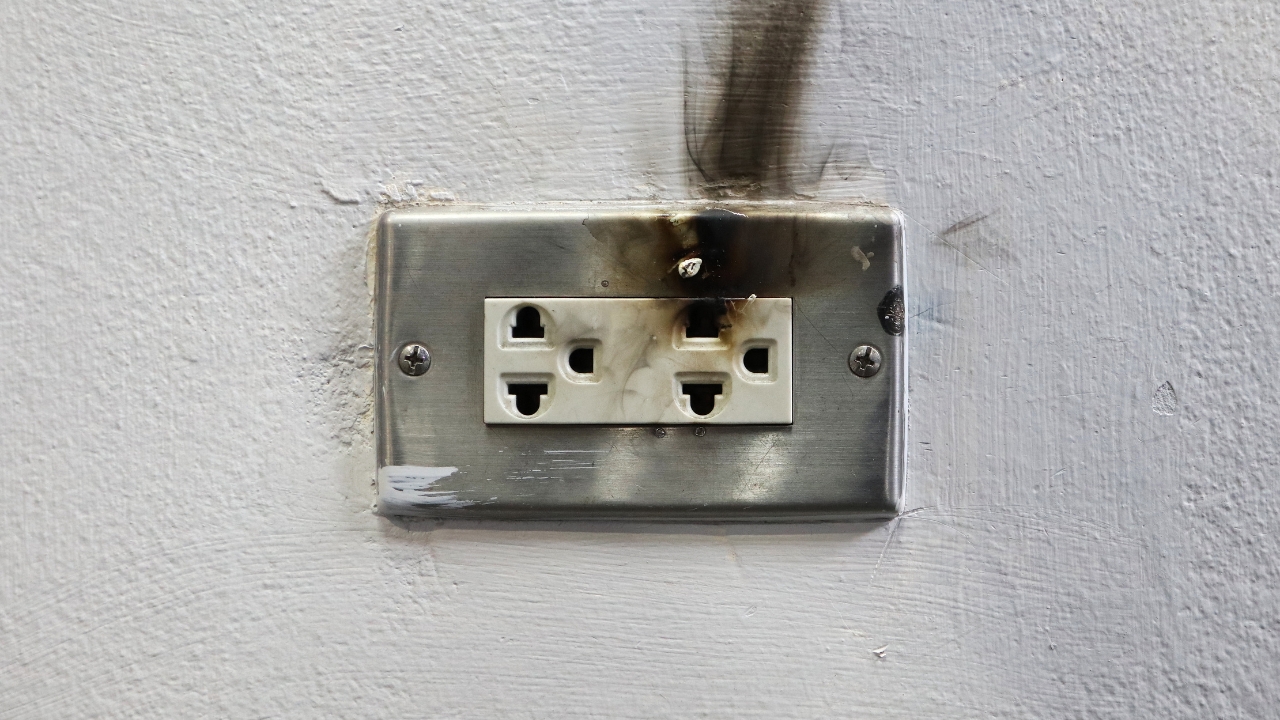
Once heat has been building for a while, your outlet often starts to show it on the surface. Brown or black smudges around the slots, a yellow halo on white plastic, or a faceplate that looks slightly melted are all signs that arcing or overheating has already occurred. Electricians flag these burnt or discolored outlets as evidence of damaged wiring or a short circuit, not just cosmetic wear, because the same heat that stains plastic can ignite nearby dust or insulation.
Those marks often appear alongside other clues, such as a breaker that trips repeatedly or a faint buzzing sound when you plug something in. Safety guidance on Warning Signs of Electrical Problems You Should Never Ignore notes that excessive heat can cause brown spots on outlets and switches, and that these blemishes are a direct sign of overheating conductors behind the wall. If you see any charring, stop using that outlet immediately, because by the time the plastic is visibly damaged, you are already much closer to a fire than most homeowners realize.
Sounds you should never hear from a wall outlet
Electricity is supposed to be silent at the point of use, so any noise from an outlet deserves your full attention. A faint hum from a transformer brick is one thing, but popping, crackling, or buzzing from the receptacle itself is a sign that current is jumping across gaps instead of flowing through solid metal contact. Safety experts describe popping or crackling as an immediate fire danger, because those sounds often come from arcing that can reach temperatures hot enough to ignite wood framing or plastic insulation.
Even a steady buzz is a problem, not a quirk you should learn to live with. Detailed checklists of signs your power outlet needs to be replaced stress that a receptacle should operate silently, and that any audible feedback points to loose parts, worn contacts, or failing components that are already degrading. If you hear noise when you plug in a vacuum, a hair dryer, or a phone charger, do not keep testing it with different devices; cut power at the breaker if you can, and schedule a repair before that sound turns into smoke.
Sparks: when a flash is normal and when it is a fire risk
A tiny, brief spark when you plug in a lamp or a laptop charger can be normal, especially if you are sliding the plug in quickly while the device is already switched on. Electricians describe these as Normal, Small, Sparks, a momentary arc as the prongs make contact and the circuit energizes. The key is that they are tiny, they vanish instantly, and they do not leave a mark or a smell behind.
The danger comes when sparks are large, frequent, or accompanied by a snapping sound, scorch marks, or a whiff of burning plastic. Detailed breakdowns of why Short Circuits Can Trigger Sparks explain that one of the most common causes is a short circuit inside the outlet, where damaged insulation or loose wiring lets current jump directly between conductors. Consumer guidance on dangerous outlet sparks also points to overloading, worn components, or faulty installation as triggers, and stresses that repeated flashes are not something you should try to “get used to.” If you see visible sparks more than once, stop using that outlet and have it inspected before a short escalates into a full failure.
Loose plugs, dead outlets, and the myth of the “harmless” failure
Many people treat a dead outlet as a minor annoyance, something to work around with a power strip or an extension cord. In reality, a receptacle that no longer holds a plug firmly or that only works intermittently is telling you that its internal grip on the prongs has worn out, which increases resistance and heat every time you draw current. Safety advisories on Warning Signs Your Outlet Might Be Dangerous list loose plugs, devices that fall out easily, and visible sparking as direct indicators that an outlet is not just inconvenient, it is a potential ignition source.
When an outlet stops working altogether, the failure can be the result of internal damage, overheated wiring, or a tripped protective device upstream. Checklists on Signs Your Electrical Outlets Are Blown emphasize that physical damage, scorch marks, or a melted faceplate are all reasons to stop using the circuit and call a professional, not to keep resetting breakers or swapping in new devices. Broader troubleshooting guides on common outlet problems add that repeated failures in the same area can signal a deeper issue in your home’s electrical system, not just a single bad receptacle.
Smells that signal trouble long before you see it
Your nose often picks up electrical trouble before your eyes do. A faint odor of hot plastic, a sharp acrid smell near a frequently used outlet, or a lingering scent of something “burning” after you unplug a device are all signs that insulation or components are overheating out of sight. Safety briefings on A lingering burning smell near outlets explain that this can indicate overloaded wiring, loose connections, or a component at risk of failure, and that you should treat the smell as a serious warning even if you cannot see any damage yet.
Those odors matter because they often appear before visible charring or tripped breakers. Technical guidance on Odd smells notes that burning plastic odours can indicate overheating insulation, while acrid scents may point to arcing or frayed wiring that is not yet visible. If you notice a smell that returns whenever a certain outlet is in use, switch off the circuit if possible, avoid using that receptacle, and arrange for an inspection before the hidden heat finds something flammable.
When the problem is bigger than a single outlet
Sometimes the warning sign at one outlet is really a symptom of stress across your entire electrical system. If you see burn marks, discoloration, or a hot faceplate in more than one room, or if multiple outlets share the same pattern of buzzing and intermittent power, you may be dealing with an overloaded branch circuit or aging wiring that can no longer handle your home’s demand. Broader safety advice on burn marks, discoloration, buzzing sounds stresses that these conditions point to unsafe electrical conditions that should be addressed promptly, not scattered quirks to ignore.
In some cases, the real culprit is a pattern of overloading or poor connections that eventually causes outlets to overheat or arc. Technical breakdowns of top causes of outlet failures explain that poor connections eventually overheat or arc, and that you may hear a faint buzzing sound, smell burning plastic, or see scorch marks as the problem develops. Broader system-level analyses of common warning signs that demand attention also point to flickering lights, frequent breaker trips, and damaged wiring as indicators that your home’s infrastructure, not just one outlet, is under strain.
How professionals read the same clues very differently
To an untrained eye, a slightly loose plug or a hairline crack in a faceplate can look trivial, but electricians are trained to see those details as part of a larger pattern. When they inspect a suspect outlet, they are not just looking at the plastic cover, they are checking for heat damage on the conductors, signs of arcing on the terminals, and any evidence that the breaker or ground fault protection is not behaving as it should. Professional guidance on Reasons To Replace a Bad Electrical Outlet notes that you should replace a receptacle if it shows burn marks, feels hot, or if a ground fault circuit interrupter does not trip as designed, because each of those signs points to a deeper reliability issue.
Experienced electricians also know when a symptom that looks minor is actually a late-stage warning. For example, detailed repair checklists on warning signs your electrical outlets need repair list sparks, buzzing, and intermittent power as reasons to call in a professional, not to attempt a do-it-yourself fix. Step-by-step troubleshooting guides on Recognizing the Warning Signs of a faulty outlet emphasize that components degrade and screws loosen over time, and that a trained technician will test voltage, inspect connections, and decide whether replacement is safer than repair. When you bring in a professional early, you are not just fixing one outlet, you are asking someone who reads these clues every day to check whether your entire system is still up to the job.
Practical steps you can take the moment you spot a warning sign
Once you know what to look for, the most important step is to act quickly and methodically when you see or smell trouble. If an outlet feels hot, shows burn marks, or produces sparks, unplug everything, avoid using that receptacle, and if possible switch off the breaker that feeds it. Safety explainers on Why an Electrical Outlet Sparks stress that a brief spark right at the moment of contact can be normal, but that a new or persistent spark that was not there before is a sign to stop and investigate. If you notice repeated tripping, discoloration, or a burning smell, treat the situation as urgent rather than waiting for a convenient time.
From there, your job is to document and delegate, not to open the outlet yourself unless you are qualified. Take clear photos of any burnt outlet or melted plastic, note which devices were in use, and share that information with a licensed electrician so they can trace the cause. If you live in a home with older receptacles or “powerpoints,” safety guidance on The Importance of Electrical Powerpoint Safety recommends replacing units that show physical damage, cracks, or looseness, even if they still work. Broader repair guides on Burned Out Outlets add that older or out-of-date models are at higher risk for connection problems, so proactive upgrades can be as important as reactive repairs.
Like Fix It Homestead’s content? Be sure to follow us.
Here’s more from us:
- I made Joanna Gaines’s Friendsgiving casserole and here is what I would keep
- Pump Shotguns That Jam the Moment You Actually Need Them
- The First 5 Things Guests Notice About Your Living Room at Christmas
- What Caliber Works Best for Groundhogs, Armadillos, and Other Digging Pests?
- Rifles worth keeping by the back door on any rural property
*This article was developed with AI-powered tools and has been carefully reviewed by our editors.