The power-outage mistake that shortens appliance life quietly
Every time the lights cut out, you probably worry about the food in your fridge or the charge on your phone, not the long‑term health of your appliances. Yet the quiet way you handle power outages can either protect that equipment for years or slowly shave time off its life. The most common mistake is simple, easy to overlook, and repeated in homes during almost every storm season.
Instead of focusing only on when the power goes off, you need to think about what happens when it comes roaring back. That moment, when electricity surges through your home again, is when sensitive electronics, compressors, and control boards face the greatest stress. With a few deliberate habits, you can avoid the outage mistake that quietly shortens the life of the devices you rely on every day.
What really happens to your wiring when the lights go out
From your perspective, a blackout feels like a simple on‑off event, but inside your walls the story is more complicated. When utility power drops, the voltage on your circuits does not always fall in a clean, controlled way. Depending on the cause of the outage and the state of the grid, you can see a mix of complete blackouts, partial brownouts, and rapid flickers that make lights stutter and electronics click. Each of those patterns puts different stress on the transformers, power supplies, and surge protection components inside your appliances, especially if your home already has marginal wiring or an overloaded panel that struggles to keep up with demand, as detailed in guidance on your panel.
The real danger often arrives when power is restored. Utilities may bring circuits back in stages, and as they do, voltage can briefly spike above normal levels. That spike, known as a power surge, can ride in on the same lines that feed your refrigerator, television, and HVAC system. Technical explainers on devices at risk describe how these surges can overwhelm delicate components that were designed for a narrow voltage range. Even if the surge is not strong enough to cause immediate failure, repeated events can weaken insulation, stress solder joints, and gradually erode the safety margin built into your equipment.
The quiet mistake: letting everything restart at once
The most damaging habit during an outage is also the most instinctive one: you leave every appliance and device exactly as it was, then let them all spring back to life the instant power returns. When that happens, motors, compressors, and power supplies across your home demand a surge of current at the same moment, which amplifies any incoming spike from the grid. Reporting on HVAC systems notes that this kind of simultaneous restart is especially hard on air conditioners and heat pumps, which already draw heavy current when compressors kick on.
That same pattern quietly shortens the life of your other appliances. When every television, game console, desktop computer, and microwave tries to boot at once, the inrush current can cause small, fast voltage dips and spikes inside your home. Over time, those fluctuations stress the power supplies and control boards that keep modern devices running. Technical breakdowns of what outages damage explain that equipment without robust surge protection is especially vulnerable in that first chaotic minute after power returns. By simply allowing everything to restart together, you unintentionally create the harshest possible conditions for your own electronics.
Why surges, not blackouts, do the real damage
It is easy to assume that the absence of power is what harms your gear, but for most modern electronics, the real threat is the sudden excess of power that follows. When voltage spikes above its normal level, it can overwhelm the tiny components that regulate current inside circuit boards. Guidance on what is a explains that these events can be triggered by lightning, switching operations on the grid, or large motors turning on and off. In each case, the surge can travel through your wiring and into any device that is still connected.
By contrast, a simple loss of power, if it were perfectly clean, would not usually harm electronics on its own. Analysis of blackout and brownout behavior notes that while a blackout itself does not damage electronics, the restoration of power can come with a surge that overwhelms sensitive equipment. Brownouts, where voltage sags but does not disappear, can be even more insidious, because motors and compressors try to run on inadequate power, overheating and wearing out faster. In both cases, it is the unstable voltage, not the darkness, that quietly shortens appliance life.
How outages attack modern control boards and compressors
Appliances that once relied on simple mechanical switches now depend on complex electronic brains. Your dishwasher, oven, and washing machine likely contain control boards that interpret sensor data and manage cycles with precision. Technical guidance on how a power in appliances explains that surges can punch through the delicate pathways on these boards, potentially causing short circuiting. Even when the board survives, repeated stress can leave it more prone to failure, which often shows up later as mysterious error codes or intermittent glitches.
Motors and compressors face a different kind of punishment. When power flickers or returns with unstable voltage, these components may try to start under heavy load or with insufficient current. That combination generates heat and mechanical strain. Over time, insulation on windings can break down, bearings can wear faster, and the motor may draw more current than it should. Detailed breakdowns of air conditioner damage note that units without built‑in surge protection are particularly vulnerable when power is restored after an outage. The same physics applies to refrigerator compressors, well pumps, and any other motor that restarts into an uncertain electrical environment.
The refrigerator exception and why it proves the rule
Refrigerators occupy a special place in outage advice, because food safety and mechanical safety pull you in different directions. Retail experts explain that, in most homes, you should keep your fridge plugged in so it can restart automatically when power returns, since that helps protect perishable food. Guidance notes that generally, no, you should not unplug the refrigerator during a typical outage, and that you should leave it connected so it can resume cooling as soon as electricity is restored.
That exception highlights how you should think about the rest of your home. The refrigerator stays plugged in because the risk of food spoilage outweighs the risk of surge damage, especially since many modern fridges include some level of internal protection. For nonessential electronics, the calculus is different. Televisions, gaming consoles, desktop computers, and small kitchen gadgets do not protect anything as critical as your food supply, and they often have more fragile electronics. That is why safety organizations advise you to unplug appliances with electronic components during an outage, then plug them back in only after power has stabilized.
HVAC systems: the most expensive victim of a bad restart
Your heating and cooling equipment is often the single most valuable system in your home, and it is also one of the most exposed to outage‑related stress. Central air conditioners and heat pumps rely on large compressors that draw heavy current when they start. Reporting on HVAC behavior during outages notes that every time the lights flicker off, your first instinct is usually to rush to the thermostat, but the most common mistake is letting the system try to restart immediately when power returns. If voltage is still unstable, the compressor can stall or short cycle, which accelerates wear and can eventually lead to failure.
Unlike a television or a microwave, an HVAC failure is not just an inconvenience. Replacing a central air conditioner or heat pump can cost thousands of dollars, and in extreme weather, losing climate control can quickly become a health issue. Technical discussions of air conditioner vulnerability emphasize that units without robust surge protection are at particular risk when power comes back after an outage. By turning your thermostat off during the blackout and waiting a few minutes after power is restored before turning it back on, you give the grid and your own panel time to stabilize, which significantly reduces the stress on your system.
Which devices are most at risk when power returns
Not every appliance faces the same level of danger when the lights come back on. Devices that combine sensitive electronics with constant connectivity, such as smart televisions, Wi‑Fi routers, gaming consoles like the PlayStation 5, and streaming boxes, are especially vulnerable. Technical lists of top devices at risk from surges highlight televisions and computers because their power supplies and logic boards are designed for efficiency, not for absorbing repeated voltage spikes. When these devices are left plugged in during an outage and then restart into a surge, the stress accumulates quietly until one day they simply fail to power on.
Large appliances with motors and compressors, such as washing machines, dryers, and dishwashers, face a different but equally serious threat. Their control boards can be damaged by surges, and their motors can overheat if they try to start under low voltage conditions during a brownout. Technical explainers on power surges describe how even a single strong event can overwhelm internal protection, while repeated smaller surges gradually erode insulation and mechanical components. By identifying which devices in your home combine sensitive electronics with heavy loads, you can prioritize which ones to unplug or protect with high‑quality surge suppressors and uninterruptible power supplies.
The right way to shut down and restart after an outage
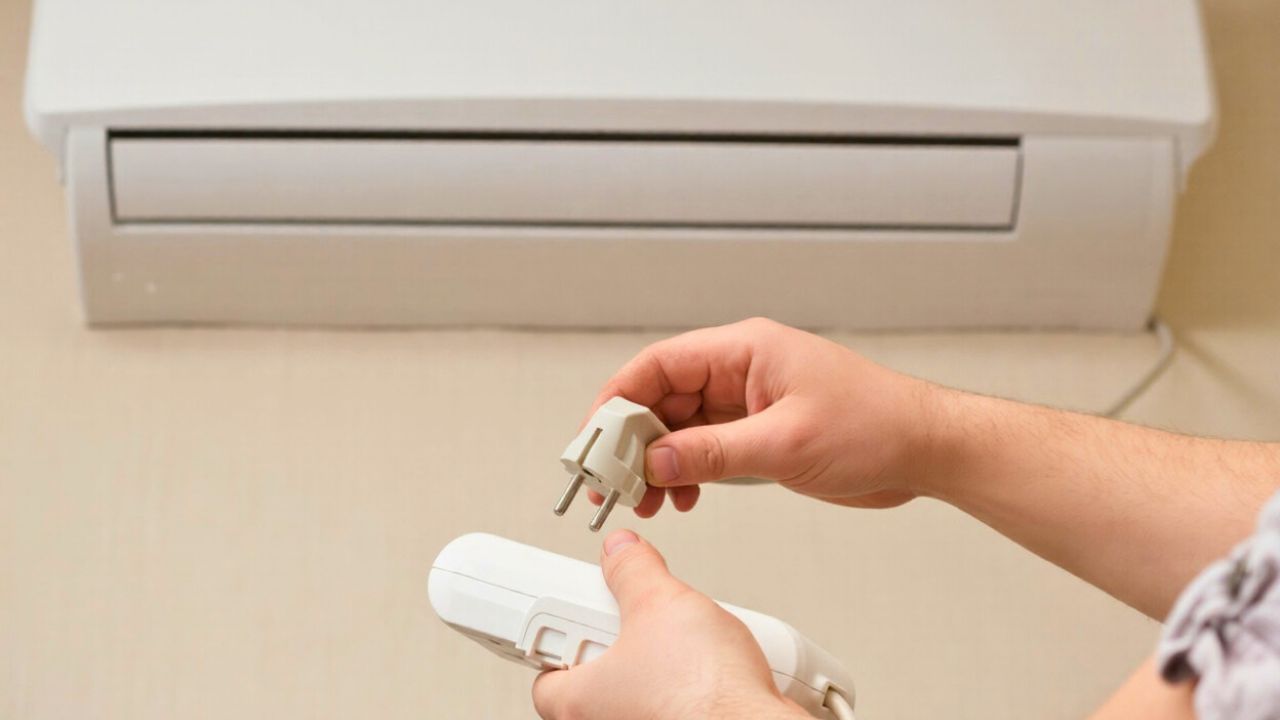
Protecting your appliances during outages is less about buying new gear and more about adopting a disciplined sequence. When the power goes out, your first step should be to switch off or unplug nonessential electronics, especially those with delicate control boards or high replacement costs. Safety guidance that urges you to unplug appliances with electronic components is grounded in the simple physics of surge protection: a device that is not connected cannot be damaged by a spike. Leave critical equipment like your refrigerator and any necessary medical devices plugged in, but give everything else a physical disconnect from the grid.
When power returns, resist the urge to flip everything back on immediately. Instead, wait a few minutes while lights stabilize and major neighborhood loads, such as other HVAC systems, cycle up. Then restore your home in stages. Start with essential systems like your HVAC, turning the thermostat back on so the compressor can start under more stable voltage. Next, plug in and power up your refrigerator‑adjacent appliances, such as freezers or wine coolers, especially if they protect valuable contents. Finally, reconnect entertainment and office electronics, ideally through quality surge protectors or battery‑backed units. Technical documentation for specialized equipment notes that there is an, some units are designed to start automatically when power is restored, which underscores how important it is to control the sequence for devices that do not have that built‑in intelligence.
When you need more than habits: surge protection and inspections
Good habits go a long way, but in many homes, they are not enough on their own. If your area sees frequent storms or grid instability, whole‑house surge protection and targeted device‑level protection can dramatically reduce the risk of silent damage. Technical guidance on power surge damage to your home electrical system explains that if your panel has not been updated or inspected in years, it may lack modern protective devices that can clamp down surges before they reach your appliances. An electrician can install surge protective devices at the panel and recommend high‑quality point‑of‑use protectors for your most sensitive electronics.
Regular inspections also help you catch problems that make outage events more dangerous. Loose connections, overloaded circuits, and aging breakers can all amplify the stress of a surge or brownout. Technical resources on surge risks emphasize that protection is a system, not a single gadget you plug into the wall. By combining a sound electrical infrastructure with deliberate outage routines, you turn unpredictable grid events into manageable risks. The mistake that quietly shortens appliance life is not the outage itself, but treating that outage as a passive event instead of an opportunity to actively protect the equipment you depend on every day.
Like Fix It Homestead’s content? Be sure to follow us.
Here’s more from us:
- I made Joanna Gaines’s Friendsgiving casserole and here is what I would keep
- Pump Shotguns That Jam the Moment You Actually Need Them
- The First 5 Things Guests Notice About Your Living Room at Christmas
- What Caliber Works Best for Groundhogs, Armadillos, and Other Digging Pests?
- Rifles worth keeping by the back door on any rural property
*This article was developed with AI-powered tools and has been carefully reviewed by our editors.