The signs your house has hard water damage and what to do first
Hard water rarely announces itself with a single dramatic leak. It creeps in quietly, leaving cloudy glasses, stiff laundry, and tired plumbing that has to work harder every month. If you learn to recognize the early warning signs, you can stop that mineral buildup from turning into corroded pipes, failing appliances, and expensive emergency calls.
This guide walks you through the most common clues that your house is already suffering hard water damage, from chalky fixtures to sluggish water pressure, and then lays out the first practical steps you should take. By the end, you will know how to confirm what you are seeing, how to triage the worst trouble spots, and which fixes are worth your money.
What “hard water damage” really means in your home
Hard water is simply water with a high load of dissolved minerals, especially calcium and magnesium, that are left behind as scale on every surface the water touches. Over time, that scale coats the inside of pipes, clogs faucet aerators, and lines the tanks of dishwashers and water heaters, which is why experts describe hard water as a problem that affects both comfort and infrastructure. When you hear “hard water damage,” you are really talking about years of this mineral film thickening until it interferes with how your plumbing and appliances are supposed to work.
Those minerals do not stop at metal and plastic. They also react with soap and detergent, which is why you see more residue on shower walls and feel a film on your skin after bathing. Several water specialists note that hard water signs show up in places you might not expect, including dry skin, dull hair, and clothes that never quite feel clean. When those personal symptoms line up with visible scale and plumbing issues, you are no longer dealing with a cosmetic nuisance but with a house-wide maintenance problem.
Everyday red flags: dishes, laundry, skin and hair
One of the earliest clues that your water is too hard often appears in the kitchen sink. Glasses that come out of the dishwasher with cloudy spots, silverware with a chalky film, and a white ring inside your kettle all point to minerals being left behind as water evaporates. Water treatment specialists explain that if water leaves spots on dishes and fixtures, those same deposits are likely forming inside your plumbing where you cannot see them. Over time, that invisible buildup is what turns a simple aesthetic annoyance into real hard water damage.
Your body and clothes also keep score. Home service experts describe how the biggest sign of hard water for many people is that their skin feels tight after showering, their hair looks dull, and freshly washed clothes are scratchy and dingy instead of soft. That happens because calcium and magnesium interfere with soap, creating a film that sticks to fibers and skin. When you are constantly battling dry hands, lifeless hair, and towels that never soften, you are seeing the human side of the same mineral problem that is attacking your plumbing.
Bathroom and kitchen clues: soap scum, spots and scale
Bathrooms and kitchens are the front lines where hard water leaves visible evidence. If you are tired of scrubbing the same cloudy spots off your shower door and still seeing a hazy film, you are dealing with more than ordinary dirt. Plumbing and HVAC specialists point out that soap scum and are classic signs that minerals are reacting with soap and clinging to surfaces. That same reaction is happening inside your shower valve and faucet cartridges, where it can eventually cause leaks and stiffness.
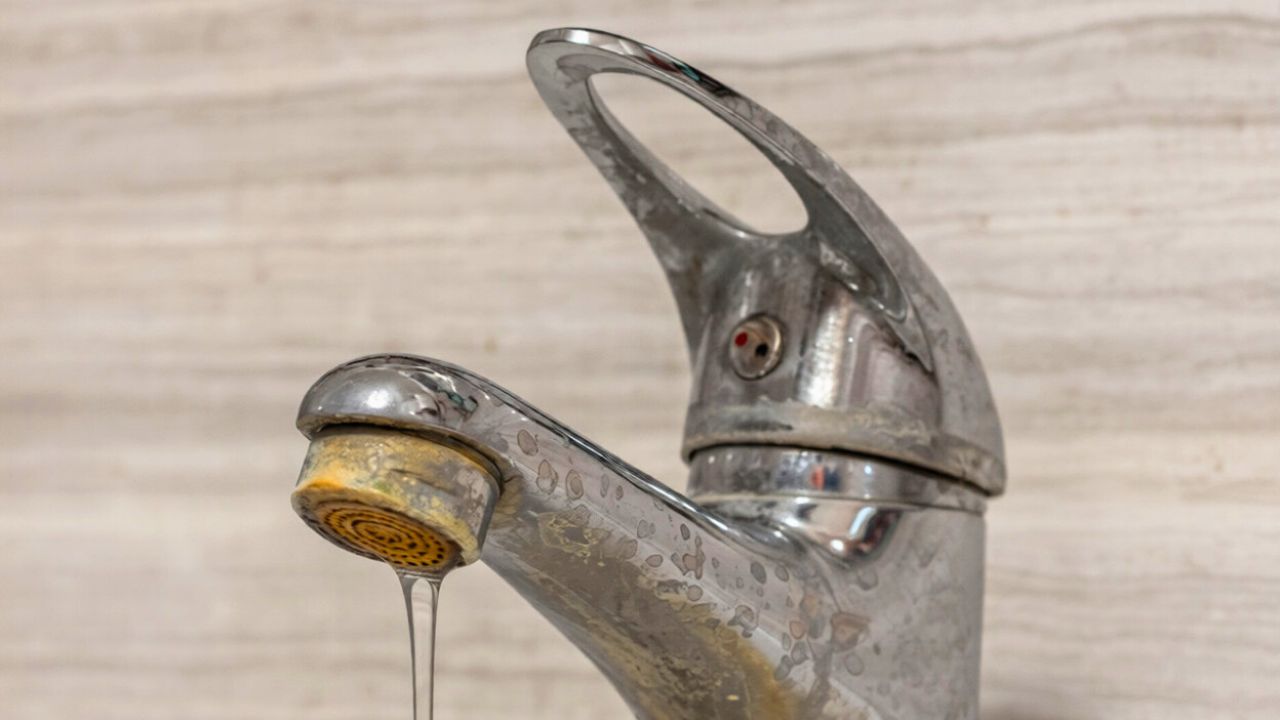
Look closely at your fixtures for a more precise read. White or chalky buildup around faucet bases, on showerheads, and at the edge of sink drains is a strong indicator that minerals are crystallizing as water dries. Plumbing pros describe white, chalky buildup on faucets, showerheads, and inside appliances as one of the most noticeable signs of hard water damage. If you see crust forming on the tiny holes of a showerhead or aerator, you can safely assume the same scale is forming in less visible bends of the plumbing behind the wall.
Plumbing warning signs: pressure, leaks and noisy pipes
Once minerals start accumulating inside your plumbing, the symptoms shift from cosmetic to mechanical. One of the clearest red flags is a change in water pressure, especially if it shows up gradually. Plumbers warn that when you turn on a tap and get a weak trickle instead of a steady stream, scale may be narrowing the inside of pipes or clogging aerators and showerheads. That restriction forces your system to work harder, which can stress joints and valves and set you up for leaks.
Other plumbing issues can be more subtle. Specialists who focus on early detection explain that if you do not have extensive plumbing knowledge, it can be difficult to tell whether your pipes are being damaged, but there are patterns to watch. You may notice your water looking slightly discolored, hear banging or whistling when fixtures are turned off, or see recurring pinhole leaks in copper lines, all of which can be linked to high mineral content and increased acidity in the water. One detailed guide notes that when you notice your water changing appearance or your pipes becoming noisy, it is often a sign that hard water has already begun to damage plumbing, pipes, and appliances.
Appliance trouble: water heater, dishwasher and laundry gear
Hard water is especially tough on any appliance that heats or circulates water. Inside a water heater, minerals settle at the bottom of the tank and form a thick layer of sediment that forces the burner or heating elements to work longer to deliver the same hot water. Manufacturers explain that hard water causes streaks and buildup that reduce efficiency and shorten equipment life, and that scale inside pipes can also reduce water pressure over time. If your water heater rumbles, runs out of hot water quickly, or needs frequent repairs, hard water is a prime suspect.
Dishwashers, washing machines, and ice makers face similar stress. Service technicians note that if you see white crust around the dishwasher door seal, stiff laundry even with fabric softener, or ice cubes that look cloudy and taste off, minerals are likely coating internal parts and strainers. One plumbing guide lists appliances requiring frequent as a key warning sign that hard water is affecting your plumbing and what flows through it. When you are replacing heating elements, pumps, or valves more often than seems reasonable, it is time to address the water quality, not just the appliance.
How to confirm hard water: DIY checks and test kits
Before you spend money on major fixes, you should confirm that hardness is really the culprit. Simple at home checks can give you a quick read. Water experts often recommend a basic soap and bottle test as a first step: fill a clear bottle with tap water, add a few drops of liquid soap, and shake. If the water stays cloudy with few suds, that points to higher mineral content. One testing guide describes this as a DIY method that is fast and inexpensive, though less precise than lab style options.
For a more accurate measurement, you can use hardness strips or a multi parameter kit that reports results in grains per gallon, often abbreviated as GPG. Water quality specialists highlight that GPG levels around 7 or higher are a decision point where you should consider a conditioner or softener. If you want to check hardness alongside other factors like pH and metals, a Safe home ultimate DIY water quality test kit can provide entry level testing for 14 parameters and can be used up to 25 times, which is useful if you want to compare different taps or track changes after you install treatment equipment.
Reading the early damage inside your plumbing
Even with test results in hand, you still need to interpret what is happening inside your pipes. Plumbers who specialize in early detection emphasize that you should look for patterns rather than isolated quirks. If several fixtures in different rooms show crust around the bases, if multiple aerators clog within months, or if you see scale on the heating element of a kettle, those are all signs that minerals are circulating throughout the system. One detailed overview of how to spot in your plumbing notes that catching these clues early can prevent more serious blockages and corrosion.
Professional resources also stress that hard water damage is cumulative. A guide focused on how hard water your plumbing system over time explains that scale does not just sit on the surface, it can trap other contaminants and create rough spots where corrosion starts. That is why you might see both mineral deposits and rust stains together around drains or in toilet tanks. If you ignore those early combinations, you risk reaching a point where pipes need to be replaced rather than cleaned, which is a far more disruptive and expensive repair.
First response: cleaning, descaling and short term fixes
Once you have identified hard water as the problem, your first move should be to limit further damage with targeted cleaning and descaling. For fixtures and glass, plumbing experts recommend simple DIY cleaning solutions that rely on acidity to dissolve mineral deposits. A common approach is a vinegar and water, where you mix equal parts white vinegar and water in a spray bottle, apply it to affected areas, let it sit, then scrub and rinse. For showerheads and faucet aerators, soaking the parts in warm vinegar can restore flow by clearing the tiny openings.
You can also take immediate steps to protect appliances while you plan longer term treatment. A 2025 guide to simple hard water for home suggests descaling fixtures with white vinegar, flushing water heaters to remove sediment, and checking for leaks and efficient settings on dishwashers and washing machines. These steps will not change the hardness of the water entering your home, but they can buy you time by reducing existing buildup and easing the workload on vulnerable components while you evaluate permanent solutions.
Longer term fixes: softeners, conditioners and when to call a pro
Short term cleaning only goes so far if your incoming water remains heavily mineralized. At that point, you need to consider equipment that treats the water before it circulates through your house. Water specialists explain that hard water problems in the home are often best addressed with a whole house softener that uses ion exchange to remove calcium and magnesium, or with a conditioner that alters how minerals behave so they are less likely to stick. The right choice depends on your hardness level, plumbing layout, and whether you want to avoid adding sodium to the water.
Because the stakes involve your entire plumbing system, it is often worth bringing in a professional once you have basic test results and a list of symptoms. A detailed overview of hard water plumbing notes that a qualified plumber can assess signs, damage, and solutions in context, including whether existing pipes are already compromised. Another resource on warning signs of in the home emphasizes that professional testing and system design can help you match equipment size and type to your actual usage, which reduces the risk of under treating the problem or overspending on gear you do not need.
Prioritizing repairs and protecting your investment
Once you understand where hard water is hitting your home the hardest, you can prioritize repairs in a way that protects both safety and budget. Start with anything that affects water quality directly, such as corroded pipes that could leach metals or a failing water heater that cannot maintain safe temperatures. A comprehensive guide that invites homeowners to explore the impact of hard water underscores that scale not only reduces efficiency but can also lead to inconsistent temperatures and reduced pressure, both of which can compromise comfort and hygiene.
From there, look at high value appliances and fixtures that are already showing stress, such as dishwashers with repeated pump failures or washing machines that struggle to fill and drain. A detailed overview of warning signs of in the home and another focused on how to spot in your plumbing both stress that addressing issues early is far cheaper than waiting for a catastrophic failure. If you decide to invest in treatment equipment, consider pairing it with a multi parameter kit such as the DIY Safe Home Ultimate Water Test Kit so you can track improvements over time and verify that your new system is actually reducing hardness and protecting your home.
Like Fix It Homestead’s content? Be sure to follow us.
Here’s more from us:
- I made Joanna Gaines’s Friendsgiving casserole and here is what I would keep
- Pump Shotguns That Jam the Moment You Actually Need Them
- The First 5 Things Guests Notice About Your Living Room at Christmas
- What Caliber Works Best for Groundhogs, Armadillos, and Other Digging Pests?
- Rifles worth keeping by the back door on any rural property
*This article was developed with AI-powered tools and has been carefully reviewed by our editors.