The trick celebrities use to make their homes look twice as big
Photo credit: Max Vakhtbovycn/Pexels.com
Celebrities have a knack for making their homes look enormous—even when they’re not. Sure, some of them live in actual mansions, but others rely on clever design tricks that visually stretch every room.
These aren’t magic illusions or million-dollar renovations; they’re intentional choices that manipulate light, space, and proportion. The good news? You can do the same thing at home, no movie star budget required.
Oversized mirrors in the right spots
A giant mirror can double a room instantly. Designers for celebrity homes often place mirrors directly across from windows or light sources to bounce natural light throughout the space. It’s not about filling every wall—it’s about placement. A single oversized mirror creates the illusion of depth, making even narrow rooms feel open. You can use full-length mirrors or wide framed ones behind furniture to extend sightlines and make your space appear twice as bright.
Matching tones from floor to ceiling
Celebrities love cohesive color stories because they expand a room visually. Light, consistent tones make walls, ceilings, and trim blur together instead of stopping your eye at harsh breaks. That’s why you’ll rarely see dark baseboards or heavy contrasts in smaller celebrity homes. A uniform palette gives a seamless effect that tricks your brain into reading the space as larger than it is. Even painting your trim the same color as the walls can create that same high-end, spacious look.
Sheer curtains and tall drapery
One of the oldest Hollywood decorator tricks is hanging curtains high and wide. When drapery rods sit just below the ceiling and extend past the window frame, the entire wall looks taller and wider. Combine that with light, sheer fabrics that let natural light filter through, and the whole space feels expansive and airy. Even standard windows start to look grand, and rooms that felt closed-in suddenly feel open and connected.
Reflective and matte balance
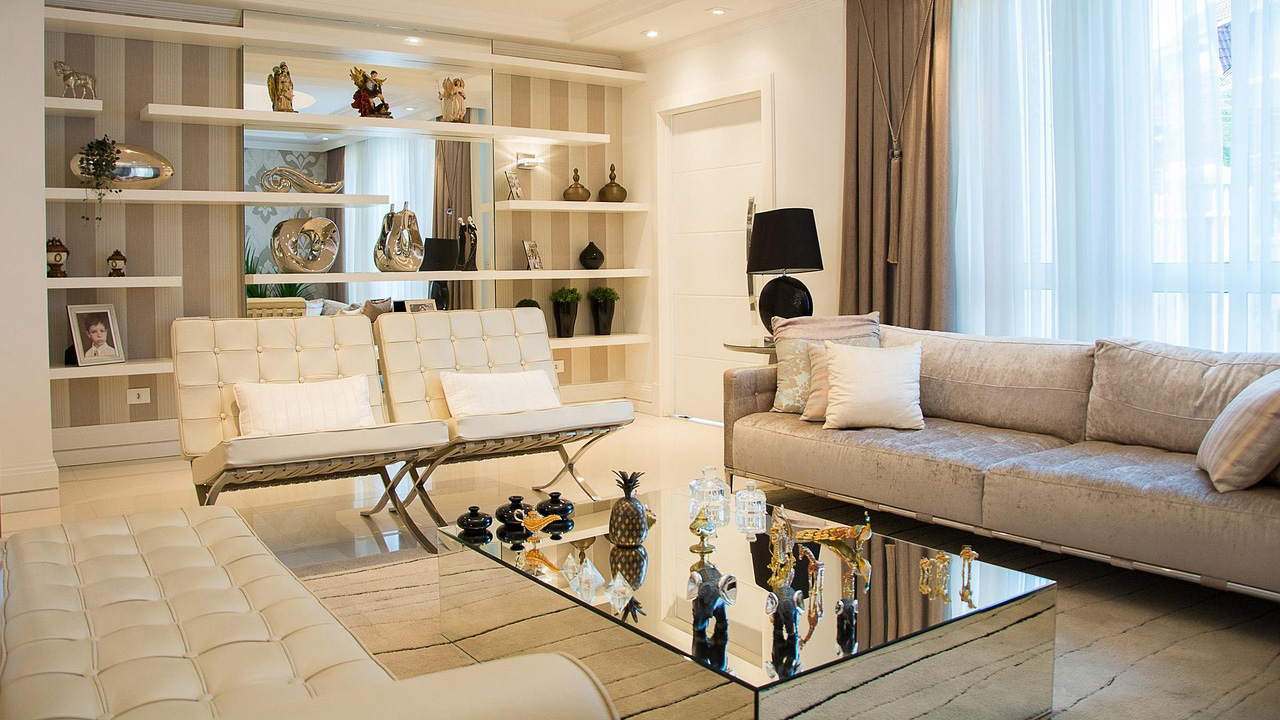
Celebrities’ interiors often balance glossy finishes—like polished floors, glass tables, or lacquered cabinetry—with matte surfaces to catch and diffuse light evenly. Too much shine can look sterile, while the right balance creates visual movement. Light bounces around subtly, softening edges and giving dimension. The reflection doesn’t just brighten—it makes the eye travel farther across the room, which gives the illusion of a larger footprint.
Hidden storage that eliminates clutter
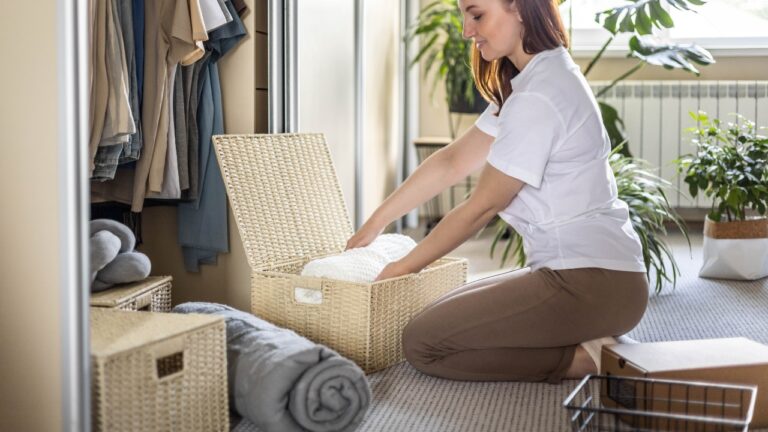
Nothing shrinks a room faster than visible clutter. Many celebrity homes rely on hidden or built-in storage—benches with lift tops, wall cabinets disguised as paneling, or drawers built into stair risers. Keeping things tucked away allows rooms to breathe. When every surface looks intentional and open, the square footage feels multiplied. Even a few storage baskets that match your décor can mimic that minimalist, expensive feel.
Large-scale art instead of gallery walls
A wall full of small frames can make a room feel busy and fragmented. Celebrities often choose one or two oversized art pieces instead of many small ones. It’s not only easier on the eyes—it visually enlarges the wall and simplifies the space. You don’t need a $10,000 piece to pull it off; even a large canvas print or a DIY abstract in muted colors can make a statement and give the illusion of more space.
Streamlined furniture with open bases
Low, heavy furniture eats up visual space. Designers often use pieces with exposed legs or open bases that allow light to flow underneath, tricking your brain into seeing more floor area. A slim sofa or raised credenza feels lighter and gives the impression that the room can breathe. Even swapping one bulky item for something with cleaner lines can make a noticeable difference.
Layered lighting for depth
Celebrities rarely rely on a single overhead light. They layer lighting—floor lamps, sconces, and accent lights—to define zones and create dimension. When light comes from multiple angles, walls appear farther apart, and shadows create subtle depth that makes rooms look larger. You can copy this by adding a few inexpensive table lamps or LED strips under cabinets to highlight surfaces and expand the sense of space.
Minimal transitions between rooms
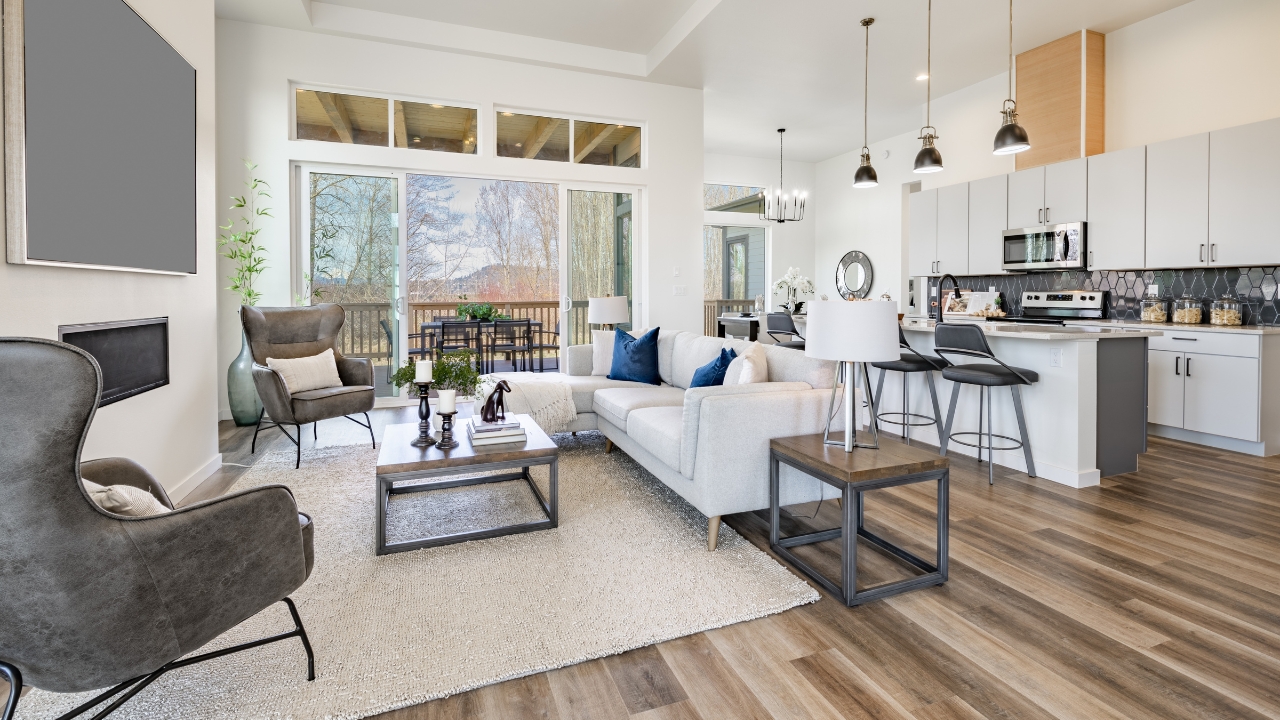
Open layouts aren’t the only way to make a home feel bigger. Celebrities often create smooth transitions between spaces using matching flooring and consistent wall colors. Without visual breaks like thresholds or paint changes, your eyes flow seamlessly through rooms, making the house feel continuous. Even a small home benefits from that unified look—it’s one of the simplest, most effective ways to fake square footage.
Intentional use of greenery and texture
Strategically placed greenery softens hard lines and adds life to otherwise static spaces. Celebrities use large potted plants and textural pieces to draw the eye upward or outward. A tall fiddle leaf fig in a corner or trailing ivy on a shelf makes walls feel higher and rooms feel fresher. The trick is scale—fewer, larger plants look more luxurious and help stretch the perception of height and width.
Like Fix It Homestead’s content? Be sure to follow us.