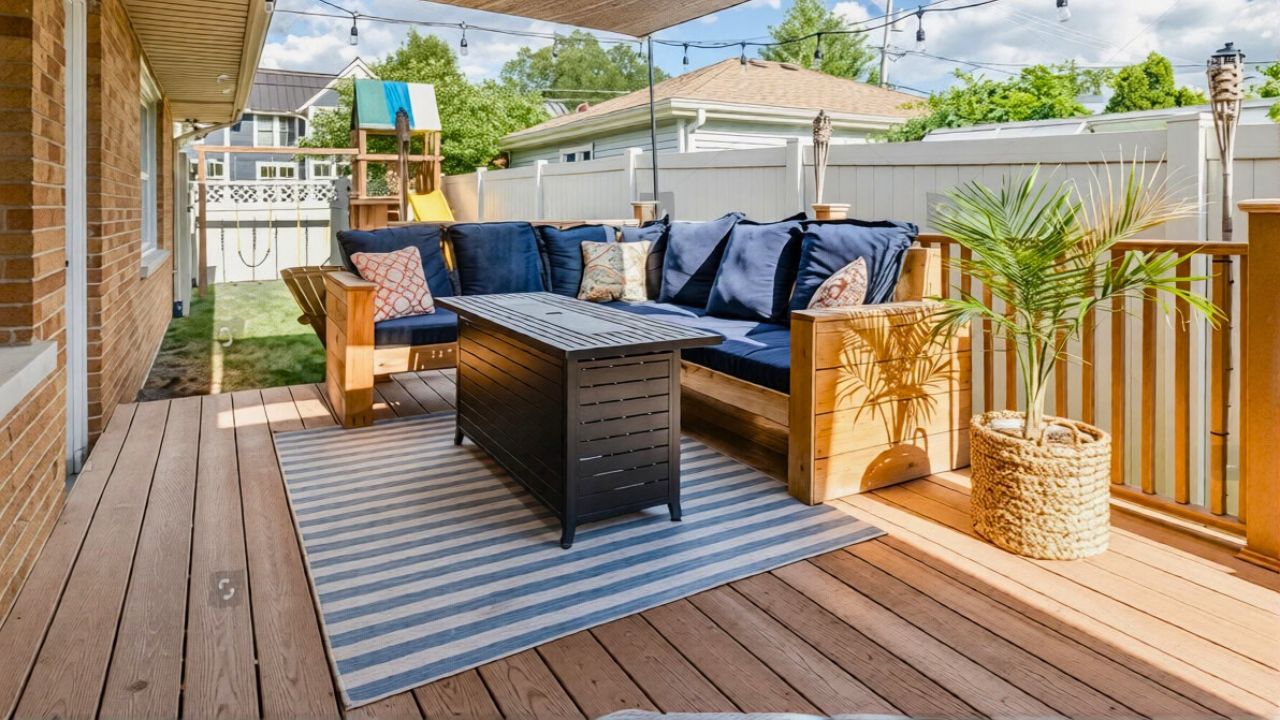
These cheap outdoor rugs trap moisture and rot decks
Photo credit: Joseph Hendrickson/Shutterstock.com
You think you are protecting your deck when you roll out a bargain outdoor rug. In reality, the wrong rug quietly traps moisture, stains finishes, and can speed up rot in the boards you paid so much to install. By understanding how cheap outdoor rugs interact with wood and composite surfaces, you can still enjoy that soft underfoot feel without sacrificing the structure beneath.
How cheap outdoor rugs actually trap moisture
When you lay a low-cost outdoor rug across your deck, you create a barrier that slows evaporation every time it rains or you wash the surface. Water seeps through the fibers, then lingers between the rug and the boards where sunlight and airflow are weakest. Several deck care guides explain that a water-soaked rug holds moisture against decking, which encourages rot, mold, and mildew to flourish on the surface and in the gaps between boards, especially if the weave is dense or backed with plastic that can trap condensation or leave residue on the finish. If your deck already sits in partial shade, that damp layer can stay in place for days instead of hours.
Under that trapped film of water, the temperature and humidity remain high, which is exactly what fungi need to colonize wood fibers and what mildew needs to stain composite boards. Advice aimed at answering whether outdoor rugs can cause damage to decks repeatedly points to this prolonged wet contact as the main problem, not the rug itself. Combine a nonbreathable backing, heavy furniture that presses the rug flat, and infrequent cleaning, and you effectively create a petri dish pressed directly onto your deck boards.
Why moisture leads to rot, mold, and hidden structural damage
Rot does not start with a dramatic crack; it starts with microscopic organisms feeding on the cellulose in your deck boards. Once moisture sits against wood long enough, those organisms move from the surface into the fibers, softening them from the inside. Guides that look at whether outdoor rugs can ruin decks describe how this process can begin at the top of the board and slowly migrate downward, especially where water collects around fasteners or between boards. On composite decks, you avoid true rot in the planks, but you still face mold staining and slippery biofilm that can be stubborn to remove.
The bigger problem is what you cannot see. When water works through seams and screw holes under a rug, it can reach the joists below. In one warning shared with deck owners, photos show the joists of a deck where a rug sat in one spot and the top faces of those hidden supports have completely deteriorated, even though the surrounding structure looks sound. That kind of selective damage is expensive to repair because you may need to remove boards and sister new lumber alongside the weakened joists, all triggered by moisture that never had a chance to dry.
Materials and backings that put your deck at risk
The cheapest rugs marketed for patios often rely on rubber, latex, or similar backings that grip the deck surface. Those materials feel secure underfoot, but they seal off airflow and can leach color or chemicals into a deck finish. One deck and garden guide specifically advises you to avoid rugs with rubber backings because they trap moisture and can discolor wood or composite boards, and instead suggests breathable weaves that drain and dry easily. When you see phrases like “non slip backing” on a discount label, you should assume that backing will hold water longer than an open weave.
Fiber choice also matters more than most shoppers realize. Some synthetic options, such as polypropylene, are promoted as durable and weather resistant, yet even these can cause trouble when the weave is tight and the rug is left in place through long wet periods. A detailed overview of outdoor rug materials notes that polypropylene rugs are a popular choice for decks because they resist fading and are easy to hose off, but it also warns that a water-soaked outdoor rug of any material can deposit moisture on the deck surface and give mold and mildew a foothold if you never lift it to dry. Natural fibers like jute absorb water even more readily, which makes them especially risky on wood.
How wood decks and composite boards respond differently
Wood decks are the most vulnerable because they combine organic fibers with fasteners and cuts that give water places to settle. Articles that ask whether outdoor rugs can cause damage to decks point out that wood surfaces can suffer from rot, mildew, and even surface checking when moisture cycles under a rug. If your deck boards are pressure-treated pine, cedar, or another soft species, repeated wetting and slow drying under a rug can also raise the grain and roughen the surface, which then collects even more dirt and spores.
Composite boards handle moisture better on the surface, but they are not immune to problems when you cover them with the wrong textile. Guidance focused on integrating outdoor rugs with composite boards stresses that you want breathable fabrics such as polypropylene or polyester that let water drain instead of pooling. It also highlights that some rubber or metal grommets can react with composite finishes and leave permanent marks. If your composite deck sits over a wood frame, any water that seeps through seams under a rug can still attack the joists and blocking below, so you cannot treat composites as a free pass to ignore drainage.
Red flags when you shop for “waterproof” outdoor rugs
Marketing language around outdoor textiles can be confusing, and cheaper products lean heavily on words like “waterproof” or “reversible” without explaining how they behave on a deck. For example, a 5 foot by 8 foot plastic straw rug derived from polypropylene is promoted as a waterproof, reversible outdoor rug and highlights that the material can be reused or recycled. That kind of construction sheds water quickly from the surface, but if you place it flat on a wood deck with no rug pad or airflow, the plastic can still trap a thin layer of moisture underneath and slide grit across the finish when you walk on it.
Similar promises appear with reversible patio rugs that are sold as waterproof and easy to hose off. A product like the VUNATE 5’x8′ waterproof reversible patio rug is described as suitable for both indoor and outdoor living spaces and aims to bring more fun and style to decks and patios. Those claims do not address what happens between the rug and the boards after a storm. Unless the weave is loose enough to breathe and you commit to lifting the rug regularly, even a waterproof label does not protect your deck from the slow grind of trapped condensation and staining.
When an outdoor rug is actually safe for your deck
Not every rug is a threat to your boards. With materials and construction chosen for ventilation, you can add softness without inviting rot. Several deck specialists recommend synthetic flatweave rugs that are specifically designed to dry quickly and that do not include solid backings. Advice aimed at homeowners who ask whether outdoor rugs can ruin decks suggests looking for products that are labeled for uncovered outdoor spaces and that emphasize drainage and fast drying, rather than only stain resistance or indoor versatility.
Some premium indoor and outdoor rugs are marketed as equal parts versatile and durable, with braided constructions that let air circulate through the fibers. A style such as the Everywhere Hand Braided Indoor Outdoor Rug is pitched as a piece that can go anywhere and is designed to handle weather exposure. Another example, a waterproof courtyard rug described as ideal for gardens, patios, decks, sunrooms, or pool areas, is built to shed water and resist fading. If you pair this kind of breathable rug with a mesh pad and a regular cleaning routine, you dramatically reduce the chance that moisture will linger long enough to harm your deck.
Routine habits that keep moisture from building up
The way you use and maintain a rug matters as much as the label on the tag. Experts who answer the question “Can outdoor rugs cause damage to decks?” consistently point to simple habits that break the moisture cycle. You are urged to lift the rug after storms, sweep away debris, and let both the rug and the deck dry completely before putting everything back in place. If you live in a climate with long wet winters, guidance from lumber and deck suppliers suggests rolling up the rug and storing it inside until the season is over, rather than leaving it to freeze into a slab of ice and dirt.
Cleaning routines also help you catch early warning signs. Rug care specialists warn that stains left untreated can permanently discolor fibers and act like magnets for dirt and grime, which then hold even more moisture against the surface below. When you wash an outdoor rug, you are advised to follow the same care principles used for indoor rugs, such as rinsing thoroughly and drying both sides before returning it to the deck. If you see dark outlines, soft spots, or a musty smell when you lift the rug, that is your cue to inspect the boards closely and adjust your habits before structural damage sets in.
What deck builders and refinishers see under long term rugs
Professionals who build and refinish decks have a blunt view of what happens when rugs stay put for years. In one video aimed at homeowners, a refinisher walks viewers through a deck where a rug sat in one spot and shows how the covered area has turned dark, slimy, and soft compared with the surrounding boards. The message is clear: the problem is not that you ever used a rug, but that you left it in place so long that water and grime never had a chance to escape. Similar caution appears in lists of surprising things that could be ruining your outdoor deck, which include outdoor carpet as a risk if it is glued down or installed without professional attention to drainage.
Deck supply companies that answer whether an outdoor rug will damage a wood deck also flag hardware and design details you might overlook. They describe how metal grommets, cheap staples, or trapped sand can scratch sealers and open tiny pathways for water to reach bare wood. Some even point you to specialized resources, such as a dedicated deck store or dock supplier, if you plan to use rugs on waterfront structures where splashing is constant. When you listen to those field experiences, a consistent pattern emerges: rugs that move occasionally and dry quickly rarely cause trouble, while rugs that stay pinned in one place over damp boards almost always leave scars.
How to choose a rug that works with your specific deck
Your best protection is to match the rug to your deck material and exposure. Guidance focused on outdoor rug choices explains that you should start by confirming whether your boards are wood or composite, then factor in how much direct rain and sun they receive. For composite decks, specialists recommend breathable fabrics for outdoor use and list polypropylene, polyester, and recycled plastic as good options when they are woven loosely enough to let air pass through. They also encourage you to avoid rubber or latex pads that can react with the boards and to favor mesh underlayments that lift the rug slightly off the surface.
If you have a wood deck, you need to be stricter. Advice from Brazilian Lumber that addresses the question “Can Outdoor Rugs Cause Damage to Decks?” stresses that you should avoid rugs that trap condensation or leave residue and instead choose designs that you can easily roll up and clean. Articles that explore whether outdoor rugs ruin wood decks further suggest that you keep large, heavy rugs away from areas where water already collects, such as near downspouts or under planters. When you combine those material choices with regular inspections and seasonal storage, you can enjoy the comfort and style of an outdoor rug without quietly rotting the structure that supports it.
Like Fix It Homestead’s content? Be sure to follow us.
Here’s more from us:
- I made Joanna Gaines’s Friendsgiving casserole and here is what I would keep
- Pump Shotguns That Jam the Moment You Actually Need Them
- The First 5 Things Guests Notice About Your Living Room at Christmas
- What Caliber Works Best for Groundhogs, Armadillos, and Other Digging Pests?
- Rifles worth keeping by the back door on any rural property
*This article was developed with AI-powered tools and has been carefully reviewed by our editors.