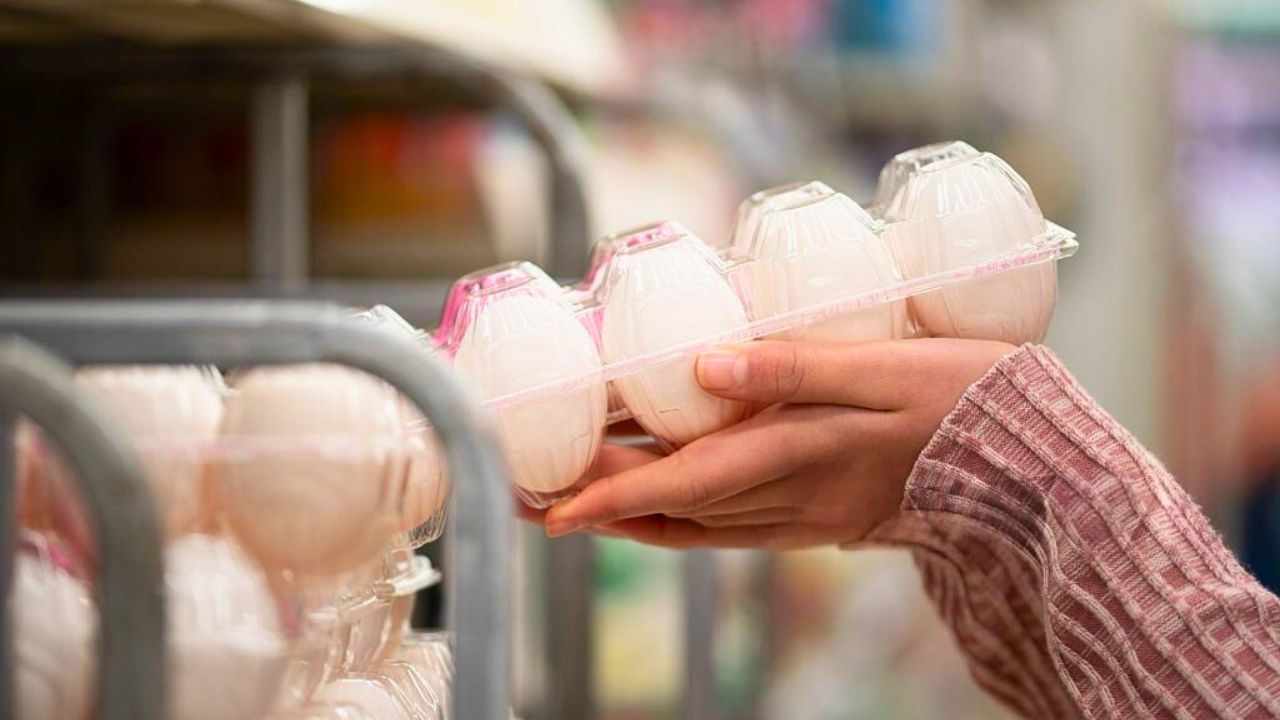
USDA’s egg market report shows holiday demand is moving prices going into Christmas week
Holiday grocery runs are colliding with a volatile egg market, and you are feeling it in the dairy aisle. As Christmas week approaches, the latest federal data on supply, demand, and disease pressures shows that seasonal buying is only one piece of a much larger pricing puzzle that has been building for several years.
Instead of a simple story of prices marching straight up or down, you are navigating a market where wholesale quotes, retail promotions, and flock health all tug in different directions. Understanding how the United States Department of Agriculture (USDA) tracks those forces gives you a clearer view of why a dozen eggs might be a bargain in one store and a budget shock in another as you plan your holiday menus.
How USDA’s egg indicators frame the holiday market
When you hear that USDA has flagged movement in the egg market heading into Christmas, what sits behind that signal is a web of production, inventory, and demand metrics. The agency’s Agricultural Marketing Service compiles a Weekly Shell Egg Demand Indicator that is explicitly described as a Calculated estimate of demand for shell eggs based on current production and on inventory clearance rate, which means it is trying to capture how quickly eggs are leaving warehouses relative to how many hens are laying. If inventories tighten while output holds steady, the indicator reads stronger demand, a pattern that often emerges when households stock up for baking and big breakfasts in late December.
For you as a shopper or as a buyer for a restaurant or bakery, that demand estimate matters because it helps explain why prices can shift even when cartons still look plentiful in the cooler. The same USDA report notes that Demand for shell eggs is inferred rather than directly counted, so the agency is essentially translating how quickly eggs clear the system into a single number that market participants watch. When that number rises going into a holiday week, it signals that retailers may need to pay more to secure supply, even if they choose to shield you from the full impact at the checkout line.
Holiday demand meets a history of price swings
Seasonal demand would be easier to manage if egg prices were otherwise calm, but you are walking into a market that has already been through several waves of volatility. Earlier this year, federal analysts documented how wholesale prices climbed to record territory, then retreated as production recovered and supply chains adjusted. They also highlighted that retailers sometimes respond to those spikes by absorbing losses, noting that When wholesale prices spike, retailers occasionally and temporarily have sold eggs at a loss to keep shoppers coming through the doors.
That pattern matters as you compare prices from Thanksgiving through Christmas, because it shows that the shelf tag does not always move in lockstep with the underlying market. The same federal chart work points out that retail prices fell after wholesale quotes came down from their all time highs by February 2025, illustrating how quickly conditions can flip once supply improves. As you plan your holiday grocery list, you are essentially stepping into the latest chapter of a story in which short term demand surges, like Christmas baking, sit on top of longer arcs of rising and falling wholesale costs.
Avian flu’s long shadow over your holiday dozen
Behind the price sticker on your holiday dozen is a flock health crisis that has reshaped the industry over several seasons. Outbreaks of highly pathogenic avian influenza did not start this winter, and they are still reverberating through the supply chain that fills your local egg case. Public health and agriculture officials have traced the current era of volatility back to earlier waves of H5N1, noting that Outbreaks of H5N1 were first detected in the U.S. in 2022 and are considered to be the main driver behind the years long volatility in egg prices that you have been living through.
Those early outbreaks set the stage for the current holiday season by shrinking the national laying flock and forcing producers to rebuild capacity just as demand kept growing. Analysts looking ahead into 2025 have warned that egg prices are likely to shoot up even more as the industry continues to battle the disease and absorb higher biosecurity and production costs. When you see a higher price on a carton in the run up to Christmas, it is not only reflecting this week’s demand for quiches and cookies, it is also echoing several years of disease pressure that have made every hen more valuable.
The “Big egg drop” and what it means for supply
The most recent wave of avian flu damage has been especially severe, and it is directly relevant to how tight the market feels as you shop for Christmas brunch. Industry reporting describes a Big egg drop tied to the latest highly pathogenic avian influenza cycle, which hit commercial flocks just as producers were trying to stabilize after earlier losses. According to that account, The HPAI wave from mid October 2024 to March 2025 resulted in the loss of 50.7 m egg laying hens, a staggering reduction that would be difficult to absorb even in a quiet demand period.
For you, that figure is not an abstraction, it is the reason some stores feel better stocked than others and why certain sizes or specialty labels may be missing or priced sharply higher. The same reporting notes that producers are still working through the aftermath of that wave, with a pause in HPAI offering some breathing room but not an instant fix for the lost capacity. As Christmas week arrives, the hens that remain are carrying the weight of both everyday breakfast habits and special occasion cooking, which tightens the margin for error when demand jumps.
How retailers juggle wholesale costs and holiday expectations
Even with disease pressure and seasonal demand pushing in the same direction, you do not always see a one to one translation into the price you pay at the register. Supermarkets and big box chains treat eggs as a traffic driver, and they often make strategic decisions about how much of a wholesale increase to pass through during key shopping weeks. Federal analysts have documented that Jun spikes in wholesale prices have sometimes led retailers to sell eggs at a loss, at least temporarily, to avoid alienating budget conscious shoppers who expect to find affordable staples when they are filling carts for the holidays.
That strategy can work in your favor in the short term, especially if you are willing to shop around or take advantage of loyalty card promotions that quietly subsidize egg prices. Over time, however, retailers need to recoup those losses, which can mean sharper increases once the peak shopping window passes or more limited discounting on other items. As you compare prices between chains in the days before Christmas, you are essentially seeing different philosophies about how to balance customer goodwill against the reality of higher input costs and thinner margins.
What USDA’s demand signal can and cannot tell you
Because the Weekly Shell Egg Demand Indicator is built on production and inventory data, it gives you a useful, if indirect, window into how tight the market is becoming as Christmas week unfolds. When the indicator shows inventories clearing faster than usual relative to the size of the laying flock, it suggests that buyers are stepping up purchases ahead of the holiday, which can put upward pressure on wholesale prices even before you notice any change on the shelf. The fact that the indicator is explicitly described as a Calculated estimate reminds you that it is a model, not a literal count of every egg sold, but it still captures the broad direction of demand.
At the same time, you should treat that signal as one piece of a larger picture rather than a precise forecast of what you will pay for a dozen large Grade A eggs on Christmas Eve. The indicator does not account for how aggressively individual retailers choose to promote eggs, how much inventory they have already locked in through contracts, or how willing they are to sacrifice margin to keep prices low during a competitive shopping period. It also cannot fully reflect local disruptions, such as a regional outbreak of HPAI or a transportation bottleneck, that might leave one metro area short of supply while another remains well stocked.
Why your region’s experience may differ from the national story
National averages can mask the reality that you face in your own zip code, especially during a holiday week when demand patterns vary widely. In areas with a dense network of supermarkets and warehouse clubs, competition can blunt the impact of higher wholesale prices as chains fight to be your primary holiday stop. In more rural regions, or in communities that rely heavily on a small number of suppliers, the loss of flocks during the latest HPAI wave can translate more directly into higher prices or thinner shelves, particularly when everyone is shopping for the same baking ingredients at once.
The disease data underscores that point, since the loss of 50.7 m hens did not fall evenly across states or production systems. If your region was hit harder, local producers may still be rebuilding flocks, which can keep wholesale prices elevated even if the national indicator shows some easing. Conversely, if your area escaped the worst of the outbreak or has strong ties to unaffected suppliers, you may see more stable pricing, with holiday demand showing up more in temporary out of stocks than in dramatic price jumps.
How to shop smarter for eggs in Christmas week
Knowing how the market works gives you leverage as you navigate the final grocery run before Christmas. Because retailers sometimes sell eggs at a loss during peak periods, you can benefit by comparing circulars and apps like Flipp or individual store apps from chains such as Kroger, Walmart, or Safeway to spot which outlets are using eggs as a featured promotion. If you see a sharp discount on a store brand dozen while national brands remain higher, that is often a sign that the retailer is selectively absorbing costs to keep your overall basket attractive.
You can also adjust your buying strategy to the realities of supply and demand that USDA is tracking. If the Weekly Shell Egg Demand Indicator is signaling stronger demand and you know your household will need multiple dozens for baking, brunch, and leftovers, it may make sense to buy slightly earlier in the week, before any last minute tightening filters through to shelf prices or availability. At the same time, you can consider flexible recipes that use fewer eggs or substitute ingredients in some dishes, reserving the freshest eggs for centerpieces like meringue pies or breakfast casseroles where quality is most visible.
Looking beyond Christmas to the next phase of the egg market
Once the holiday rush passes, the forces shaping your egg prices will not simply reset to normal. The industry still has to work through the structural damage from H5N1, rebuild the national flock, and adapt to higher ongoing biosecurity costs that are now baked into production. Analysts who have tracked the crisis from the first Outbreaks of H5N1 in 2022 through the latest wave warn that this is a years long adjustment, not a single season shock, which means you should expect some level of price and availability swings to persist into the new year.
For you, that longer horizon suggests a shift from short term coping to more deliberate planning. If eggs are a staple in your household or business, it may be worth watching USDA’s indicators more closely, experimenting with recipes that stretch each dozen further, or even exploring local producers who can offer more predictable supply outside the mass market system. As Christmas week reminds you, eggs sit at the intersection of animal health, global disease dynamics, and everyday cooking, and understanding that intersection is the best way to keep your holiday traditions intact without losing control of your budget.
Like Fix It Homestead’s content? Be sure to follow us.
Here’s more from us:
- I made Joanna Gaines’s Friendsgiving casserole and here is what I would keep
- Pump Shotguns That Jam the Moment You Actually Need Them
- The First 5 Things Guests Notice About Your Living Room at Christmas
- What Caliber Works Best for Groundhogs, Armadillos, and Other Digging Pests?
- Rifles worth keeping by the back door on any rural property
*This article was developed with AI-powered tools and has been carefully reviewed by our editors.