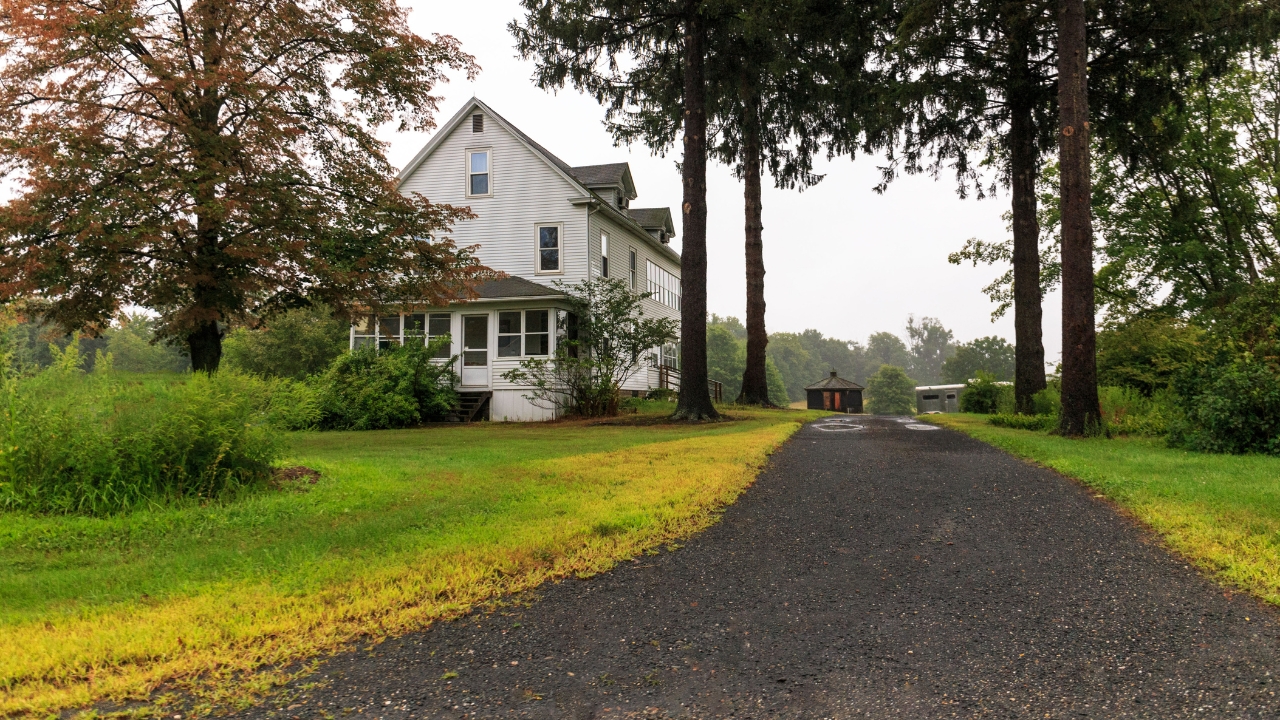
What finally helped when the grass by the driveway wouldn’t fill in
Along countless driveways, the lawn looks fine until it reaches the concrete, then suddenly turns to yellow strips, bare soil or a ragged dirt trench. Homeowners reseed, water and fertilize, only to watch the edge recede again each season.
That stubborn gap is rarely about bad luck. It usually comes from a stack of small but predictable stresses: heat, compaction, salt, scalping and neglect. Once those are identified and addressed in order, the grass beside a driveway can finally knit together and stay that way.
Why the edge dies in the first place
Concrete and asphalt act like heat sinks. In sunny weather, the hard surface warms up, then radiates that heat into the narrow strip of soil beside it. Lawn enthusiasts point out that concrete heats up and evaporates moisture from the surrounding soil faster than the rest of the yard, so the edge dries out first.
That same narrow band also tends to be compacted. Tires roll across it when drivers cut a corner, foot traffic cuts from driveway to door, and edging tools repeatedly strike the same line. Over time, the soil becomes dense and roots struggle to penetrate more than a few centimeters, which leaves the turf shallow rooted and easy to scorch.
Winter and early spring add another layer of stress. Where snow and ice are treated, plows and shovels push salty slush to the side, and meltwater carries that salt into the soil. Specialty mixes describe this problem directly, marketing seed as a blend of salt loving grasses that prevent winter salt damage, as in the Green Thumb curbside and driveway repair mix.
Heat, compaction and salt combine with mowing habits. Many homeowners like a tightly clipped edge, but commercial advice warns that when people mow their grass too short near hardscape, the already stressed plants lose leaf area and energy reserves and cannot recover.
Water, soil and the hidden design problem
Water often misses the driveway edge entirely. Irrigation heads are usually set to avoid spraying cars or pavement, and hand watering tends to focus on the more visible center of the lawn. Professionals urge owners to make sure that grass at the margin actually gets water, because if it is not getting any water in hot spells, it will thin out regardless of fertilizer or seed, a point reinforced in guidance on how to keep that grass alive beside a driveway.
Soil quality at the edge is often worse than in the rest of the yard. During construction, contractors may have backfilled along the driveway with gravelly subsoil, concrete washout or thin topsoil that dries quickly. One landscaping discussion recommends that owners get themselves some topsoil, mix it with triple mix to boost nutrients, then seed and water that area more frequently, advice that highlights how much better soil can change the outcome.
Design also matters. A perfectly straight strip of turf pressed against a wide slab leaves no buffer for heat or salt. Some lawn services suggest rethinking that layout entirely and installing pavers, pebbles or a narrow planting bed along the driveway, which reduces the amount of grass forced to live in the harshest microclimate and reflects the idea that owners should sometimes think pavers, pebbles or a mulch strip instead of insisting on grass right to the edge, as seen in guidance on why grass will not next to hot hardscape.
Where owners decide that grass is not the right answer, some turn the problem zone into a feature. One homeowner documented a project to eliminate dead grass at the back of a driveway by installing a gravel path along the route they used to walk from the car into the house, showing how a simple gravel path can be more practical than constant reseeding.
What finally works to fill in the strip
For those determined to keep turf beside the driveway, the most reliable fixes combine several steps. First, the soil must be loosened. Advice from lawn forums suggests aerating along the edge with a fork or core aerator so roots can grow deeper and access more moisture. In the same spirit, some contributors joke that if a lawn is self edging because the grass keeps dying back from the concrete, the owner should either accept the strip or address the underlying compaction, with one comment dryly suggesting people simply get some green paint for the grass and, right after that, noting that if people keep scalping the edge, the grass will die, as captured in a discussion where a user named 2pale4you explains that if people keep hitting the edge, the grass will die.
Next, the soil profile needs improvement. Following the recommendation to get topsoil and triple mix, many homeowners spread a narrow band of enriched soil along the driveway, feathering it into the existing turf so there is no sharp lip that could be scalped by the mower. This new layer gives roots a cooler, more moisture retentive medium and dilutes accumulated salt.
Seed choice also matters. Where deicing is common, specialists point to salt tolerant species such as Bermudagrass, which appears at the top of a golden list of the best salt tolerant grasses for a lawn, even though it is not always readily available in stores, as described in a guide to best salt tolerant options. In colder regions, mixes like the Green Thumb blend aim to combine similar resilience with cool season performance.
Once the site is prepared and seeded, consistent moisture is the deciding factor. Big box retailers outline basic grass planting options and methods, stressing that once the cause of bare spots has been addressed, owners must keep the seedbed evenly damp until the new grass is established, a step that many skip in the rush to get back to normal mowing. Guides on repairing bare spots reinforce that without this follow through, even the right seed will fail along a driveway edge.
At the same time, mowing height should be raised slightly along the pavement. Allowing an extra centimeter or two of leaf helps shade the soil, cool the crowns and reduce evaporation. Combined with a sharper blade and slower passes near the concrete, this change cuts down on scalping and mechanical damage that otherwise reset the repair effort every week.
When the best fix is giving up on grass
Some homeowners eventually decide that a green border is not worth the repeated effort. They may be tired of string trimmers nicking cars, or worried that herbicide overspray from attempts to kill weeds along the driveway could hit desirable plants, a concern echoed by one user who compared different sprayers and settled on a hand sprayer bottle from the dollar store because it was easier to adjust the spray and avoid trashing shrubs if the spray accidentally hit them, advice shared in a post about using specific sprayers that are to control.
In those cases, gravel, pavers or a mulched planting strip can be more honest and more attractive. A narrow bed with drought tolerant perennials or small shrubs absorbs heat instead of reflecting it onto grass, and drip irrigation can be tuned to keep roots moist without wasting water on concrete.
The pattern is clear across professional advice and homeowner experience. The strip of lawn beside a driveway fails for specific, fixable reasons, not random fate. Once owners address heat, compaction, salt, water and soil together, the bare band that refused to fill in often becomes just another part of a healthy yard, or is replaced with a design that finally suits the conditions.
Like Fix It Homestead’s content? Be sure to follow us.
Here’s more from us:
- I made Joanna Gaines’s Friendsgiving casserole and here is what I would keep
- Pump Shotguns That Jam the Moment You Actually Need Them
- The First 5 Things Guests Notice About Your Living Room at Christmas
- What Caliber Works Best for Groundhogs, Armadillos, and Other Digging Pests?
- Rifles worth keeping by the back door on any rural property
*This article was developed with AI-powered tools and has been carefully reviewed by our editors.