When power comes back, the order to turn things on so you don’t trip breakers
When the lights finally flick back on after an outage, what you do in the next few minutes can decide whether your home stays powered or you end up in the dark again. Bringing everything online at once can overload your system, trip breakers, and even stress appliances that just survived a rough shutdown. A deliberate order for turning things back on protects your wiring, your equipment, and your sanity the next time the grid stumbles.
Think of it as a restart sequence for your house: you confirm the power is really back, reset any tripped breakers correctly, then add loads in stages instead of all at once. With a little planning, you can move from candles and flashlights to a stable, fully powered home without gambling on whether the main breaker will hold.
Start before the outage: set yourself up to succeed
Your best defense against tripped breakers when power returns actually begins while the power is still off. As soon as the outage hits, you should confirm whether the problem is only in your home or part of a wider failure by checking a few rooms and then looking outside to see if neighbors are affected, a step that aligns with guidance that tells you to Confirm what is happening before you act. If nearby homes are still lit, the issue may be in your panel or service line, and you should avoid flipping breakers blindly until a professional has weighed in.
Once you know the outage is broader, your next move is to reduce the load that will slam back onto your circuits the moment power is restored. Safety experts stress that you should not panic and that you should calmly Check whether the problem is in your home or the power supplier’s electrical system, then start switching off or unplugging nonessential devices. That early discipline, turning off big draws like space heaters and window air conditioners, is what makes it possible to bring your home back online in a controlled order instead of letting every motor and heating element surge at once.
Why everything tripping at once is not a fluke
If you have ever watched the power come back only to hear a click and lose it again, you have already seen what happens when too much demand hits at the same instant. Electrical pros describe how, after an outage, every device that was left on tries to start together, which can overload the main breaker and cause it to trip as soon as service is restored, a pattern echoed in a technical discussion that notes that After an outage, a heavily loaded circuit is more likely to trip. That is not a mysterious glitch, it is your protection system doing its job when the demand exceeds what the wiring and breaker are designed to handle.
Behind that behavior is a simple physics problem: high inrush current. When the power turns back on, motors, compressors, and power supplies all draw a spike of current that can be several times higher than their normal running level, and electricians warn that High inrush current on all circuits at once can overload the main breaker. That is why your restart sequence matters so much: by staggering those surges, you keep the total load under the breaker rating instead of stacking every spike on the same second.
Understand what your breakers are actually protecting
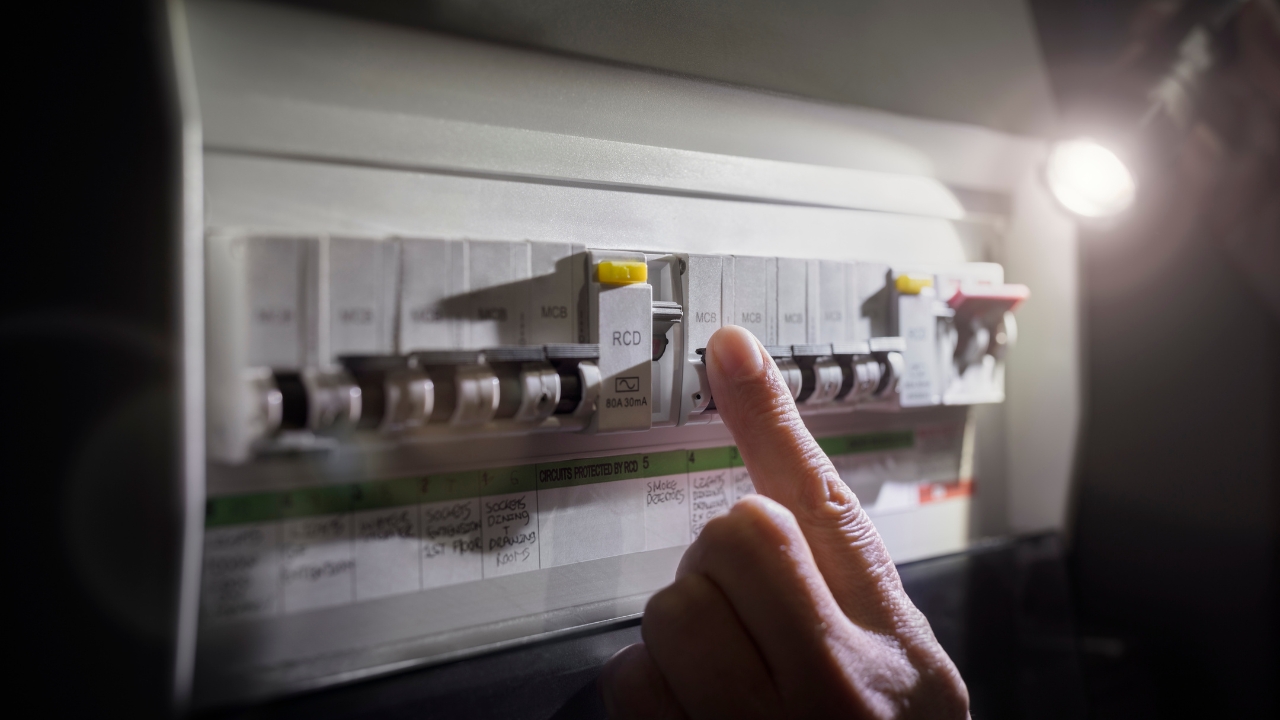
To bring power back intelligently, you need a basic sense of what your breakers do and how to reset them correctly. Each breaker is a switch that protects a specific circuit from overheating by cutting power when current exceeds its rating, and service guides explain that the first step is to Find the breaker panel in your home and identify which breaker has tripped. That tripped breaker will usually sit between ON and OFF, and you must move it fully to OFF before turning it back on so the internal mechanism can reset.
When you are dealing with a partial outage, not a full neighborhood blackout, the order of operations is even more important. Utility guidance on how to Reset Breakers recommends that you first turn off light switches and unplug appliances in rooms that have lost power, then locate the tripped breaker and reset it, and only then plug devices back in. That sequence prevents a marginal circuit from immediately slamming back into an overloaded state and gives you a chance to notice if a particular appliance is the trigger.
During the outage: what you turn off matters later
Every outage is an opportunity to quietly prepare for a smoother restart. Emergency planners advise you to keep refrigerator and freezer doors closed to preserve food and to use a generator only outdoors and away from windows, and they also emphasize that you should Keep those doors shut rather than repeatedly checking inside. At the same time, you should walk through your home and turn off or unplug noncritical loads so they are not all waiting to roar back to life the instant the grid recovers.
That includes sensitive electronics and anything with a motor or heating element. Utility advice highlights that you should Unplug appliances and lamps such as Microwaves, televisions, and computers to protect them from surges when electricity is restored. The same logic underpins a popular life tip that when the power goes out you should turn everything off, because leaving devices on so they all restart together increases the odds of a secondary blackout, a point echoed in advice that starts with When your power goes out and warns against that temptation.
The safe way to bring circuits back after the lights return
When power is finally restored to your street, resist the urge to flip every switch at once. Before you touch the panel, walk through your home and confirm that major appliances are still off, then go to the breakers and reset any that are tripped by moving them firmly to the OFF position and then back to ON, a step that aligns with guidance that says Before you turn the circuit breaker back on, you should make sure it is fully switched to OFF first. That simple reset technique prevents half-set breakers that chatter or trip again under even modest load.
Once your panel is stable, you can begin your restart sequence. Start with low demand items like lights and small electronics, then move to medium loads such as televisions and routers, and only then bring on heavy hitters like electric ovens, clothes dryers, and central air. If you are unsure about the condition of your system after a storm, remember that community forums for professionals warn that if YOU ARE NOT QUALIFIED ELECTRICIAN, you should exercise extreme caution and avoid experimenting with damaged equipment. In that situation, your safest order of operations may be to leave certain breakers off until an inspection is complete.
Prioritizing loads: what comes on first, second, and last
Thinking in tiers helps you decide what deserves power first. Your top tier is safety and preservation: lights in key rooms, your refrigerator and freezer, medical devices, and communication tools like your modem and phone chargers. Preparedness guides for planned outages recommend that you Plug In Appliances Gradually and Turn your appliances on one by one, starting with the most important ones like your refrigerator, precisely to avoid a sudden jolt to your home’s electrical system.
Your second tier is comfort and routine: televisions, computers, and smaller kitchen appliances that make life easier but are not critical in the first minutes after power returns. The final tier is high draw equipment such as electric ranges, space heaters, and large air conditioners, which you should add only after the first two tiers are running without tripping anything. This staged approach mirrors the logic behind Testing For Circuit Overload, where you add devices one at a time to see which combination pushes a circuit too far, and it gives you a built in troubleshooting path if a breaker does trip again.
How inrush current and motors shape your restart order
Not all loads are equal when it comes to that first second of power. Electric motors, from furnace blowers to well pumps, draw a surge of current when they start, and industrial research notes that When an electric motor starts directly on line, it can draw 6 to 8 times its rated current, which not only wastes energy but also causes mechanical stress. In a home, you may not have soft starters on your appliances, so your only real tool is timing: you avoid starting multiple big motors at the same instant.
That is why your restart sequence should separate motor loads from each other. Let your refrigerator cycle on and settle before you start a central air compressor, and avoid running a well pump, pool pump, and clothes dryer all in the same minute if you can help it. Electricians who see main breakers trip after outages often trace the problem to that stack of simultaneous surges, and community advice that warns about When the power turns back on and all your circuits turn on together is essentially a reminder to treat motors with extra respect in your power up order.
Spotting overloads and knowing when to stop
Even with a careful sequence, you may discover that a particular circuit simply cannot handle the combination of devices you want on it. Home warranty specialists point out that the top three causes of a breaker that keeps tripping are overloaded circuits, faulty or damaged wiring, and sudden voltage spikes, and they stress that Decisions about what to run together can be the difference between a stable system and a chronic nuisance. If a breaker trips every time you add one more appliance, that is a sign to rethink your load distribution rather than to keep flipping it back on.
Professional troubleshooting guides list Common Reasons a Circuit Breaker Keeps Tripping, including an Overloaded Circuit from Running Too Many Devices at Once and Short Circui problems, and they recommend that you avoid overloading and consult a professional if the pattern continues. Another service manual underscores that you should Never force a breaker that will not reset or that trips repeatedly, because something deeper is going on. Your restart order is not just about convenience, it is also a diagnostic tool that can reveal which circuit is at its limit.
Turn the experience into a plan for next time
Every outage gives you data about how your home behaves under stress, and you can turn that into a standing plan so the next restart is smoother. If you notice that one bedroom circuit trips whenever a space heater and a gaming PC run together, treat that as a permanent rule and adjust your habits, much like the trial and error described in When your circuit trips and you unplug devices to know what caused the overload. Write down a simple three step sequence for your household: which breakers to check, which appliances to power first, and which ones to leave for last.
You can also rehearse parts of that plan during planned maintenance outages or generator tests. Preparedness checklists that tell you to Turn devices on gradually during a scheduled cut are essentially giving you a safe environment to practice your own order of operations. By the time the next storm or grid failure hits, you will not be improvising in the dark, you will be following a tested routine that keeps your breakers steady and your home running.
Like Fix It Homestead’s content? Be sure to follow us.
Here’s more from us:
- I made Joanna Gaines’s Friendsgiving casserole and here is what I would keep
- Pump Shotguns That Jam the Moment You Actually Need Them
- The First 5 Things Guests Notice About Your Living Room at Christmas
- What Caliber Works Best for Groundhogs, Armadillos, and Other Digging Pests?
- Rifles worth keeping by the back door on any rural property
*This article was developed with AI-powered tools and has been carefully reviewed by our editors.