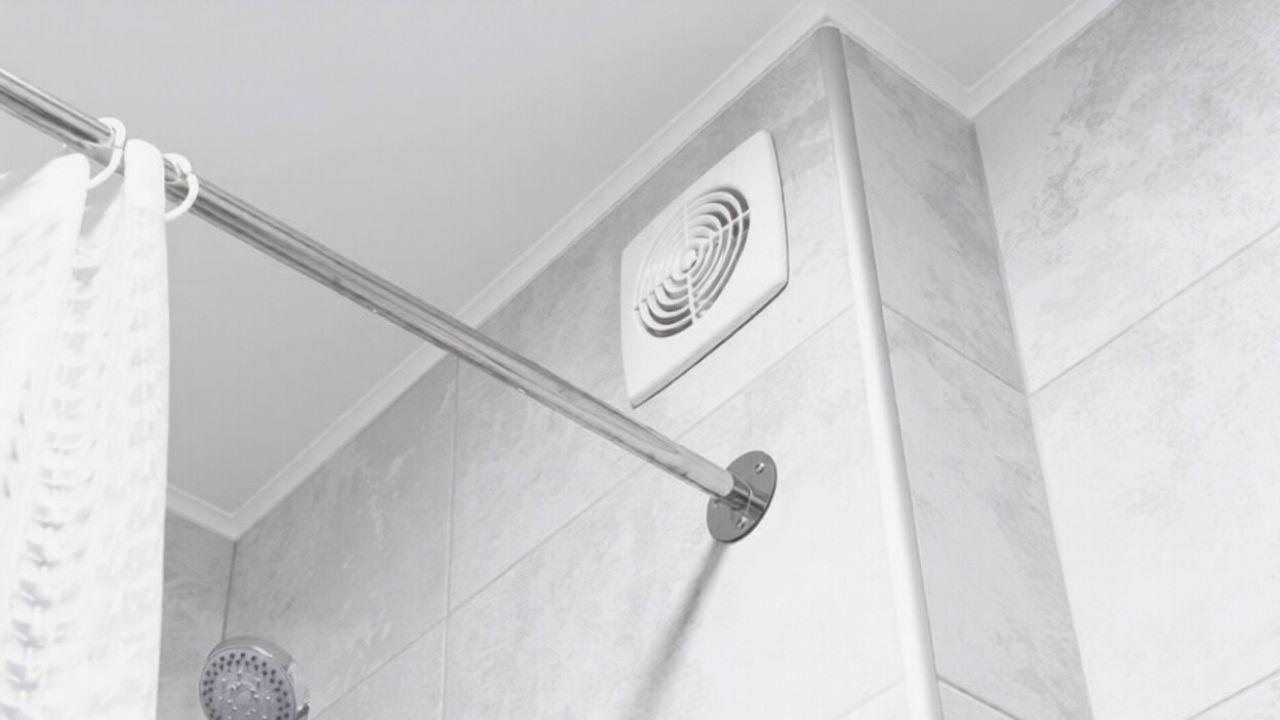
Why bathroom fans are failing to fix humidity in many houses
Across thousands of homes, bathroom ceilings hum with exhaust fans that sound busy but leave mirrors fogged, grout damp, and paint slowly peeling. The problem is not that ventilation is a bad idea, it is that the way many fans are chosen, installed, and used makes them far less effective than you expect. If you want your fan to actually control humidity instead of just making noise, you need to look beyond the switch on the wall and into the details of sizing, ducting, and day‑to‑day operation.
Why your fan’s job is harder than you think
You ask a lot of a small box of plastic and metal when you expect it to clear a room full of hot steam in a few minutes. A typical shower can dump a surprising amount of moisture into the air, and if your fan is undersized or starved of fresh replacement air, it simply cannot keep up. Many homeowners assume that any ceiling grille equals protection, but humidity control depends on how much air the fan can actually move out of the room and how consistently it does that during and after each shower.
Manufacturers design bathroom fans to remove moisture from the room, not just to circulate air in place, and that distinction matters when you are judging performance. Guidance on Reasons Why Your Bathroom Fan Is Not Removing Steam stresses that if the fan cannot exchange the room’s air volume several times per hour, it will be less effective at clearing steam. In practice, that means a small, quiet unit that looks sleek in a renovation may be doing almost nothing against the volume of moisture your family generates every morning.
Undersized and code‑minimum fans
One of the most common reasons your bathroom stays muggy is that the fan was never powerful enough for the space in the first place. Builders often install the smallest unit that satisfies local code on paper, which may only require a modest extraction rate that assumes short showers and ideal ducting. In reality, a large primary bathroom with a walk‑in shower, double vanity, and separate tub can need far more airflow than a compact powder room, yet both may receive the same basic fan.
Industry commentary notes that Most new homes go with a code‑minimum extract fan, often wired to a simple on or off switch or a short run‑on timer. That setup might satisfy inspection, but once you add long runs of flexi‑duct and real‑world usage, performance can drop drastically. If your fan’s rated capacity never matched your bathroom’s size and layout, no amount of wishful thinking at the light switch will make it clear humidity quickly.
Improper installation and venting mistakes
Even a well‑sized fan can fail if it is installed poorly or vented to the wrong place. When the duct run is too long, sharply kinked, or reduced in diameter, the fan has to work against extra resistance and moves far less air than its label suggests. In some houses, the fan is not vented outdoors at all, instead dumping moist air into an attic or roof cavity where it can condense on cold surfaces and eventually feed mold or rot.
Guidance on bathroom ventilation warns that Critical errors include venting into attic spaces, which can cause serious moisture damage, and using undersized ductwork that reduces efficiency. Installers are also advised that when installing a bathroom exhaust fan vent, they must make sure that it does not vent into the attic and instead When possible vents outside. If your fan terminates under eaves or into a soffit without a proper outlet, much of the moisture you think you are expelling may be lingering just above your ceiling.
Poor placement and weak air circulation
Where the fan sits in the ceiling has a direct impact on how well it captures steam. If it is tucked over a toilet in the far corner while your shower is on the opposite wall, the fan may be pulling mostly dry air while the heaviest moisture hugs the ceiling above the shower. You also need a path for dry air to enter the room, usually under the door, so the fan can draw a steady stream of replacement air instead of just spinning in a stagnant pocket.
Best practice is to Center your exhaust fan in the bathroom ceiling for even air circulation, positioning it between the shower and the door so it can intercept rising steam and pull in drier air from the hallway. If your door sweeps tightly against the floor, trimming it slightly or adding a discreet grille can improve airflow underneath for proper air circulation. Without that basic attention to placement and air paths, even a powerful fan can leave pockets of humidity untouched.
Misuse and unrealistic run times
Many fans fail not because of hardware, but because of how you use them. Turning the fan on only after the room is already filled with steam, or switching it off the moment you step out of the shower, gives it almost no chance to remove the bulk of the moisture. In busy households, people may also skip the fan entirely to save noise or energy, then wonder why the bathroom smells musty and the ceiling paint starts to bubble.
Guidance on Best Practices for Using Your Bathroom Fan explains that Timing Guidelines for Maximum Effectiveness recommend you start your fan at least several minutes before a hot shower and keep it running for a significant period afterward so it can actually clear humid air. That same advice notes that proper duct sealing prevents moisture from leaking into cavities and that a quality fan can last up to 15 years with proper maintenance. If you treat the fan as a brief courtesy rather than a core part of your bathroom routine, you are almost guaranteeing lingering humidity.
Neglected cleaning and maintenance
Over time, dust, lint, and even stray insulation can clog the grille and internal blades of your fan, cutting airflow dramatically. A unit that once worked well can become little more than a noisy decoration if you never remove the cover and clean it. The same is true of the duct: if the vent hood outside is jammed with debris or the backdraft damper is stuck, the fan has to fight to push air out, and much of the moisture simply stays in the room.
Home performance advice on Why Bathroom Ventilation Matters notes that mold and mildew growth on tiles, grout, and walls is a clear sign that humidity is not being controlled, and it recommends that you regularly clean vents and consider replacement if the fan still struggles. Electrical specialists also stress that you should Clean Your Ventilation System Regularly, including any filters that need occasional changing, because even a thin layer of grime on blades and housings can cut performance. If your fan has grown louder over the years while clearing less steam, a careful cleaning and inspection is overdue.
Hidden damage, wear, and vent path problems
Bathroom fans live in a harsh environment, exposed to warm, moist air every day, and that takes a toll on motors, bearings, and electrical components. As parts wear, the fan may still spin but at a lower speed, or it may vibrate and rattle instead of moving air efficiently. Moisture can also corrode metal housings and fasteners, leading to gaps where air leaks into the ceiling cavity instead of traveling down the duct.
Technical troubleshooting guides explain that Their primary function exposes them to constant moisture and humidity, which can damage motors, wiring, and housings and lead to the problems mentioned above. Repair specialists also advise that if your fan is running but not clearing moisture, you should Check the Vent Path for obstructions or crushed sections that prevent moisture from being expelled properly. A fan that has quietly deteriorated over a decade can be just as ineffective as one that was undersized from day one.
Why relying on the fan alone is not enough
Even a perfectly chosen, installed, and maintained fan has limits if the rest of your bathroom works against it. Long, hot showers with the door closed and no window cracked can overwhelm the system, especially in small, tightly sealed homes. If you dry laundry on racks in the bathroom, leave wet towels piled in corners, or never heat the room properly, you create a constant source of moisture that a single fan cannot fully overcome.
Ventilation experts caution that Relying Solely on Exhaust Fans Without Proper Maintenance undermines your efforts, and that while bathroom fans are essential for reducing humidity, they require regular cleaning and should be paired with other strategies like opening windows or using moisture‑resistant finishes to significantly improve bathroom air circulation. If you treat the fan as a magic fix while ignoring habits and design choices that trap moisture, you will keep seeing fogged mirrors and damp corners no matter how often you flip the switch.
How to tell your fan is failing and what to change
Persistent condensation is not just an annoyance, it is an early warning that your ventilation is not doing its job. If your bathroom feels clammy long after a shower, if you see mold spots creeping along caulk lines, or if the paint near the ceiling starts to peel, you are looking at the consequences of excessive moisture. Those signs suggest that the fan, the duct, or both need attention before minor irritation turns into structural damage or a serious mold problem.
Inspection guidance lists Excessive, Prolonged Humidity In Your Bathroom as a key issue resulting from bath fan venting problems and recommends having the ducting examined by a professional if you suspect trouble. Practical repair advice also notes that your bathroom fan is designed to help keep your home free from moisture and that if it is not doing so, you should review Your fan’s ability to remove moisture from the room and consider whether it is time for an upgrade. If you combine a right‑sized, well‑installed fan with better usage habits and regular maintenance, you can finally expect the quiet workhorse in your ceiling to live up to its promise.
Turning a noisy box into real humidity control
Once you understand why so many bathroom fans underperform, you can start to stack the odds in your favor. That begins with confirming that your current unit is appropriate for the room’s size and layout, then checking that the duct is short, smooth, and properly terminated outdoors. From there, you can adjust your routine so the fan runs long enough to matter, and you can schedule simple cleaning and inspections that keep it working close to its rated capacity.
Practical guides on Proper Use of Your Bathroom Fan emphasize that as we said above, the way you operate the fan can make it more or less effective, and that combining correct use with sound installation is what finally clears steam. If you treat the fan as part of a broader moisture strategy, rather than a decorative afterthought, you can turn that humming box in the ceiling into a genuine tool for protecting your finishes, your indoor air, and your long‑term repair budget.
Like Fix It Homestead’s content? Be sure to follow us.
Here’s more from us:
- I made Joanna Gaines’s Friendsgiving casserole and here is what I would keep
- Pump Shotguns That Jam the Moment You Actually Need Them
- The First 5 Things Guests Notice About Your Living Room at Christmas
- What Caliber Works Best for Groundhogs, Armadillos, and Other Digging Pests?
- Rifles worth keeping by the back door on any rural property
*This article was developed with AI-powered tools and has been carefully reviewed by our editors.