Why old houses struggle with modern HVAC setups
When you try to marry a century‑old house with a sleek modern HVAC system, you are really forcing two very different eras of building technology to coexist. The charm that drew you to thick plaster walls, arched doorways, and original woodwork is often the same reason your heating and cooling equipment struggles to keep up. Understanding why these homes fight contemporary systems is the first step toward choosing upgrades that respect the architecture while finally delivering the comfort and efficiency you expect.
Instead of assuming your house is “just drafty,” it helps to see the specific structural, electrical, and mechanical obstacles that stand between you and reliable climate control. Once you can name those obstacles, you can work with contractors to design solutions that fit your home’s bones, rather than forcing a one‑size‑fits‑all system into walls and attics that were never built for it.
The hidden conflicts between old bones and new equipment
Most older houses were designed around natural ventilation, fireplaces, and maybe a gravity furnace, not a central air conditioner with a high static‑pressure blower. That history shows up in the details: narrow wall cavities, shallow joist bays, and plaster and lath that crack if you look at them the wrong way. When you try to insert full‑size duct trunks into those tight spaces, you quickly discover that the structure itself limits what kind of system you can install and how much air it can move.
On top of that, many older properties still rely on original or minimally updated electrical and mechanical infrastructure. You might be dealing with knob‑and‑tube wiring, undersized panels, or aging gas lines that were never meant to support the power draw of a modern compressor or the controls of a variable‑speed furnace. Contractors who specialize in efficient solutions for AC installation in older homes point to outdated wiring, limited space for ductwork, and existing structural quirks as major drivers of both complexity and cost, especially when you want to avoid tearing into historic finishes.
No ducts, tight chases, and the physics of limited space
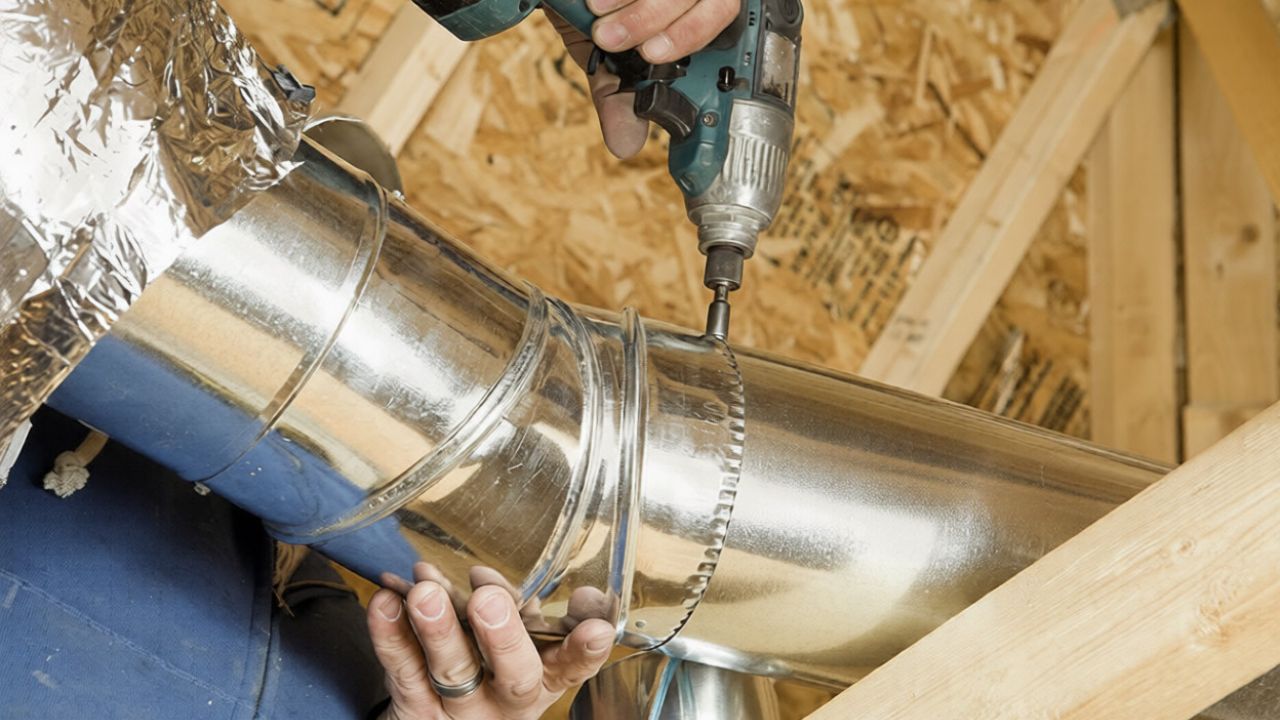
If your house predates mid‑century forced‑air systems, it may have no ductwork at all, or only a few oversized chases serving a basement furnace. That absence is not a minor inconvenience, it is a fundamental design constraint. To add full‑size supply and return ducts, you often have to carve out new chases through closets, soffits, or bulkheads, which can compromise storage, ceiling height, and original trim. Even when you find a path, the available volume in walls and attics may be too small to carry the airflow a conventional system needs to cool or heat distant rooms.
Guides that walk you through HVAC options for old homes highlight recurring problems: no existing ductwork, limited space in walls or attics for new components, and thicker walls that resist modification. Those same thick masonry or plaster assemblies that keep your home quiet also make it harder to snake new runs without extensive demolition. When you try to squeeze ducts into undersized cavities, you increase friction losses, which means the blower has to work harder, energy use climbs, and some rooms still end up starved for conditioned air.
Uneven rooms, poor airflow, and comfort that never quite stabilizes
Even when you do have ducts, older layouts rarely deliver air evenly. Long branch runs, undersized returns, and registers tucked behind radiators or furniture all conspire to create hot and cold spots. You feel it as a living room that bakes while a back bedroom never warms up, or as a second floor that stays stifling long after the thermostat says the setpoint has been reached. That unevenness is not just annoying, it pushes you to overcool or overheat the entire house to satisfy the worst room.
Specialists who focus on improving air flow in older homes note that outdated duct designs, blocked vents, and leaky connections are common culprits. Other reporting on common HVAC issues in older homes points to uneven cooling that creates persistent hot or cold spots, especially on upper levels. When airflow is this compromised, your equipment cycles more often, runs longer, and still fails to deliver consistent comfort, which accelerates wear and tear on every component in the system.
Insulation, infiltration, and why your system feels undersized
Even the best equipment cannot overcome a building envelope that leaks energy in every direction. Many older houses have little or no insulation in walls, minimal coverage in attics, and original single‑pane windows that allow conditioned air to escape and outside air to seep in. That combination forces your HVAC system to fight a constant load, especially in extreme weather, so it feels undersized even when the nameplate capacity looks right on paper.
Analyses of HVAC problems you will probably see in older homes call out insufficient insulation as a primary driver of high energy bills and poor comfort. When walls and attics lack proper thermal resistance, your system has to run longer cycles to maintain setpoints, which increases operating costs and can shorten equipment life. If you size new equipment to overcome those losses without first addressing the envelope, you risk oversizing, which leads to short cycling, humidity issues, and more noticeable temperature swings from room to room.
Electrical and control systems that lag behind
Modern HVAC equipment expects a stable electrical backbone and responsive controls, but many older houses still rely on panels and wiring that were never designed for today’s loads. If your service panel is small or your branch circuits are already crowded, adding a high‑efficiency heat pump or multi‑stage air handler can push the system beyond its safe capacity. That constraint can limit what equipment you can choose, or force you into an electrical upgrade before you ever touch the mechanicals.
Reporting on common HVAC problems in older homes notes that older electrical panels and wiring add a significant layer of complexity to retrofits, especially when you want to install equipment that requires more power. In many older buildings, thermostats and control wiring are also outdated or poorly located, which makes it harder for the system to read actual living conditions. Analyses that focus on addressing HVAC issues in older buildings point out that aging thermostats and controls can lead to inconsistent temperatures and even contribute to indoor air quality problems, including respiratory issues and allergies, when they fail to manage ventilation and filtration effectively.
Why traditional ducted systems often disappoint
When you try to retrofit a standard forced‑air system into an older house, you are asking large, rigid ducts to navigate framing that was never laid out for them. The result is often a maze of compromises: undersized runs, sharp turns, and long horizontal stretches that sap pressure and reduce airflow. Even if you manage to hide most of the ductwork, you may still end up with noisy registers, whistling grilles, and rooms that never quite reach the thermostat setting.
Comparisons between high velocity and conventional systems for older homes describe how traditional ducted setups struggle with the challenge of cooling older homes that have limited space in walls and floors. Those same analyses explain that conventional systems often require extensive remodeling to create duct chases, which can disrupt original finishes and still deliver only marginal airflow improvements. When you combine those structural limits with the uneven insulation and leaky envelopes common in older properties, a standard ducted system can feel like an expensive compromise rather than a true solution.
High velocity, ductless, and other workarounds that actually fit
To get around the space problem, you increasingly see homeowners turn to compact or alternative distribution systems that respect the existing structure. High velocity setups use small, flexible ducts that can snake through tight cavities and land discreet outlets in ceilings or high on walls. Because the ducts are only a few inches in diameter, they can often be threaded through existing framing with minimal demolition, which is especially attractive if you are trying to preserve plaster or historic trim.
Installers who specialize in high velocity HVAC describe using flexible, narrow ducts, typically 2 inches in diameter, that can be snaked through existing walls and floors while delivering both heating and cooling. Other contractors emphasize ductless mini‑splits and small‑format air handlers as part of the broader HVAC challenges and solutions for older homes, since these systems place compact indoor units directly in the rooms that need conditioning. By reducing or eliminating the need for large duct trunks, you can often achieve better comfort with less disruption, even if the equipment itself is more visible than a fully concealed central system.
Smart controls, zoning, and making old systems behave better
Even if you are not ready to replace every component, you can often coax better performance out of an older system with smarter controls and zoning. Traditional single‑zone setups treat your entire house as if it were one uniform space, which is rarely true in an older layout with additions, dormers, and varying sun exposure. By adding multiple thermostats, motorized dampers, or room‑by‑room controls, you can direct heating and cooling where it is actually needed, instead of overconditioning already comfortable areas.
Analyses of upgrading old HVAC explain that, however complex the starting point, smart controls can resolve many comfort and efficiency issues while improving indoor air quality and overall building performance. When you pair those controls with targeted repairs that address poor airflow or indoor air quality problems, you reduce the strain on aging equipment and extend its useful life. In practice, that might mean sealing ducts, adding returns in starved rooms, and installing smart thermostats that learn your schedule, all of which can be done without gutting walls or replacing every mechanical component at once.
How to plan upgrades so your house and HVAC finally align
To move from frustration to a workable plan, you need to approach your old house as a system rather than a collection of disconnected fixes. That starts with a thorough assessment of the building envelope, existing mechanicals, and electrical capacity, ideally by a contractor who understands both older construction and modern equipment. From there, you can prioritize improvements that reduce load, such as insulation and air sealing, before you commit to new heating and cooling hardware.
Professionals who focus on understanding the challenges of AC installation in older homes, on common issues in old homes, and on insufficient insulation all converge on the same advice: match the system to the structure you actually have, not the one you wish you had. That may mean choosing high velocity or ductless equipment instead of a conventional furnace and AC, upgrading electrical service before installing a new heat pump, or phasing work so that envelope improvements come first. When you respect the constraints built into your home’s bones, you give modern HVAC a fair chance to do its job, and you finally get comfort that feels as solid as the house itself.
Like Fix It Homestead’s content? Be sure to follow us.
Here’s more from us:
- I made Joanna Gaines’s Friendsgiving casserole and here is what I would keep
- Pump Shotguns That Jam the Moment You Actually Need Them
- The First 5 Things Guests Notice About Your Living Room at Christmas
- What Caliber Works Best for Groundhogs, Armadillos, and Other Digging Pests?
- Rifles worth keeping by the back door on any rural property
*This article was developed with AI-powered tools and has been carefully reviewed by our editors.