Why power surges cause damage even when lights stay on
Power in your home feels simple, until a refrigerator dies early or a laptop refuses to start even though the lights never went out. The quiet culprit is often a surge that raced through your wiring too quickly for you to notice, leaving only subtle damage behind. Understanding how that invisible spike harms electronics, even while lamps keep glowing, is the first step toward protecting the devices you rely on every day.
Once you see how small overvoltage events chip away at circuit boards, power supplies, and LED drivers, you can start treating surge protection as basic home maintenance rather than a luxury accessory. With a few targeted upgrades and better habits, you can keep your lights on and your electronics alive at the same time.
Why “normal” voltage is not as steady as it looks
You plug into the wall expecting a steady flow of electricity, but what you actually get is a constantly shifting waveform that only averages out to a familiar number. In most U.S. homes, wall outlets are built around a 120-volt system, yet the real-time voltage rises and falls as motors start, heaters cycle, and neighborhood loads change. Your lights tolerate that variation, so they look steady, but sensitive electronics see every spike and dip as electrical stress.
Insurers and electricians describe a surge as a brief jump above the expected range, not a Hollywood-style blackout, which is why your lamps can stay bright while your router or TV quietly takes a hit. Guidance on household wiring notes that the current may appear stable to you, yet voltage fluctuations inside the circuit can still be large enough to scar tiny components. You experience a calm evening at home, but inside your devices, microscopic pathways are being overheated and weakened in milliseconds.
How surges actually damage electronics from the inside
When a surge arrives, it forces extra energy into components that were engineered for a narrow operating window, and that excess has to go somewhere. In many devices, it races into delicate semiconductor junctions, thin copper traces, and tiny capacitors, where it can punch through insulation or melt microscopic connections. Technical explainers on electrical surges describe this as a spike that happens faster than the blink of an eye, yet it can leave permanent scars that only reveal themselves later as random glitches or outright failure.
Some surges are strong enough to burn out a power supply instantly, but the more common pattern is slow, cumulative harm. Energy companies warn that repeated overvoltage events can cause partial breakdown of internal components so that devices mysteriously stop working long after the surge has passed. In extreme cases, the same mechanism that quietly degrades electronics can also overheat wiring or circuit boards enough to ignite nearby material, turning an invisible spike into a fire risk even though the room never went dark.
Why your lights can stay on while electronics fail
The reason your ceiling fixture shrugs off a surge that kills a modem comes down to design and sensitivity. Incandescent bulbs and many basic fixtures are relatively simple loads, so they can ride through short spikes without obvious harm, while modern electronics pack dense circuit boards and switching power supplies that react sharply to overvoltage. Home safety guidance notes that dimmed or flickering can be a clue that something is wrong, but many surges are subtle enough that your lighting never shows a visible symptom.
Inside a laptop charger or smart TV, the first line of defense is usually a small component that clamps excess voltage, sacrificing itself to protect the rest of the circuitry. When a surge hits, that part can degrade or fail outright, leaving the device more vulnerable to the next event even though it appears to keep working for a while. Electrical safety resources describe this as an electrical surge that is over in an instant but shortens the lifespan that manufacturers designed into your equipment.
The devices in your home that are most at risk
Not every plug-in gadget faces the same level of danger, and knowing which ones are most exposed helps you prioritize protection. Electronics that stay connected around the clock, such as refrigerators with digital controls, Wi‑Fi routers, smart thermostats, and streaming boxes, are constantly in the path of any spike that travels through your wiring. Electricians who specialize in residential work point out that devices at risk often include anything with a microprocessor, from gaming consoles to high-end washing machines, because their control boards are built from the same sensitive components as computers.
Lists of vulnerable equipment also highlight televisions, desktop PCs, and home office gear, which tend to be clustered on a few outlets and left powered on for long stretches. One breakdown of the Top Home Devices Most at Risk from Power Surges notes that the sneaky part is how mild events accumulate, quietly eroding the lifespan of these investments. You may never see a dramatic failure, but you will feel the cost when a major appliance or entertainment system dies years earlier than expected.
Why LED and fluorescent lighting are quietly vulnerable
Even though your lighting may not blink during a surge, modern fixtures are more fragile than they look. Many LED bulbs and integrated fixtures contain small drivers that convert incoming AC power into the low-voltage DC current the diodes need, and those drivers are built from the same kind of electronics that fail in computers and TVs. Lighting specialists warn that Fluorescent fixtures with electronic ballasts are particularly susceptible, since a surge can damage the ballast and lead to early failure of the entire unit.
Commercial and residential guidance on LED systems notes that one of the most common problems is not a dramatic burnout but a gradual loss of brightness and color quality as repeated surges chip away at the driver circuitry. That means your investment in efficient lighting can quickly turn into a liability if it is not adequately protected from overvoltage. You may notice that fixtures in one part of the house fail more often than others, which can be a sign that a particular circuit is taking the brunt of internal or external surges.
How surges attack computers and home office gear
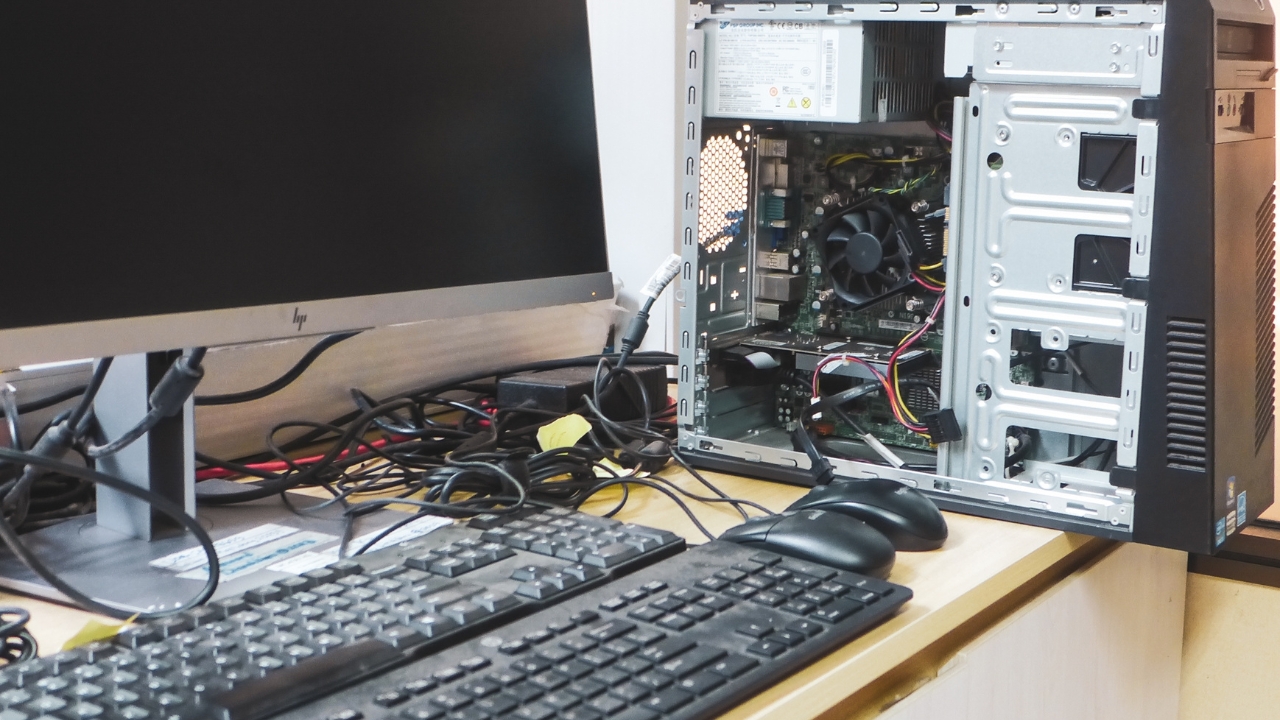
Your computer is one of the most complex and expensive devices in your home, and it is also one of the most exposed. Inside a desktop tower or laptop charger, power regulation circuits work constantly to smooth out incoming electricity, and a surge can overwhelm those defenses in an instant. Technical guides on How to Protect Your Computer from Power Surges explain that a spike can damage not only the power supply but also any peripherals that share the same connection, including monitors, printers, and external drives.
Because your PC also holds irreplaceable data, the stakes are higher than a simple hardware replacement. A surge that corrupts a drive or motherboard can wipe out family photos, tax records, or creative projects in a fraction of a second. That is why experts recommend treating surge protection as part of a Complete Protection Guide for your home office, pairing quality surge suppressors with regular backups so that a single electrical event does not take your digital life with it.
Whole-home protection versus plug-in strips
Once you understand how often small surges occur, it becomes clear that a single power strip behind the TV is not enough. Electricians increasingly recommend a layered approach that starts at your main service panel, where a device can intercept spikes before they spread through your circuits. One overview of Whole Home Surge notes that Trained professionals can install panel-mounted units and then add individual protectors for especially sensitive electronics.
At the outlet level, it is important to distinguish between basic power strips and true surge suppressors. Safety guidance urges you to Use Proper Surge for sensitive electronics and to Look for a UL (Underwriters Laboratories) rating as added assurance that the device has been tested. That label is your signal that the strip is designed to absorb and divert excess energy rather than simply offering more outlets, and it is especially important for clusters of gear like gaming setups and home studios.
Lightning, outdoor lines, and the limits of your wiring
Not all surges originate inside your home. Lightning strikes, grid switching, and faults on nearby lines can send powerful spikes racing along utility conductors and into your service entrance, where they look for any path to ground. Risk management guidance for churches and other large buildings advises that, to assure the highest level of protection, facilities should have a licensed electrician install Underwriters Laboratorie listed surge protectors on electrical service panels. The same logic applies at a residential scale, where a properly rated device at the panel can blunt the worst of an incoming surge before it reaches branch circuits.
Your wiring also has physical limits that affect how surges behave. Long runs to detached garages, outdoor receptacles, or second-story rooms can act like antennas, picking up induced voltage from nearby strikes even if the bolt never hits your house directly. That is why experts often pair panel-level protection with point-of-use devices on circuits that serve exterior equipment, such as heat pumps, pool systems, or EV chargers. By treating the whole path from the street to the outlet as a system, you reduce the odds that a single spike will find an unprotected weak spot.
Practical steps to reduce hidden damage over time
Protecting your home from surges is less about chasing every storm and more about building quiet resilience into your everyday setup. Start by mapping where your most sensitive and expensive devices live, then make sure each cluster is connected through a properly rated suppressor rather than a bare power strip. Home safety resources that ask Can a power surge damage my electronics and invite you to Learn how to protect your property emphasize that even modest upgrades can dramatically cut your risk.
From there, consider a whole-home device at the panel, especially if you live in an area with frequent storms or an older grid. Pair that hardware with simple habits, such as unplugging nonessential electronics during severe weather and avoiding daisy-chaining multiple strips, which can defeat built-in protection. By treating surges as a routine maintenance issue rather than a rare disaster, you give your lights, appliances, and electronics a better chance to live out their full design life instead of failing early in silence.
Like Fix It Homestead’s content? Be sure to follow us.
Here’s more from us:
- I made Joanna Gaines’s Friendsgiving casserole and here is what I would keep
- Pump Shotguns That Jam the Moment You Actually Need Them
- The First 5 Things Guests Notice About Your Living Room at Christmas
- What Caliber Works Best for Groundhogs, Armadillos, and Other Digging Pests?
- Rifles worth keeping by the back door on any rural property
*This article was developed with AI-powered tools and has been carefully reviewed by our editors.