Why some homes need a different alarm type near the kitchen
Cooking is the leading trigger for home fire alarms, yet the device you rely on to protect your family can become so annoying near the kitchen that you are tempted to silence it or take it down. The problem is rarely the idea of detection itself, but often that the wrong alarm type is installed in the wrong spot. If you understand how different technologies react to smoke, steam, and heat, you can choose a setup near the kitchen that cuts nuisance alerts without sacrificing the early warning that saves lives.
Why kitchens are a special case for fire detection
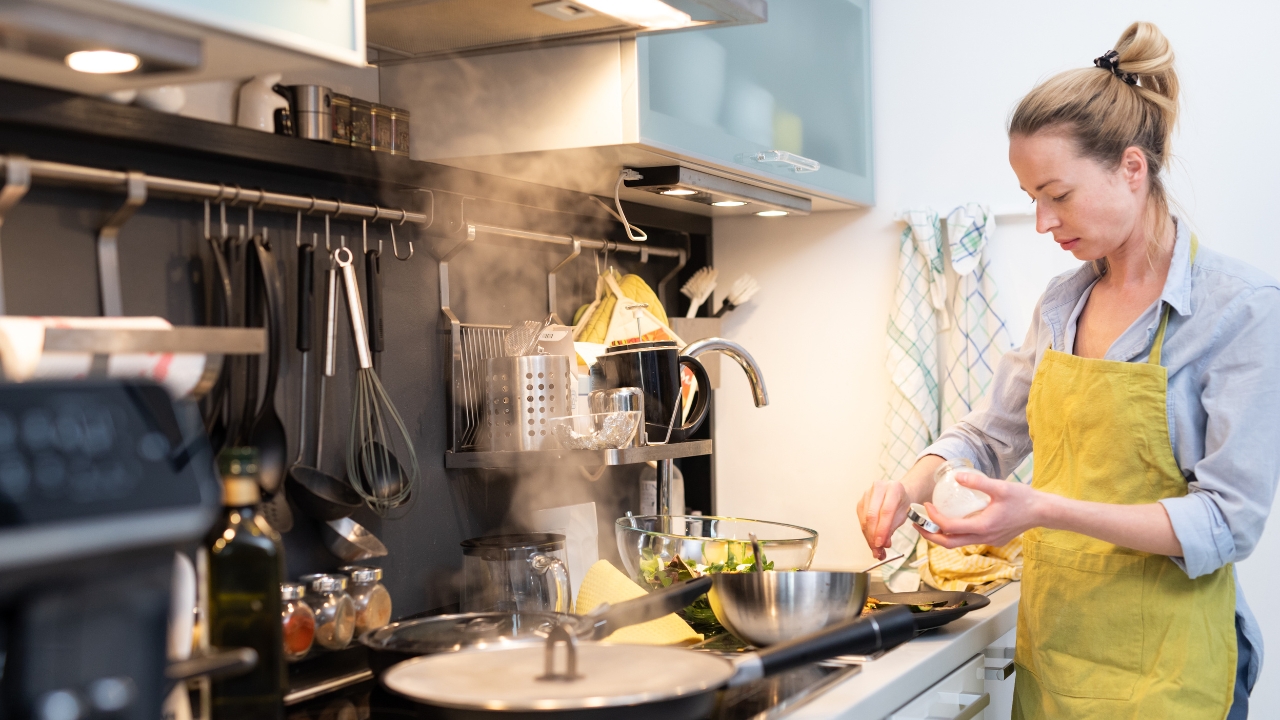
Your kitchen is the one room where you deliberately create smoke, steam, and high heat, sometimes several times a day. That makes it very different from a bedroom or hallway, where any smoke is almost certainly a sign of danger. In a cooking space, burnt toast, a searing cast-iron pan, or a forgotten pizza can all send particles into the air that look like trouble to a sensitive sensor, even when you are in the room and in control.
Fire safety guidance stresses that Kitchens are notorious for nuisance alarms because of smoke and aerosols from stoves and other appliances. When a detector near the kitchen shrieks every time you fry bacon, you are more likely to disable it, which leaves you exposed when a pan fire or unattended burner turns into a real emergency. That tension, between necessary sensitivity and everyday practicality, is why some homes genuinely need a different alarm type or placement strategy around the cooking area.
Ionization vs photoelectric: how the main smoke alarm types behave
Most homes rely on one of two core smoke sensing technologies, and the way each one works explains why some behave badly near the kitchen. Ionization alarms use a small amount of radioactive material to ionize air in a sensing chamber, then watch for changes when tiny combustion particles enter that space. Photoelectric alarms shine a light across a chamber and look for the way larger smoke particles scatter that beam toward a sensor.
National guidance notes that there are many brands of smoke alarms, but they fall into two basic types, There are ionization and photoelectric. Technical comparisons explain that Ionization devices tend to react faster to fast-flaming fires with very small particles, while photoelectric models respond more quickly to smoldering fires that produce larger, visible smoke. That difference matters in a kitchen, where quick bursts of cooking smoke can look like a flaming fire to an ionization sensor, even when the only thing at risk is your dinner.
Why ionization alarms often misbehave near stoves
If your hallway alarm screams every time you open the oven, there is a good chance it is an ionization unit. Because these sensors are tuned to pick up very small particles, they can be triggered by harmless cooking aerosols long before a real fire has developed. In practice, that means a detector mounted too close to the kitchen can feel like a punishment for everyday cooking rather than a safety net for genuine danger.
Consumer guidance on nuisance alarms notes that the ionization alarm is especially prone to false alerts from burnt toast or a forgotten cutting board on a hot burner, and that The ionization design is often the culprit when a detector is too close to the kitchen. Local fire departments explain that ionization smoke alarms usually carry a lower case letter “i” on the label, and that they Have markings such as “contains rad” and Sometimes an “i” inside a square box, which can help you identify whether the device that keeps going off near your stove is using the most kitchen-friendly technology.
Why photoelectric and dual-sensor alarms can be a better fit
Photoelectric alarms, because they are tuned to the larger particles from smoldering fires, are generally less jumpy around brief cooking smoke and steam. That does not mean they will never sound when you burn dinner, but they are less likely to react to every wisp from a hot pan. For many households, swapping an ionization unit near the kitchen for a photoelectric model is enough to cut nuisance alarms while still providing early warning if a dish towel or cabinet starts to smolder.
Home inspection experts point out that it is for this reason that homeowners should use both types of smoke detectors in their homes, placing them in rooms where each is most effective so that It’s for this reason you are encouraged to mix technologies rather than rely on a single style. Other guidance from heating and cooling specialists, such as Aire Serv, explains that photoelectric units are often recommended in living areas and near kitchens, while ionization models may be better suited to spaces where fast-flaming fires are the main concern.
When a heat detector makes more sense than a smoke alarm
In some layouts, even a photoelectric alarm just outside the kitchen door will still be overwhelmed by steam from a dishwasher or smoke from a broiler. That is where heat detectors come in. Instead of reacting to particles in the air, these devices respond to a rapid rise in temperature or to a fixed temperature threshold, which makes them far less likely to be triggered by everyday cooking byproducts.
Fire safety advice explains that Smoke alarms detect smoke, while heat alarms detect rapid increases in heat, and that in rooms like kitchens or garages, a heat alarm may be more appropriate than a smoke alarm. Technical FAQs add that you should consider a heat detector instead of a smoke detector in spaces where dust, steam, or cooking aerosols could cause constant false alarms, and that guidance on When Should you use a heat detector highlights kitchens, garages, and attics as prime candidates.
How to read the label and choose the right technology
Before you decide what to install near your kitchen, it helps to decode the jargon on the box and on the alarm itself. Manufacturers often use small icons or letters to indicate whether a unit is ionization, photoelectric, dual-sensor, or a heat detector, and whether it also includes carbon monoxide or natural gas sensing. If you know what you are looking at, you can avoid buying another device that will behave exactly like the one that keeps going off now.
Local safety FAQs explain that when you ask, What types of smoke alarms are available, the answer is that There are many different brands of smoke alarms, but they fall into two basic types and should be listed by a recognized testing laboratory. Kitchen-specific advice from smart home providers notes that Each type of smoke detector, including Ionization Smoke Detectors and photoelectric models, has its own pros and cons, which is why you should match the technology to the room rather than buying on price alone.
Placement: distance, height, and avoiding nuisance triggers
Even the best-chosen alarm type will misbehave if you mount it in the wrong spot. Put a smoke detector directly above a stove or too close to an oven door, and you are almost guaranteed regular false alerts. Move it a few feet away, or into an adjacent hallway, and it can still sense dangerous smoke while staying quiet during normal cooking.
Installation guides emphasize that smoke alarms should be fitted on ceilings or high on walls, but that in kitchens you should avoid placing them too close to cooking appliances to reduce nuisance alarms, and that Kitchens in particular benefit from alarms installed just outside the cooking area. Fire protection specialists add that In kitchens, position heat detectors on the ceiling but far enough from cooktops to avoid nuisance alarms, which balances early detection with day to day usability.
Smart multi-sensor options built specifically for kitchens
If you are renovating or upgrading, you are no longer limited to a simple single-sensor smoke alarm near the kitchen. Newer devices combine smoke, carbon monoxide, and even natural gas detection, sometimes with algorithms tuned to recognize the difference between a burnt bagel and a growing fire. These multi-sensor units can be especially useful in open-plan homes where the kitchen flows directly into living space.
One example is The PLACE Kitchen unit, which is designed with you in mind and created with smoke, carbon monoxide, and natural gas alarm functions to get ahead of gas leaks as well as fires. Retail listings for the same device, described as product information for a Kitchen Smart Natural Gas, Smoke, and Carbon Monoxide Detector and Alarm, show how manufacturers are tailoring sensors and alerts specifically for the cooking environment rather than treating the kitchen like any other room.
Putting it together: a practical plan for your home
Once you understand how each technology behaves, you can map out a simple, room by room plan. In many homes, that means using a mix of photoelectric and ionization alarms, adding heat detectors where smoke sensors would be overwhelmed, and choosing at least one multi-sensor device near the kitchen if your layout is open or your stove runs on gas. The goal is not to overcomplicate your system, but to make sure the alarm that protects your family is actually usable in daily life.
Fire safety experts recommend that Heat Detectors provide Reliable Detection for High Heat Fires in spaces where smoke detectors would be impractical, and that you combine them with smoke alarms elsewhere for full coverage. Kitchen specific advice from security providers underlines that They are trained to assist you in choosing what Type of Smoke Detector is Best For Your Kitchen, and that the number one cause of residential fires in the United States is cooking, which is why it is worth taking the time to match the right alarm type to the busiest room in your home.
Like Fix It Homestead’s content? Be sure to follow us.
Here’s more from us:
- I made Joanna Gaines’s Friendsgiving casserole and here is what I would keep
- Pump Shotguns That Jam the Moment You Actually Need Them
- The First 5 Things Guests Notice About Your Living Room at Christmas
- What Caliber Works Best for Groundhogs, Armadillos, and Other Digging Pests?
- Rifles worth keeping by the back door on any rural property
*This article was developed with AI-powered tools and has been carefully reviewed by our editors.