World leaders warn global order is facing a historic “rupture”
From Davos to Munich and across a widening Middle East war, a strikingly similar phrase is echoing through speeches and briefings: the world order is in the midst of a historic rupture. Leaders who once defended a stable, rules based system now talk openly about its erosion and the need to build something new.
The warning is not coming from fringe critics but from heads of government, senior European officials and security strategists who helped shape the post 1945 architecture they now describe as broken, bruised or already gone.
Carney’s Davos shock and the end of an “old fiction”
The clearest diagnosis has come from Canadian Prime Minister Mark Carney, who used a special address at the World Economic Forum in Davos to declare that the old international order is ending and that the world is “in the midst of a rupture.” Speaking to business leaders and officials, he argued that the system that followed 1945 rested on a useful “fiction” of shared rules and restraint, backed above all by American power.
In his Davos speech, that fiction once delivered public goods such as open sea lanes and a stable financial system, but it has now been exposed as a set of vulnerabilities that revisionist states treat as targets rather than guardrails. Carney described a shift from cooperative problem solving to a more coercive approach to international relations, where economic interdependence is weaponized instead of managed.
He spoke not as an academic but as the leader of Canada, a country that has long relied on multilateralism and U.S. security guarantees. That context made his argument that the “old world” is gone more jarring, since middle powers like Ottawa are among the biggest stakeholders in a predictable rules based order.
Profiles of Mark Carney have long highlighted his technocratic credentials, from central banking to climate finance, which makes his choice of language at Davos even more striking. In his telling, the rupture is not a passing storm but a structural break that will force governments to rethink security, trade and technology all at once.
In that same address, available through the World Economic Forum, Carney framed the end of American hegemony as both a loss and an opening. He acknowledged that U.S. dominance helped suppress great power war and keep markets open, yet he also suggested that a more plural system could emerge if states resist the slide into raw power politics.
Follow up interviews and commentary on his Davos remarks stress that he sees the current period as a transition, not simply a collapse. Still, he warned that without deliberate choices, the vacuum left by a retreating hegemon will be filled by coercion, fragmented standards and escalating conflict.
Davos, Trump and a Greenland sideshow
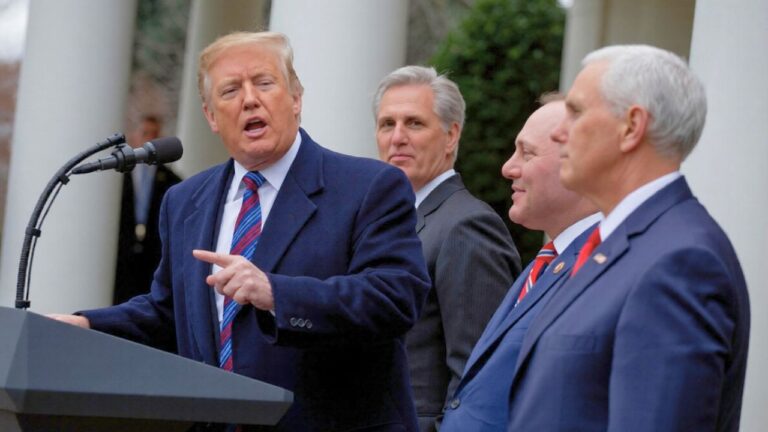
Carney’s warning came as other leaders at Davos voiced similar concerns that the global system is “rupturing,” even as the summit’s public conversation was dominated by a very different story. Reports from the meeting describe how U.S. President Donald Trump’s renewed push to acquire Greenland, framed in Washington as a strategic move in the Arctic, consumed attention that might otherwise have gone to systemic risks.
Coverage of the gathering in Davos portrays a split screen: on one side, world leaders speaking about fractured rules and mounting security crises; on the other, a U.S. president focused on transactional deals and territorial bargaining. For officials worried about global governance gaps, the Greenland episode illustrated how American priorities have shifted away from stewarding an order to exploiting its loopholes.
Analysts tracking Carney’s foreign policy argue that his rupture language is in part a response to that American turn inward and toward unilateralism. He has warned that if the United States treats alliances and institutions as disposable, others will either imitate that behavior or seek protection in alternative blocs.
Commentary on the liberal order notes that during the first year of his second term, President Donald Trump pulled the United States out of several agreements and questioned long standing alliances. One analysis argues that this reorientation of American foreign policy helped rupture the liberal international order by encouraging asymmetric enforcement of trade rules and weakening collective security arrangements.
Munich Security Conference: an order “broken, bruised or bolstered”
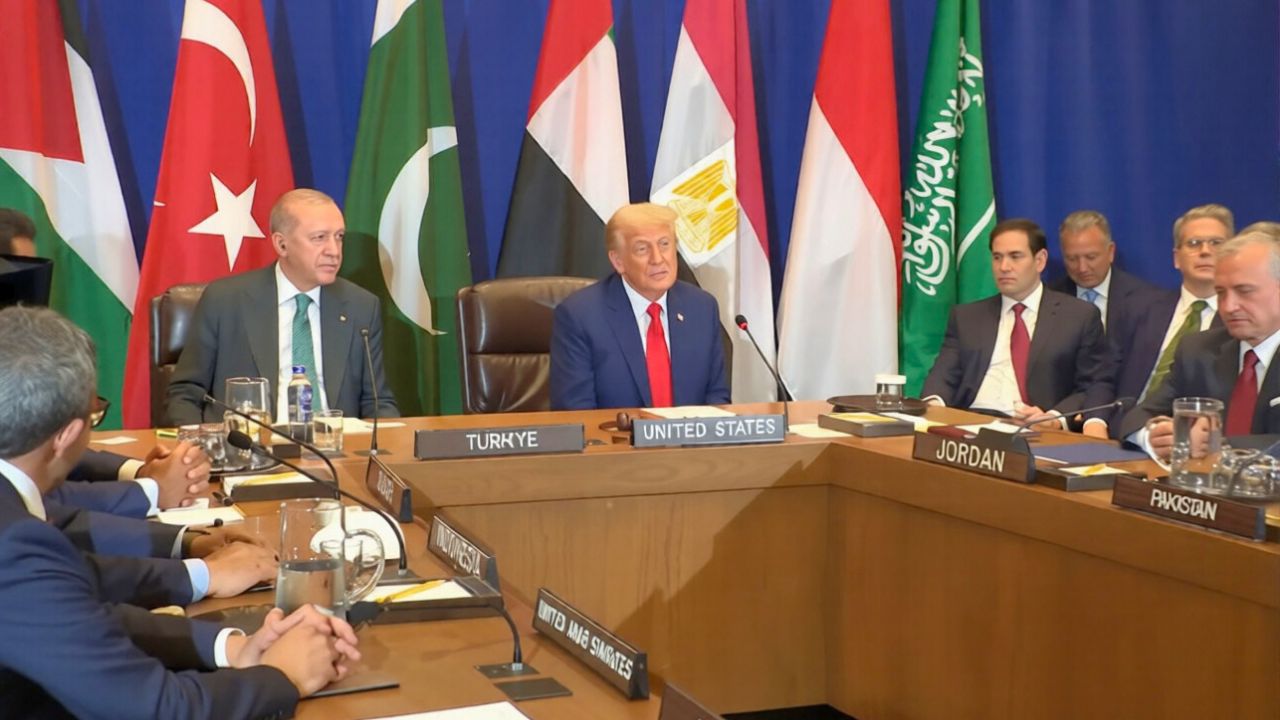
If Davos supplied the alarm bell, the Munich Security Conference tried to map the damage. The 2026 gathering, described in its own debrief as a debate over whether the order is “broken, bruised or bolstered,” brought together leaders who largely agreed that the post 1945 framework is no longer intact.
According to the conference summary, participants offered competing narratives. Some argued that the system is fundamentally broken, pointing to wars, cyberattacks and economic coercion that existing institutions have failed to prevent. Others described it as bruised but salvageable, if states commit to reforms and invest in collective defense, climate action and technology governance.
One reflection on Munich notes that “At the Munich Security Conference” earlier this year, several leaders essentially pronounced the post 1945 order dead and spoke of an “old world” that is gone. That assessment aligns with Carney’s Davos message and with the mood among European officials who no longer assume that U.S. security guarantees are automatic.
The conference debrief highlights growing concern about global governance gaps, from space and AI regulation to energy security. It warns that without new rules and enforcement mechanisms, great powers will continue to test red lines and weaker states will “suffer what they must,” echoing a phrase that has gained traction in commentary on fractured rules.
European anxieties and power shifts
Within Europe, leaders are increasingly blunt about the end of the old order. In a recent address to EU ambassadors, Ursula von der, President of the European Commission, declared that the “old world order is over” and that Europe can no longer rely solely on traditional rules based structures for its security.
In that speech, captured in a video of her remarks, she argued that Europe must build more autonomous capabilities, from defense production to digital infrastructure. The message to EU diplomats was clear: the continent should prepare for a world in which U.S. protection is less predictable and in which systemic shocks are more frequent.
German conservatives have voiced similar concerns. Searches for Friedrich Merz show a politician who has warned about the erosion of Western cohesion and the need for Germany to shoulder more responsibility within Europe. Commentary linked to Merz often stresses that Berlin can no longer assume a benign geopolitical environment or permanent American leadership.
These European debates connect directly to the themes at Davos and Munich. With the old order gone, the question in Brussels, Berlin and other capitals is whether Europe becomes a more coherent strategic actor or a collection of vulnerable mid sized states caught between larger powers.
Middle East war and a spreading crisis
While elites gather in Alpine resorts and Bavarian conference halls, the most visceral evidence of rupture is playing out in the Middle East. A recent briefing described an “historic rupture” as the region’s crisis spreads, with fighting no longer confined to a single front and the fallout extending far beyond the battlefield.
Television coverage from Global National on a Sunday night showed casualties mounting as Iran and Israel traded strikes. The report described more U.S. and Israeli attacks on targets in the heart of “Thrron,” a garbled reference to Tehran, and retaliatory bombings by the Iranian regime.
The conflict has drawn in regional proxies and disrupted shipping, energy markets and diplomatic ties. It has also exposed the limits of existing security arrangements, which have failed to prevent escalation or protect civilians. For many observers, the Middle East war is not an isolated tragedy but a symptom of a world where deterrence is less reliable and international law is contested.
What a ruptured order means for middle powers
Fragmented rules and the search for a new equilibrium
Like Fix It Homestead’s content? Be sure to follow us.
Here’s more from us:
- I made Joanna Gaines’s Friendsgiving casserole and here is what I would keep
- Pump Shotguns That Jam the Moment You Actually Need Them
- The First 5 Things Guests Notice About Your Living Room at Christmas
- What Caliber Works Best for Groundhogs, Armadillos, and Other Digging Pests?
- Rifles worth keeping by the back door on any rural property
*This article was developed with AI-powered tools and has been carefully reviewed by our editors.