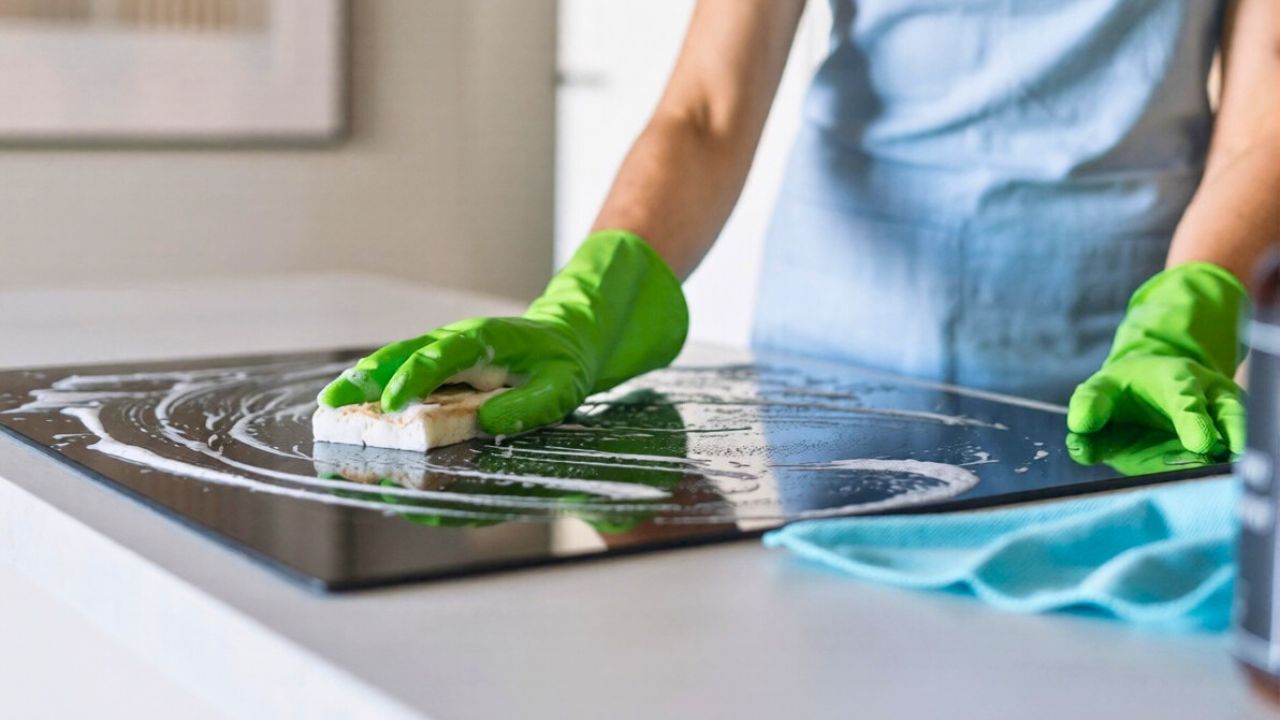
You’re cleaning your glass-top stove in a way that causes scratches
Photo credit: Brizmaker/Shutterstock.com
Your glass-top stove is designed to look sleek, but the way you clean it can quietly grind fine scratches into the surface every single day. The wrong sponge, cleaner or habit does not just dull the shine, it can permanently damage the glass-ceramic layer that protects the heating elements underneath. With a few targeted changes, you can keep that surface smooth for years instead of watching it cloud over in a matter of months.
That starts with understanding which cleaning moves are actually sanding your cooktop, which tools manufacturers recommend, and how to handle stubborn messes without resorting to products that behave like sandpaper. Once you swap out a handful of habits, you protect both the look of your stove and its performance.
Why glass cooktops scratch so easily
You might assume a glass cooktop is as tough as a car windshield, yet the material under your pots is a specialized glass-ceramic that trades some scratch resistance for the ability to handle intense, uneven heat. The surface can shrug off red-hot burners, but it is far more vulnerable to gritty particles and hard edges that scrape across it. When you drag a pan over a few grains of salt or burnt sugar, those particles act like tiny cutting tools that dig into the finish and leave visible marks.
Manufacturers describe these cooktops as durable but make it clear they still rely on gentle care if you want them looking new. Guides on how to clean glass electric cooktops stress that you should protect the surface during both cooking and cleaning, because scratches not only look bad, they can also trap residue that is harder to remove the next time. Over months of daily use, a few careless wipes with the wrong pad or cleaner can turn a glossy panel into a cloudy, swirled sheet that never quite looks clean again.
The hidden scratch risks in your everyday routine
The habits that mark up your stove rarely feel dramatic. You might slide a heavy saucepan from one burner to another, scrub a crusted spill with the rough side of a sponge, or wipe crumbs away with a dry paper towel. Each of those moves seems harmless in the moment, yet every pass can grind microscopic grit between your hand and the glass. Over time, those faint arcs and circles add up, especially in the high-traffic zones where you tend to stir and lift pots.
Guides that walk you through glass-top stove cleaning warn that even ordinary kitchen dirt can become abrasive if you push it around while it is dry. Food residue, sugar, and mineral deposits from boiled-over pasta water can harden into rough patches that act like sand when you scrub them aggressively. If you clean only when the mess is already baked on, you set yourself up to use more pressure and harsher tools, which compounds the risk of scratching the surface you are trying to protect.
The tools that quietly ruin your cooktop
The fastest way to ruin a glass cooktop is to reach for tools designed to scour metal. Steel wool pads, green scouring pads, and stiff brushes are all marketed as tough cleaners, and on a cast-iron grate they make sense. On glass-ceramic, those same fibers carve fine grooves that catch the light and make the surface look hazy. Even some “non-scratch” scrubbers can be too aggressive if they are loaded with gritty cleanser or if you bear down hard on a small area.
Manufacturer instructions for how to clean tell you to skip abrasive pads entirely and stick with a cooktop scraper, a cooktop scrubbing pad, and soft cloths instead. A separate section on Tools explains that abrasive cleaners, scouring pads and harsh chemicals can damage the surface, even if they promise to cut through grease. When you treat the cooktop like stainless steel, you invite scratches that no amount of polishing will fully erase.
Why your “deep clean” products are too harsh
When a spill burns onto the glass, it is tempting to reach for the strongest cleaner in your cabinet. Powdered abrasives, oven sprays and rust removers are all formulated to chew through stubborn residue, and they often rely on gritty particles or aggressive chemicals to do the job. On a glass cooktop, those ingredients do not just attack the mess, they also etch the surface and leave behind a dull patch that stands out against the surrounding shine.
Manufacturer care guides for glass cooktops advise you to avoid chlorine bleach, rust remover and strong ammonia cleaners because these formulas can damage the finish and discolor the surface over time. Instructions that explain how to clean instead recommend a dedicated cooktop cleaner, used with a soft cloth, and a baking soda paste for tougher spots. By trading powdered scouring agents for cream cleaners and gentle abrasives like baking soda, you loosen burnt residue without grinding the glass underneath.
The right way to wipe: cloths, pads and scrapers
Protecting your cooktop starts with what you hold in your hand. Soft microfiber cloths, non-scratch sponges and specialized cooktop pads are designed to lift residue without cutting into the glass. Microfiber in particular traps fine particles in its fibers rather than dragging them across the surface, which is why some reusable microfiber scrub cloths are marketed as completely non-scratch for dishes and kitchen surfaces. Paired with a mild detergent or cooktop cleaner, those cloths let you tackle daily messes without leaving behind swirl marks.
For hardened spills, a razor-style cooktop scraper is safer than a scouring pad as long as you use it correctly. Guides that cover what you need for glass-top cleaning usually include a razor blade held at a shallow angle, used only on a cool surface and always pushed in one direction. You apply light pressure, let the blade glide under the burned-on food, and then follow with a soft cloth and cleaner. That approach slices off the crust without dragging grit in circles, which is how many home cooks accidentally create halos of fine scratches around a single stubborn spot.
How to clean daily without grinding in grit
A gentle daily routine does more to prevent scratches than any occasional deep clean. Once the burners cool, you want to remove loose crumbs and spills before they harden, but you also want to avoid rubbing dry debris around like sand. The safest approach is to start with a slightly damp, soft cloth to lift away loose particles, then follow with a small amount of cooktop cleaner or mild dish soap, applied with a microfiber cloth or non-scratch sponge.
Step-by-step guides on how to clean recommend using baking soda as a natural abrasive that is effective at loosening residue without the hardness of mineral grit. You sprinkle it over the affected area, mist with water or vinegar, let it sit, then wipe gently with a soft cloth. By keeping the surface slightly wet while you clean and by working in straight, overlapping strokes instead of hard circles, you reduce friction and keep any remaining particles from scratching the glass as you move.
Handling stubborn messes without scratching
Burnt sugar, boiled-over sauces and melted plastic are the situations that tempt you to throw caution aside. The key is to soften the mess instead of attacking it with brute force. You can lay a warm, soapy cloth over the area to rehydrate the residue, then use a cooktop scraper to lift it in thin layers. If the spill is sugary or has caramelized, you may need to repeat that cycle a few times, but each pass should be controlled and gentle rather than a frantic scrub.
Guides that list common causes of emphasize that aggressive cleaning of hardened spills is one of the main culprits. They recommend applying a cleaning solution and letting it sit before wiping, which lets chemistry do more of the work so you do not have to. When you face a stubborn ring around a burner, patience, soak time and the right scraper will protect your cooktop far better than a handful of abrasive pads ever could.
What to do once scratches appear
Once you see scratches, you cannot magically restore the glass to its factory finish, but you can reduce how visible some marks look and keep the damage from getting worse. Fine surface scratches sometimes blend in when you polish the area with a gentle abrasive like baking soda paste or a dedicated glass-ceramic cleaner. You apply a small amount, rub in slow circles with a soft cloth, then buff with a clean, dry towel so the light reflects more evenly across the surface.
Repair guides that explain how to handle suggest that baking soda paste or even toothpaste can reduce the appearance of shallow marks, while deeper gouges may respond better to a specialized polishing compound. Other experts on scratches on glass-ceramic caution that aggressive polishing can thin the surface and that sometimes the most realistic fix is to change the lighting or accept a few cosmetic flaws. Either way, once you see marks, your priority should shift to preventing new ones by upgrading your daily cleaning habits.
Prevention habits that keep your cooktop clear
The most effective scratch protection happens before you ever pick up a sponge. You can start by checking the bottoms of your pots and pans for rough spots, burrs or baked-on residue that might drag across the glass. Cast iron, stoneware and damaged pans are common offenders, especially if you slide them from burner to burner. Lifting cookware instead of dragging it, and keeping pan bottoms clean and smooth, removes a major source of scratches before they touch the surface.
Prevention guides that explain how to prevent also advise you never to place kitchen tools, lids or other hard objects directly on the cooktop, since they can leave marks when moved. Recommendations on preventing scratches on highlight the value of wiping spills with a soft, damp cloth rather than anything rough, and of cleaning regularly so stains do not harden. When you combine those small habits with the right cleaners and tools, you stop treating your cooktop like a workbench and start handling it like the glass surface it really is.
Like Fix It Homestead’s content? Be sure to follow us.
Here’s more from us:
- I made Joanna Gaines’s Friendsgiving casserole and here is what I would keep
- Pump Shotguns That Jam the Moment You Actually Need Them
- The First 5 Things Guests Notice About Your Living Room at Christmas
- What Caliber Works Best for Groundhogs, Armadillos, and Other Digging Pests?
- Rifles worth keeping by the back door on any rural property
*This article was developed with AI-powered tools and has been carefully reviewed by our editors.