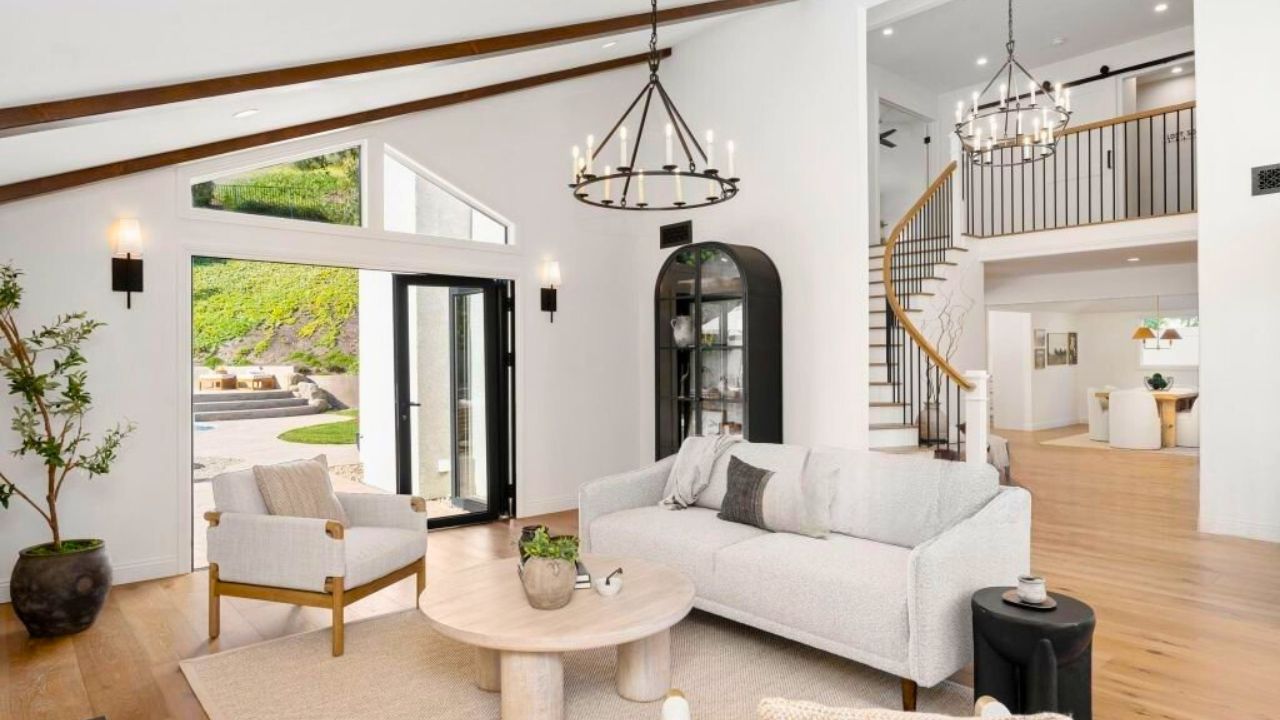
The budget lighting upgrades that make rooms feel warmer
Photo credit: Wirestock/istock.com
If a room feels cold and flat, it’s not always the paint or the furniture—it’s often the lighting. One too-bright overhead light makes everything look harsher and cooler than it really is, even if you’ve got warm colors and comfortable pieces in there.
You don’t have to rewire the house to fix it. A few budget swaps and a little rearranging can make a room feel warmer and more relaxed without touching the thermostat.
Start by fixing the bulbs you already have
Before you buy a single lamp, look at your bulbs. Color temperature is one of the biggest reasons a room feels cold.
On the box, you’ll see numbers like 2700K, 3000K, 4000K:
- Lower numbers (around 2700K–3000K) give a warmer, softer light.
- Higher numbers (4000K and up) start to feel cooler and more like an office.
If your main rooms are lit with bright, cool bulbs, swapping them to a warm white is one of the cheapest, most noticeable changes you can make. Start with the bulbs in fixtures you use every single evening—living room, kitchen, bedroom—and work outward from there.
Add at least one lamp so the overhead isn’t doing all the work
Relying on a single ceiling light makes a room feel flat and sometimes harsher than it needs to. Even adding one or two basic lamps changes the whole mood.
You don’t have to buy expensive ones. Thrifted lamp bases with new shades or simple floor lamps from a big-box store work just fine. The goal is to:
- Put light at different heights (not everything from above)
- Fill darker corners so the room doesn’t feel cave-like
- Give yourself an option besides “fully lit” or “dark”
Turn on the lamps first in the evening and use the overhead light only if you truly need it. The softer, side lighting makes everything feel more relaxed right away.
Use warm-toned shades and bulbs together
Even if your bulbs are warm-toned, a very white or cool-toned shade can make the light feel sharper. If you’re buying or swapping shades, look for:
- Off-white, cream, or linen-colored shades
- Fabric or paper that diffuses light instead of shining it straight into your eyes
When you pair a warm bulb with a soft shade, the light that hits the room feels calmer and more “settled.” It’s a small detail, but your eyes notice the difference.
Aim light where people are, not at bare walls
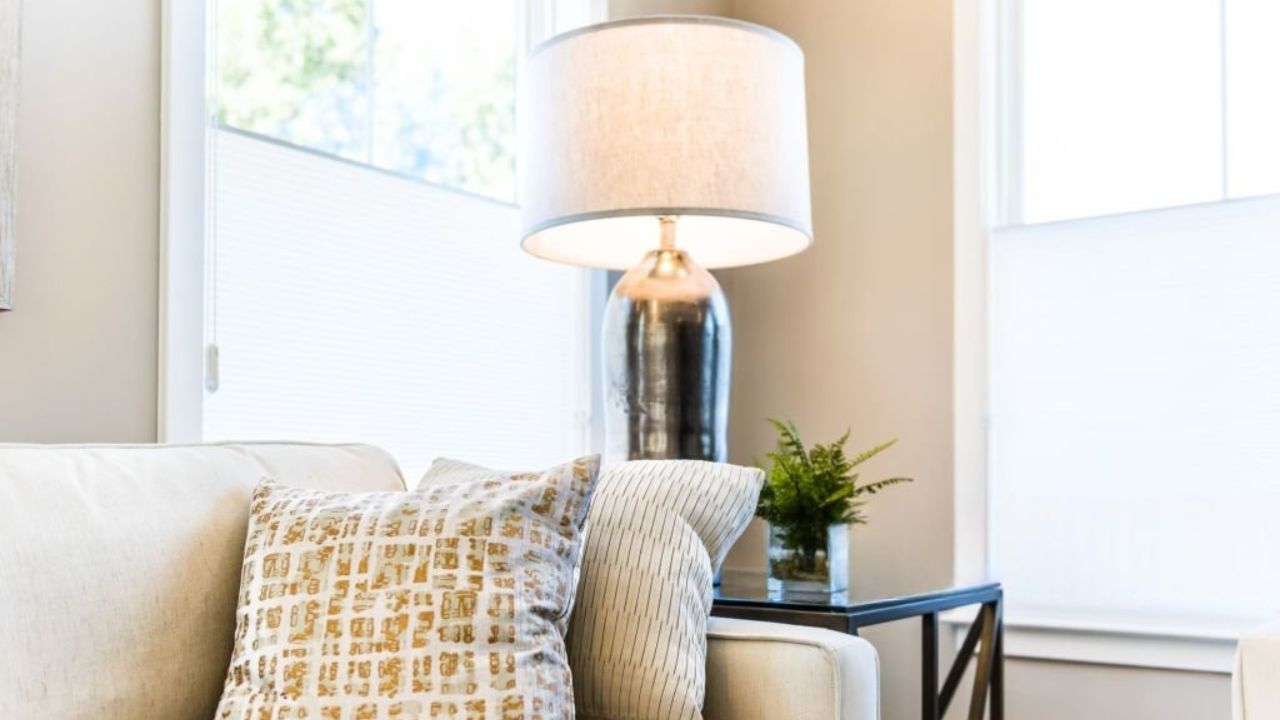
Lighting feels more inviting when it lands where you sit, read, or talk—not just blasting open spaces.
You can do this by:
- Putting a floor lamp near the seating area instead of in an empty corner
- Using a small table lamp on an end table beside a chair or sofa
- Adding a lamp to a console or dresser so it lights the area you actually use
When light pools around people and surfaces, the room feels smaller in a good way—more focused and comfortable, less like a waiting room.
Use cheap “reflection tricks” to stretch light further
You don’t need more fixtures if you can use what you already have more efficiently. Light bounces, so give it something good to bounce off.
Simple tricks:
- Hang a mirror across from or near a lamp to reflect light back into the room
- Use lighter accessories—tray, picture frames, or vases—on darker surfaces where lamps are sitting
- Keep dust off bulbs and shades so they’re not quietly dulling the light
You’re not trying to make the room brighter, just more even. When dark corners soften, the whole space feels less stark.
Try dimmers and smart plugs where it makes sense
Dimmers used to be a bigger project. Now, smart plugs and dimmable bulbs make it easier to bring the brightness down without rewiring.
On a budget, you can:
- Use a smart plug on a lamp so you can dim or shut it off from your phone
- Buy dimmable bulbs if your existing switch is already a dimmer
- Group a couple of lamps onto one smart plug so they act like a “scene”
Being able to lower the light at night without turning everything off helps the room feel warmer and calmer without feeling dark.
Add small accent lights instead of more big ones
Sometimes the room doesn’t need more general lighting—it needs little points of interest. A tiny glow in the right spot is more impactful than another ceiling fixture.
Think:
- A plug-in under-cabinet light strip in the kitchen
- A battery-powered puck light in a dark bookcase
- A small lamp or nightlight in a hallway or corner
These tiny lights make the room feel layered. At night, you can leave just a couple on and still move around without feeling like you’re in a cave.
Use candles and faux candles where you want that soft glow
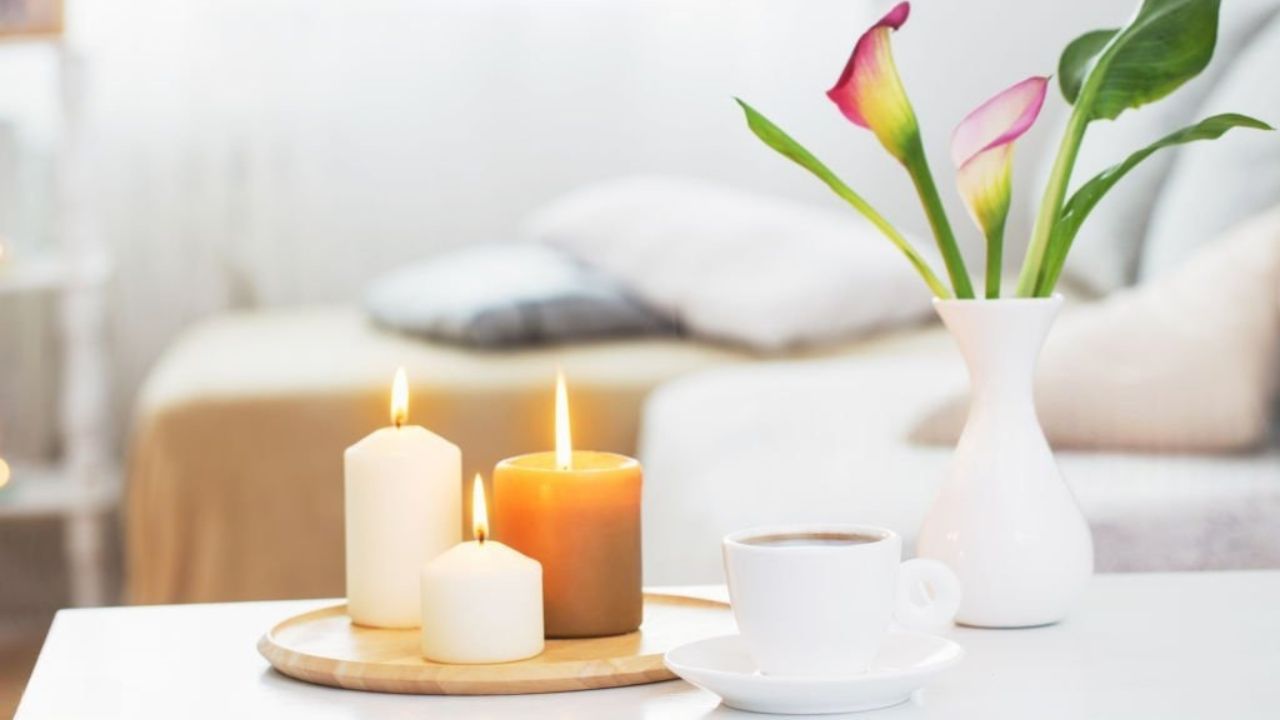
If you like that candlelight feel but don’t want open flames everywhere, LED candles are a good stand-in. Even one or two on a mantel, table, or shelf can warm up the feel of the room.
Mix real candles (where you can safely keep an eye on them) with battery-operated ones in harder-to-watch spots. You get the same soft flicker without worrying about wax or little hands.
The big picture with budget lighting isn’t perfection—it’s getting away from one harsh overhead light and toward layered, warmer light in the areas you actually use. Small changes, like swapping a bulb or adding a lamp, add up fast when you use those lights every single evening.
Like Fix It Homestead’s content? Be sure to follow us.