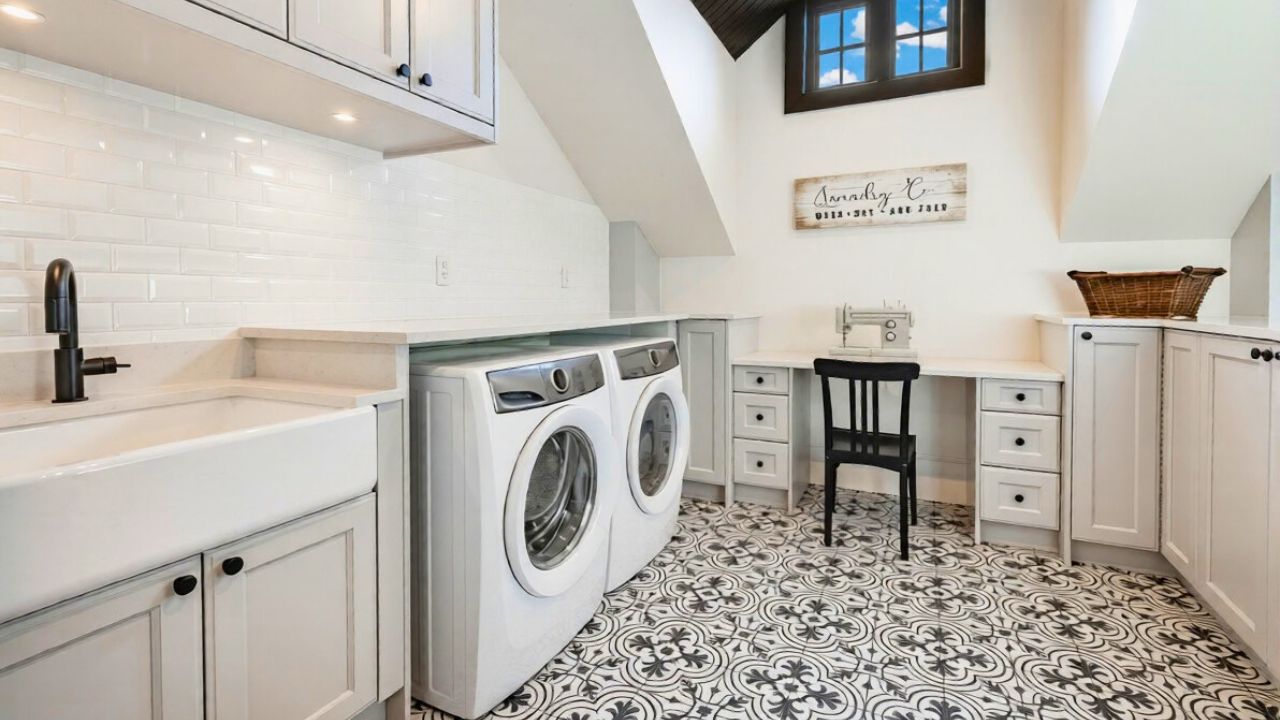
The laundry room setup that causes hidden water damage
Photo credit: Sheila Say/Shutterstock.com
Your laundry room can quietly undermine the rest of your home. The wrong combination of washer, hoses, flooring and storage turns a routine chore space into a slow leak that rots framing, feeds mold and even threatens your foundation. By rethinking how you set up this room, you protect more than your floors, you protect the structure that holds everything up.
The hidden risk often comes from a setup that looks tidy and efficient on the surface, yet traps moisture where you never see it. Once you understand how water actually moves around your machines, walls and subfloor, you can redesign the space so a small drip never has the chance to become a major repair.
The “perfectly tucked” laundry that quietly leaks
You may be encouraged to push your washer and dryer as far back and as close together as possible to free up floor space. That tight, built‑in look can be appealing, but it also hides the very components most likely to fail. When your hoses, valves and drain are squeezed behind the machines with no clearance, you have almost no visual warning if something starts to seep, and a slow leak can soak drywall and framing for months before you notice a stain on the baseboard.
Guides that focus on safeguarding this space point out that your laundry room is not just another storage closet, it is a high‑risk wet area where you should actually design for visibility and access rather than concealment. Advice on safeguarding your laundry stresses that you should think about how easily you can see and reach the back wall, the shutoff valves and the drain, because those are the places where water first escapes and where early intervention saves your flooring.
Why laundry rooms are structurally high risk
You use your washer and utility sink in concentrated bursts, but the plumbing that feeds them is pressurized around the clock. That constant pressure, combined with vibration from spin cycles and the heat and humidity from dryers, makes this one of the most punishing rooms for pipes, valves and fittings. If your laundry is stacked above finished living space, any leak has a direct path into ceilings and wall cavities below, which multiplies the cost and complexity of repairs.
Specialists who focus on water mitigation describe laundry rooms as high‑risk zones because they combine heavy water use, electricity and hidden voids behind walls and under floors that are perfect for unseen damage. One breakdown of Why Laundry Rooms and similar spaces are considered Risk Areas for Water Damage notes that burst or leaking washer hoses are among the most common failures, and that these leaks often go unnoticed until you see visible damage in adjacent rooms, by which time subflooring and insulation may already be saturated.
The washer hoses and valves that fail first
The weakest link in many laundry setups is not the machine itself, it is the rubber or braided lines that connect it to your water supply and the shutoff valve that controls them. Standard rubber hoses can crack, bulge or loosen at the fittings over time, especially when your washer vibrates against the wall. If you cannot easily see the back of the machine, you will not spot small beads of water collecting on the fittings or slight rust on the valve, both of which are early warning signs.
Home maintenance checklists frequently start with the supply lines when they walk you through a Laundry Room Plumbing Checklist and urge you to Check the washing machine hoses first if you suspect a leak. Plumbing professionals add that you should Inspect the shut‑off valve by looking for drips into the washing machine while it is not in use, and that if you detect a leak you should have it fixed before additional damage occurs, advice reflected in guidance on how to Inspect the components behind your appliances.
The hidden path from laundry leak to foundation damage
What begins as a damp patch behind your washer can travel far beyond the laundry room. Water that seeps through vinyl seams or around a floor drain can reach the subfloor, then migrate sideways along joists or down wall cavities. If your laundry sits over a crawlspace or slab, that moisture can eventually reach the soil around footings and support walls, where it starts to wash away fine particles and weaken bearing capacity.
Engineers who investigate structural failures describe how Water damage is not always dramatic and often creeps in quietly behind walls, under slabs and around footings, slowly eroding soil and weakening foundations until minor leaks escalate into major structural problems. Because many of your appliances sit in laundry rooms, basements or utility spaces that you rarely inspect closely, one overlooked supply line or drain issue can become the trigger for these hidden foundation stresses, a pattern highlighted in discussions of how small appliance failures lead to many of these sit out of sight and allow leaks to continue.
The upstairs laundry flood that starts with a drip
If your washer is on an upper floor, the stakes climb quickly. A small drip at a hose connection can pool in the pan, then spill over the lip and run under the flooring. From there, water finds the path of least resistance into ceiling cavities below, where it can saturate insulation and drywall. By the time you see a stain on the living room ceiling, water may have been cycling through every time you washed towels for weeks.
Contractors who install second‑floor laundry rooms emphasize that you should combine a drain pan, a properly sloped floor and a floor drain with clear access to shutoff valves. Practical demonstrations on how to How to Avoid a Flood from Your Upstairs Laundry Room walk you through scenarios where a simple supply hose failure sends water through recessed lights and down interior walls. The core lesson is that you need a plan for both early detection and fast shutoff, because once water escapes on an upper level it can affect multiple rooms and stories before it finds a place to stop.
The layout mistakes that trap moisture
Beyond hoses and valves, layout choices can quietly encourage water to linger where it should not. When you install cabinetry or Custom Cabinetry tight around your machines to hide exposed pipes, you reduce air circulation and make it harder for minor splashes or condensation to dry. If you then stack storage boxes or laundry baskets directly against the wall, any dampness behind them can feed mold on both the drywall and the items you are storing.
Design advice that focuses on The Best Ways To Hide Exposed Laundry Room Pipes notes that One of the most effective approaches is to use cabinetry that still allows access panels or removable sections so you can inspect the plumbing. At the same time, plumbing layout tips that encourage you to Rearrange the Furniture in your laundry room highlight that You do have some choices when it comes to where you place your appliances, and that you should keep them on a level surface with enough clearance to prevent kinks in hoses and to give you room to spot and clean up any moisture.
The surfaces under your machines that hide damage
The floor beneath your washer and dryer is the front line between a minor spill and a major repair. If you have laminate, engineered wood or carpet in this room, even a small, recurring leak can wick along the underlayment and pad, staying hidden until the material swells or smells. Hard tile or sealed concrete gives you a better chance of seeing standing water, but only if you are not covering it completely with storage or laundry piles.
Flooring and restoration specialists repeatedly recommend simple physical barriers that buy you time when accidents happen. One guide on how to Use Mats stresses that Mats are your best friend when it comes to protecting your floors and that you should Place thick rubber mats under and in front of your washer and sink. Another set of tips on Preventing Water Damage in the Laundry Room reminds you that Sometimes things just fail, and that a properly installed pan and drain under the washer can channel leaks away from vulnerable flooring and into a controlled drainage path instead.
The warning signs you smell before you see
By the time you see bubbling paint or a warped baseboard, moisture has usually been present for a while. Your nose often gives you earlier clues. A persistent musty odor when you open the laundry door, even after you have washed and dried clothes, suggests that something behind the walls or under the floor is staying damp between loads. If you ignore that smell, you give mold a comfortable environment to spread.
Leak detection guidance that covers bathrooms and similar wet spaces notes that Mould and musty smells that will not go away can signal a long‑term leak behind walls or under floors, and that Persistent damp odours often appear before any visible staining. Home inspectors who walk through these spaces for buyers warn that Laundry rooms are essential spaces in your home, However they can also be sites where hidden issues like slow leaks and poor ventilation lead to severe consequences if ignored, a pattern described in detail in one Laundry focused inspection guide.
The setup that actually protects your home
If the riskiest laundry room is the one that hides its plumbing and squeezes machines into a tight alcove, the safest version does the opposite. You give yourself a margin of error by choosing a water resistant floor, installing a pan and drain under the washer, and keeping at least a few inches of clearance around the appliances so you can inspect hoses and valves. You also make sure you know exactly where the shutoff is and that you can reach it quickly without moving anything.
Risk management advice aimed at homeowners points out that Your laundry room is where a lot of your home’s water use is concentrated and that leaks from washing machines, supply lines or clogged drains can be major sources of loss, guidance reflected in practical tips on Ways to Avoid. Other restoration specialists emphasize that Your seemingly innocent washing machine can be a ticking time bomb and that Cracked hoses, loose connections or faulty seals can unleash hundreds of gallons of water if they fail, which is why they urge you to follow Immediate Action Steps outlined in guides on what to do in a Flooded Laundry Room. When you combine those habits with routine inspections and a layout that favors access over aesthetics, you turn a hidden hazard into a room that quietly protects the rest of your home.
Like Fix It Homestead’s content? Be sure to follow us.
Here’s more from us:
- I made Joanna Gaines’s Friendsgiving casserole and here is what I would keep
- Pump Shotguns That Jam the Moment You Actually Need Them
- The First 5 Things Guests Notice About Your Living Room at Christmas
- What Caliber Works Best for Groundhogs, Armadillos, and Other Digging Pests?
- Rifles worth keeping by the back door on any rural property
*This article was developed with AI-powered tools and has been carefully reviewed by our editors.