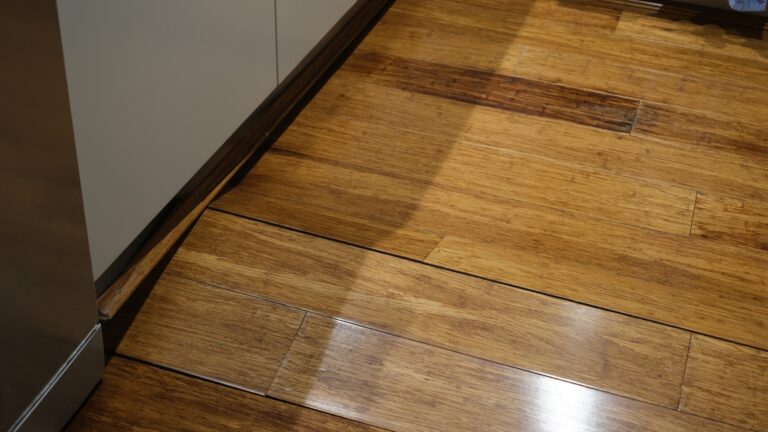
Average flood insurance claims now exceeding $32,000
Photo credit: Utah778/istock.com
Average flood insurance payouts climbing above $32,000 change the stakes of how you think about water risk at home. Instead of a nuisance add‑on to your homeowners policy, flood coverage now sits much closer to the real cost of rebuilding after a serious storm. If you own property in a coastal county, along a river, or even in a neighborhood that simply drains poorly, that new benchmark should push you to reassess how exposed your savings really are.
Those rising claim sizes reflect a mix of more intense flooding, higher construction costs, and better recognition of how much even a few inches of water can destroy inside a house. Once an average loss crosses into five‑figure territory, you are no longer protecting just drywall and flooring, you are protecting your long‑term financial plan.
The new math behind average flood losses
You now have to think about flood damage in terms of a single event wiping out a car’s worth of value or more. Earlier estimates pegged the typical flood loss around $33,000, which already rivaled the price of a new midsize SUV. As rebuilding costs and claim severity increase, average insurance payouts clearing $32,000 simply confirm that water on the floor quickly becomes a five‑figure problem, not a minor repair.
The jump is easier to understand when you look at how little water it takes to do serious harm. Data on residential flooding show that Just 1 inch, which means a modest basement or first‑floor incident can rapidly approach or exceed the new average claim level. Picture a finished family room, a furnace, a washer and dryer, and a late‑model laptop sitting on a lower shelf, and it becomes clear how quickly that damage total can climb past $32,000.
Why claim sizes are rising faster than premiums
You are not imagining it if your coverage feels more expensive at the same time that payouts are getting larger. Broader property trends show that Homeowners insurance rates have climbed in recent years, driven by higher labor and materials costs that make every repair pricier. That same inflation hits flood claims directly, since the cost to replace flooring, appliances, drywall, and electrical systems all feed into the final settlement amount.
Federal disaster grants have not kept pace with what it actually costs you to rebuild. Between 2019 and 2023, the average FEMA disaster grant was only $3,208 per household, while the average NFIP flood insurance payout in that same period reached $52,000. When grant support lags that far behind actual rebuilding costs, more of the burden shifts to insurance, which helps explain why the typical insured loss has moved into the $32,000‑plus range.
What NFIP data reveal about real‑world payouts
If you want a clearer benchmark for what flood insurance really pays, you can look directly at National Flood Insurance Program experience. From 2016 through 2021, NFIP policyholders saw average claims payouts of $68,000, which is more than double the new $32,000 threshold you are hearing about. That longer‑term figure tells you that in practice, once you actually file a claim, the damage is often far worse than the minimum averages suggest.
Private‑sector analysis of flood coverage points in the same direction. One review of policyholder data found that NFIP policyholder claims average $68,000, reinforcing the idea that you should prepare for a serious loss rather than a cosmetic cleanup. When you compare that kind of payout to the cost of your annual premium, the value proposition of carrying adequate limits becomes much clearer.
How coverage limits stack up against a $32,000 loss
Once you understand that an average claim can easily exceed $32,000, your next step is to see how your policy limits compare. Standard NFIP residential contracts allow you to insure Building Property for up to $250,000 and Personal Property (Contents) for up to $100,000. The NFIP encourages you to purchase both types of coverage, because structural repairs and damaged belongings quickly combine into a much larger bill than either category alone.
If you own a higher‑value home or operate a small business, you may also look at expanded limits through the same program. Coverage under The National Flood Insurance Program can reach $500,000 for certain buildings, which matters if your replacement cost far exceeds the base $250,000 cap. When you set your own limits, you should picture a worst‑case scenario where both your structure and your contents are total losses, then check whether your combined coverage would still be standing after a $68,000 claim.
Why relying on disaster aid leaves a dangerous gap
You might be tempted to skip flood insurance entirely and plan to lean on federal aid after a storm, but the numbers show how exposed that leaves you. The average grant of $3,208 per household barely covers a new furnace or a fraction of a kitchen rebuild, let alone a full first floor. When you place that figure next to a typical insured payout that can reach $52,000 or $68,000, the shortfall becomes obvious.
Federal agencies themselves stress that flooding is America’s 1 natural, which means you are likely to face multiple events over the life of your home. A one‑time grant after a major disaster will not protect you from the second or third flood, and it certainly will not rebuild to the same standard as a full insurance settlement. If the average loss already exceeds $32,000, counting on a few thousand dollars of aid is effectively choosing to self‑insure the rest out of pocket.
What rising claims mean for your annual premium
Higher payouts inevitably feed back into what you pay each year, so you should understand the tradeoff. A national review of policy data found that the average cost of flood coverage runs about $926 per year, based on an analysis of information from FEMA. Put differently, you are paying roughly $926 each year to protect yourself from a potential bill that could easily clear $32,000 and, in many cases, reach $68,000.
That tradeoff looks even more reasonable when you factor in how frequently smaller floods occur. Guidance on flood risk explains that According to FEMA, even one inch of water can cause $25,000 in damage to your home. If you pay $926 per year for a decade, you have invested less than $10,000 to shield yourself from a single event that could cost $25,000, $32,000, or far more. That kind of leverage is rare in personal finance, especially for a risk as common as flooding.
How to gauge your own flood exposure
To decide whether an average claim north of $32,000 is your problem, you need a realistic view of your property’s risk. Official tools let you check whether you sit in a high‑risk FEMA flood zone and whether your lender might require coverage. You can Visit FEMA Flood Map Service Center and enter your address, then follow up with an insurance agent to run a flood determination.
Even if your home is outside the highest risk zones, you should not assume you are safe. A detailed Flood Insurance Risk will look at local drainage, nearby creeks, and your home’s elevation before suggesting coverage. You can also use the federal portal at FloodSmart.gov to explore your property’s specific flood zone and see how much coverage might cost, which helps you weigh the roughly $926 annual premium against the potential of a $32,000 or $68,000 claim.
How federal policy shapes your options
Behind the scenes, the rules that govern flood insurance are set in Washington, and they directly influence what you pay and how much protection you can buy. A memorandum prepared for Members of the on Financial Services, identified as coming from Committee Staff with a Date and Subject line, lays out how The NFIP operates and where its finances stand. When lawmakers evaluate issues such as repetitive loss properties or premium subsidies, they are effectively deciding how much of the rising claim burden you will shoulder through your own bill.
Historical analysis shows that Much of the coverage in major river floods has flowed through the federal National Flood Insurance program, and that premiums for this coverage can be high enough in some Illi communities that homeowners tend to underinsure. When average claims sit above $32,000, carrying too little coverage becomes even more dangerous, which is why you should watch federal debates about rate structures and mitigation incentives with your own policy in mind.
Practical steps to align your coverage with modern losses
Once you see how the numbers line up, your job is to bring your own coverage in line with the risk. Start by inventorying your home room by room, including big‑ticket items like a 2023 Samsung washer and dryer set, a 2022 MacBook Pro, or a 2021 LG OLED TV that might sit on a lower level. When you add up replacement costs, you will see how easily your personal property can approach the $100,000 Contents cap, which makes a $32,000 loss feel less like an outlier and more like a realistic mid‑range scenario.
You should also compare quotes from NFIP‑backed policies and private carriers, paying close attention to deductibles, exclusions, and waiting periods. Official guidance at FloodSmart.gov explains how to find a provider and how The NFIP structures coverage, while additional resources on How flood insurance pricing works can help you understand why your quote looks the way it does. When you line up the cost of a policy against the reality that NFIP policyholder claims average $68,000, treating flood insurance as optional starts to feel like a luxury you might not actually have.
Like Fix It Homestead’s content? Be sure to follow us.
Here’s more from us:
- I made Joanna Gaines’s Friendsgiving casserole and here is what I would keep
- Pump Shotguns That Jam the Moment You Actually Need Them
- The First 5 Things Guests Notice About Your Living Room at Christmas
- What Caliber Works Best for Groundhogs, Armadillos, and Other Digging Pests?
- Rifles worth keeping by the back door on any rural property
*This article was developed with AI-powered tools and has been carefully reviewed by our editors.