Neighbor Builds a Dirt Dam on the Property Line — Then the Next Rain Could Flood the House
Photo credit: Fix It Homestead
Drainage problems between neighbors can get ugly fast because water does not politely stop at the property line. It follows slope, soil, gutters, low spots, and whatever path gravity gives it. When one homeowner changes that path without thinking through the damage next door, the neighbor on the wrong side of the water can end up staring at a flooded yard and wondering what the next storm will do.
That is what one Iowa homeowner said happened after a downhill neighbor started building his own house and moved dirt into what the homeowner described as a dam along the property line. The homeowner shared the situation in a Reddit post on r/legaladvice, saying the newly built dirt barrier was causing rainwater to back up near their house. The original Reddit post is here: https://www.reddit.com/r/legaladvice/comments/1ohqdkv/my_neighbor_built_a_dam_on_the_property_line_that/
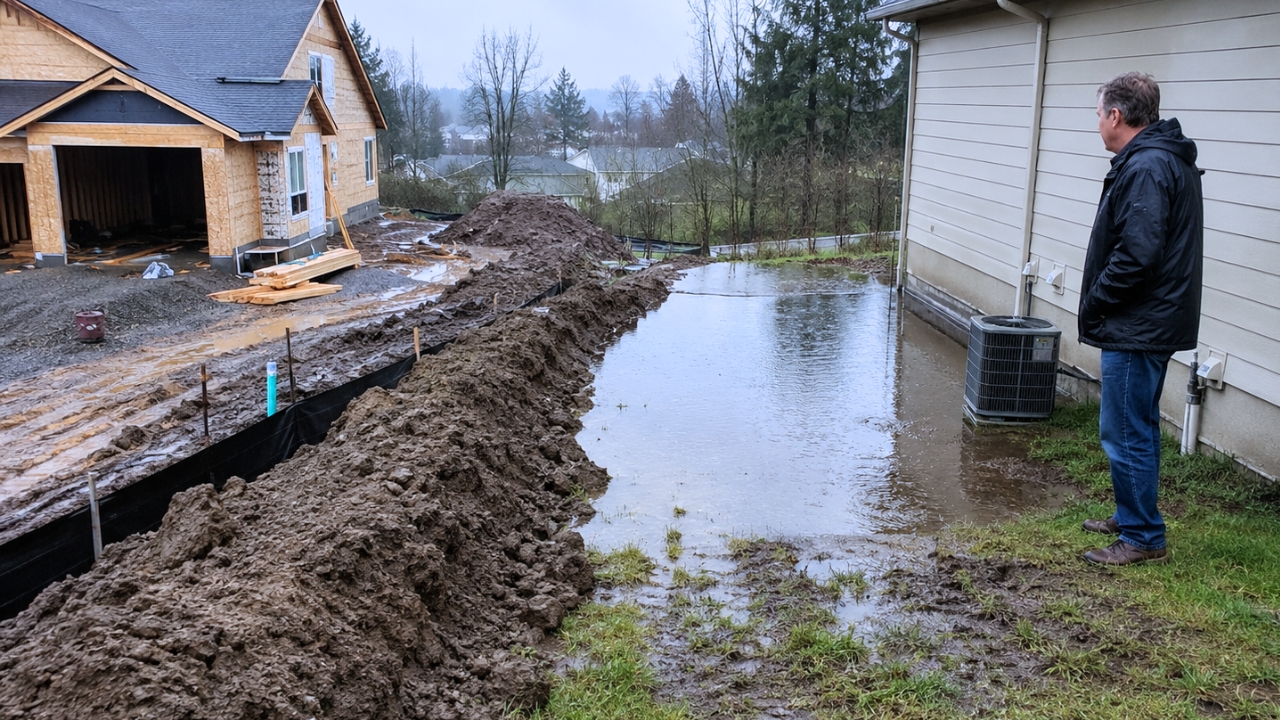
According to the homeowner, the neighbor was building his house mostly by himself. During construction, he moved a lot of dirt around and built up a berm or dam right on the property line. The homeowner said the neighbor’s property sits downhill from theirs, which matters because the natural drainage had always moved from the higher property toward the lower one.
The neighbor apparently did not like that. During construction, water from the homeowner’s lawn and downspout flowed into the neighbor’s construction hole and got into the basement. Instead of correcting the grading around his own house, the neighbor reportedly tried to stop the water at the line.
The homeowner said the result was water backing up on their property, right near their house, when it rained. That is the kind of thing that makes any homeowner nervous. Water pooling in the yard is one problem. Water collecting close to the foundation is another. If it keeps happening, it can create basement leaks, foundation moisture, soil movement, erosion, and expensive repairs.
The homeowner had already looked into Iowa drainage law and believed the downhill property could not simply block the natural flow of water coming from uphill land. They also linked to information from Iowa State’s Center for Agricultural Law and Taxation while trying to understand the issue. From their view, the neighbor was not only making a bad drainage choice. He may have been violating the way water rights and drainage responsibilities work in that area.
The neighbor wanted the water to run between the two houses and out toward the road instead of flowing through the backyards toward the road like it naturally had before. But the homeowner said that would not work because the land between the houses actually goes uphill before it goes downhill. In other words, the neighbor’s preferred path was not the path the land wanted to use.
The neighbor also wanted the homeowner to install a bunch of French drains in their own yard. That is what made the homeowner push back. French drains can be useful in the right situation, but they are not a magic fix for every drainage fight. If the lower property owner blocks natural drainage and backs water up against the higher property, it does not automatically become the higher homeowner’s job to spend thousands installing drains.
The homeowner brought out a professional landscaper for an opinion. According to the post, the landscaper said the neighbor needed to extend his window wells up and backfill dirt around the backside of his own house so the water would naturally flow around it. The neighbor refused.
That refusal left the homeowner in a tough spot. They did not want to wait until a major downpour flooded the property or basement before doing something. But they also were not sure who had authority to force the neighbor to remove the dam. Since no damage had happened yet, they wondered whether they had to wait for actual damage before taking action.
There was another important detail: the lot plat reportedly showed a 10-foot utility and drainage easement around the properties, and the homeowner said the neighbor’s dam was built right on top of that easement. That could matter a lot. A drainage easement is usually there for a reason. It may allow utilities, stormwater movement, access, or maintenance. Building a dirt barrier on top of it could create problems beyond a private neighbor dispute.
The timing made the whole thing feel even more suspicious. The homeowner said the neighbor waited until they were out of town for 10 days and did the work while they were gone. Coming home to a surprise dirt dam along the line is not exactly the kind of neighborly communication anyone hopes for.
The homeowner had three big questions: could they force the neighbor to remove it now, would insurance care about the issue, and could the easement make the city responsible or at least give the city authority to act?
This is the kind of rural or small-town property problem that can be easy to underestimate until the rain comes. A pile of dirt may not look like much on a dry day. But if it changes where water collects, backs up, or rushes during a storm, it can put a house at risk. And once water damage reaches a basement or foundation, the cost of waiting can be much higher than the cost of handling the drainage fight early.
Commenters strongly encouraged the homeowner to contact local officials quickly instead of waiting for a flood. Several suggested calling code enforcement, zoning, the building department, or whichever office issued building permits for the neighbor’s construction. A few said the dam may not match the grading or drainage plans submitted for the build.
Some commenters also recommended getting a lawyer familiar with land use or drainage issues. One user said a cease-and-desist letter from an attorney could put the neighbor on notice and demand that the water flow be restored to its previous path. Others said Iowa drainage law can be very specific, so local legal guidance would matter.
Several people focused on the easement. They pointed out that if the dirt dam sat inside a utility or drainage easement, that alone could be a serious issue. A neighbor generally cannot treat an easement area like open space for whatever construction choice suits them.
Others told the homeowner to document everything before the next storm: photos of the dam, videos of water pooling, the plat showing the easement, messages with the neighbor, and the landscaper’s opinion. A few also suggested cameras in case the dispute got worse.
The strongest advice was not to go out and remove the dirt dam themselves. Even if the neighbor was wrong, self-help with earthmoving equipment could create a new legal problem. The safer path was documentation, code enforcement, drainage officials, and a lawyer if the neighbor refused to fix what he built.