New Construction Homeowner Says the Well Water Stained Everything in Two Days — Then the “New Well” Started Looking Expensive
Photo credit: Fix It Homestead
A brand-new house can make people feel like the big problems should already be behind them. New walls, new floors, new fixtures, new appliances, new systems — it all gives the impression that everything should work cleanly from day one. But private wells do not always care how new the house is.
That is what one new construction homeowner found out after moving into a brand-new home with a brand-new well and quickly realizing the water looked bad enough to stain just about everything it touched. They shared the situation in a Reddit post on r/homeowners, asking whether the well simply needed time to “settle” or if the water was going to stay that rough long-term. The original Reddit post is here: https://www.reddit.com/r/homeowners/comments/18a52bd/brand_new_home_with_new_well_does_my_well_need_to/
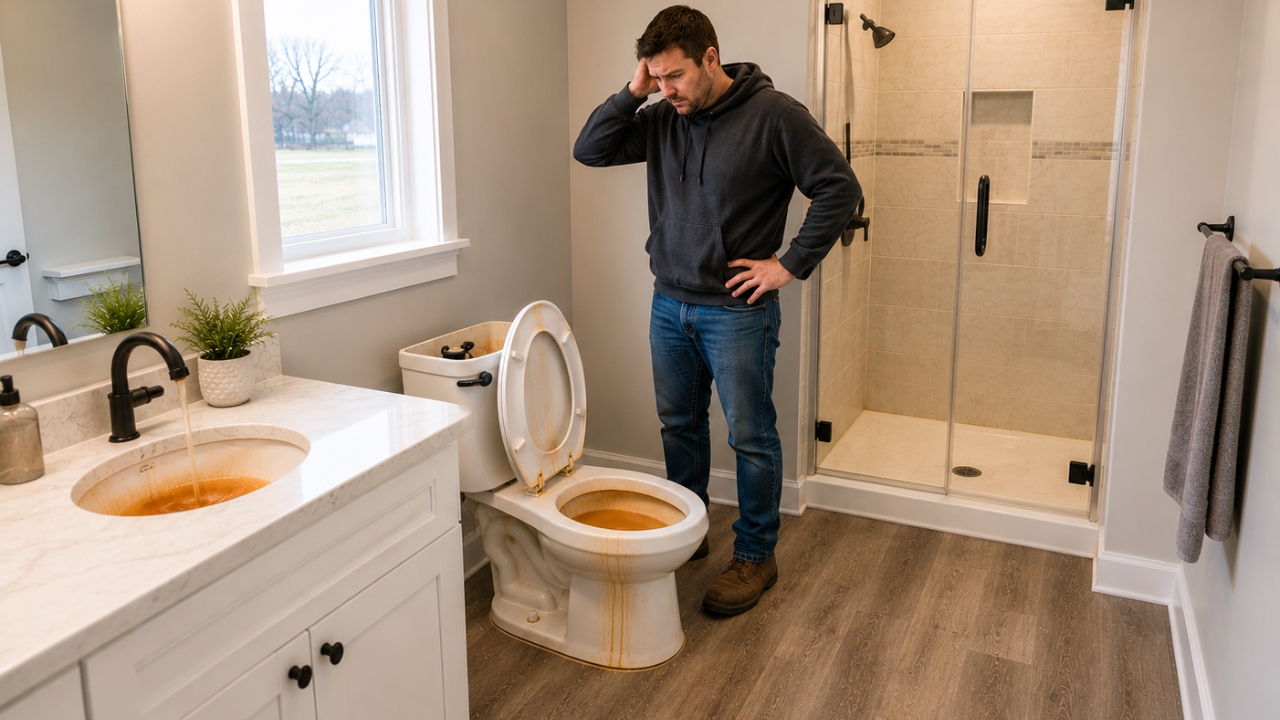
According to the homeowner, the house and well were both new, but the water was already creating problems within the first couple of days. They said the water was leaving orange staining, including on the toilets, shower, and sinks. They also described sediment in the toilet tanks and said the water smelled like iron.
That is not exactly the fresh-start feeling people expect after moving into new construction. Nobody wants to walk into a clean new bathroom and immediately see orange rings forming in the toilet or rust-colored stains showing up in the shower. Even if the water is technically safe, it can make the house feel dirty fast.
The homeowner wondered if this was normal for a new well. Sometimes newly drilled wells can produce cloudy, sandy, or discolored water for a little while as sediment clears out. There can also be leftover drilling debris, disturbed minerals, or flushing that still needs to happen. So the question made sense: was this a temporary break-in issue, or was the well water naturally high in iron and sediment?
That distinction matters because the fixes are very different. If the well simply needed additional flushing, the homeowner might be able to get through the first few days or weeks and see improvement. But if the water source itself had high iron, manganese, sediment, sulfur smell, or other mineral problems, the house might need filtration or treatment equipment.
The homeowner was already thinking along those lines. They mentioned that the builder said a sediment filter would be installed, but they were not sure if that would solve the issue. A basic sediment filter can catch particles, but it will not necessarily remove dissolved iron or stop staining if the iron is actually in the water. That is where homeowners can get tripped up. Clear-looking water can still stain if dissolved minerals oxidize after coming out of the tap.
The orange staining suggested iron was a major suspect. Iron in well water is common in many areas and can show up as reddish-orange stains, metallic taste, odor, or sediment-like particles once it oxidizes. But the homeowner needed actual testing, not guesses. Well water can contain several things at once, and the right treatment depends on the levels, the type of iron, pH, hardness, bacteria, sulfur, and other chemistry.
That is the part of well ownership that can surprise people moving from city water. With a private well, the homeowner becomes responsible for figuring out water quality, testing it, treating it, maintaining filters, and protecting plumbing and appliances. The water bill may disappear, but the responsibility does not.
The frustration in this case was that the well was brand new. It is one thing to buy an old farmhouse and discover the water needs work. It is another to move into new construction and immediately start wondering if the toilets, tubs, sinks, dishwasher, washing machine, and fixtures are going to be stained before the house even feels lived in.
Several commenters pushed the homeowner to test the water before installing random treatment equipment. That is good advice because water treatment can get expensive quickly, and the wrong system can waste money. A sediment cartridge may help with visible grit. A water softener may help with hardness and some low-level clear-water iron. But higher iron, iron bacteria, sulfur odors, or heavy sediment may require different systems like an oxidizing filter, backwashing iron filter, chlorination, aeration, or other treatment designed around the actual water report.
There was also the question of the builder’s responsibility. If the home was sold with a new well, the homeowner had reason to ask what water testing was done before closing, whether the well had been properly flushed, and what the builder promised about potability or treatment. A well can be functional and still produce water that stains badly, but new construction buyers should not have to guess what was tested and what still needs to be installed.
For this homeowner, the outcome was not as simple as waiting a few days and hoping the orange stains disappeared. The well might need flushing, but the staining suggested they needed a real water analysis and probably a treatment plan. The house may have been brand new, but the water system still needed the kind of attention rural homeowners know well: test first, treat based on results, and do not assume “new” automatically means clean.
Commenters mostly told the homeowner to get the water tested before spending money on equipment. Several said a sediment filter alone would not necessarily solve orange staining if the water had dissolved iron or other minerals that required specific treatment.
A number of users said new wells often need to be flushed, but they also warned that staining after only a couple of days could point to ongoing iron or mineral issues. Some suggested asking the builder or well driller what testing had already been done and whether the well had been properly developed and flushed.
Others recommended talking with a local water treatment company, but only after getting actual lab results. Commenters warned that well-water treatment is not one-size-fits-all. The homeowner needed to know iron levels, hardness, pH, sulfur, bacteria, sediment, and other water chemistry before choosing filters or softeners.
Several users also said the homeowner should protect fixtures and appliances while figuring it out. Orange well-water stains can build quickly, and once they settle into toilets, tubs, and sinks, they become much harder to clean. The practical advice was clear: do not panic, but do not ignore it either. Test the water, confirm what the builder owes, flush the system if needed, and install treatment that matches the actual problem.