A Hot-Water Leak Filled the Crawlspace With Moisture — Then the Mold Quotes Came Back Over $10,000
Photo credit: Fix It Homestead
A crawlspace leak can stay hidden long enough to cause real trouble before anyone realizes what is happening. You might notice a damp smell, higher utility bills, soft spots in the floor, or nothing at all until someone finally opens the crawlspace and sees the damage for themselves.
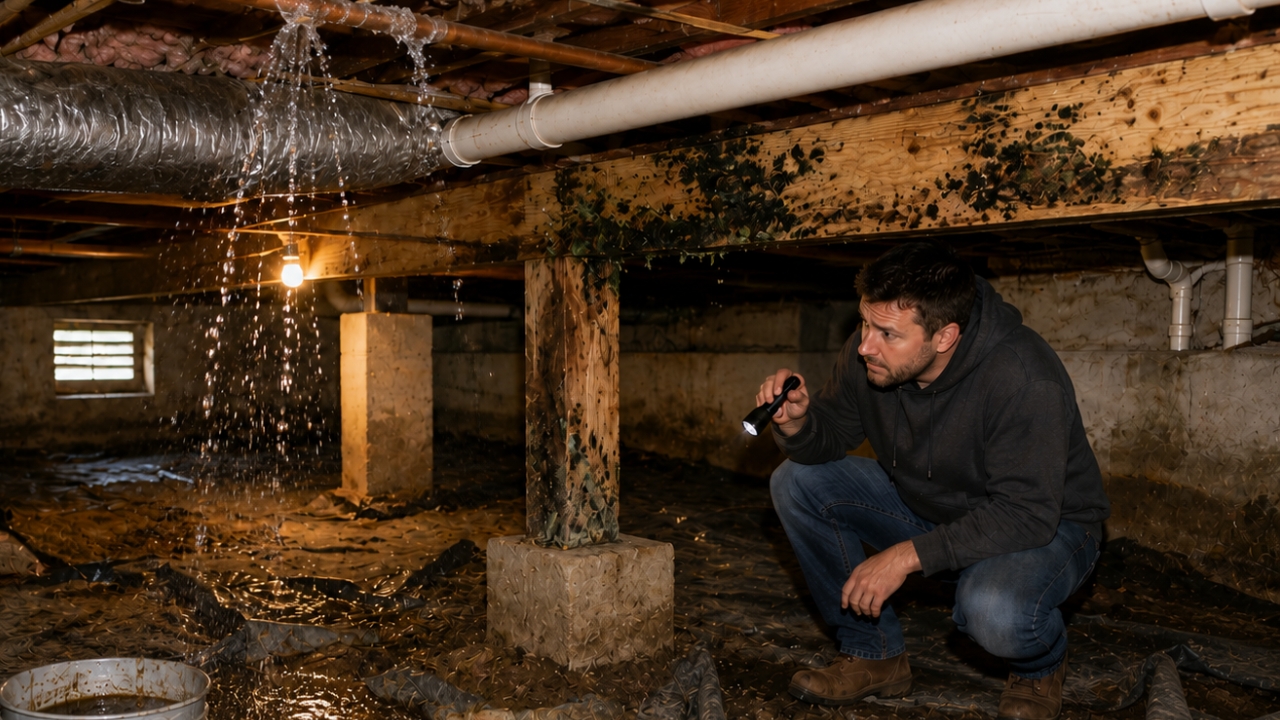
That is what one homeowner described after discovering that a hot-water line had been leaking in the crawlspace and creating enough moisture to trigger mold growth. They shared the situation in a Reddit post on r/homeowners, explaining that the leak had led to several mold remediation quotes, some climbing above $10,000. The original Reddit post is here: https://www.reddit.com/r/homeowners/comments/18n3zgc/hot_water_leak_in_crawlspace_triggered_mold_growth/
According to the homeowner, the issue started with a leak from a hot-water pipe in the crawlspace. That detail matters because hot water can create a different kind of mess than a cold-water drip. When warm water leaks into an enclosed crawlspace, it can raise humidity fast. Add limited airflow, exposed wood, insulation, dirt, and darkness, and the space can become exactly the kind of place mold likes.
The homeowner got the leak fixed, which was the first and most urgent step. But by then, the moisture had already done its work. Mold had started growing in the crawlspace, and the homeowner was left trying to figure out what cleanup actually needed to happen and how much it should cost.
That is where the situation became stressful. The homeowner received multiple quotes for mold remediation, and the prices varied widely. Some were around $3,000, while others were over $10,000. That kind of range is enough to make anyone suspicious. When one company says the job is a few thousand dollars and another says it is more than the price of a used car, it becomes hard to know who is being realistic and who is trying to scare you.
The homeowner wanted to know what was reasonable. They did not want to ignore mold, especially in a crawlspace connected to the home’s air, framing, insulation, and flooring. But they also did not want to get pushed into an oversized remediation job if the problem could be handled more simply.
That is one of the hardest parts of mold situations. Homeowners hear the word “mold” and immediately feel pressure. Some companies use that fear to sell a very large scope of work. Others may underbid and fail to address the moisture source, contaminated insulation, or long-term humidity control. The homeowner has to figure out which plan is actually right for the house.
In this case, stopping the water leak was only part of the repair. The crawlspace still needed to dry. The mold needed to be evaluated. The homeowner had to consider whether insulation was wet or contaminated, whether wood needed cleaning or treatment, whether a vapor barrier was present, and whether humidity would keep causing problems after remediation.
A crawlspace can look like one simple area, but several systems are involved. Plumbing runs through it. Floor framing sits above it. Moisture moves through soil and foundation vents. HVAC ducts sometimes pass through it. If the space stays damp, the same problem can return even after someone sprays or wipes the visible mold.
That is why the lower quote and higher quote may not have been offering the same thing. One company might have been proposing surface treatment only. Another might have included insulation removal, HEPA vacuuming, antimicrobial treatment, encapsulation, a vapor barrier, dehumidification, air sealing, or drainage improvements. Without comparing the exact scope, the prices alone would not tell the full story.
The homeowner’s concern was practical. They needed to know what work would actually protect the house without paying for unnecessary extras. With mold, that usually means asking for a detailed scope in writing. What areas will be cleaned? What materials will be removed? Will containment be used? Will the crawlspace be dried first? Will moisture levels be measured? Will the company address the reason mold grew in the first place? Will there be photos before and after?
The story also shows why crawlspaces should not be ignored. A leak under the house may not make a dramatic mess in the living room, but it can still create expensive damage. Hot-water leaks can be even worse because they add heat and humidity to a space that may already struggle to stay dry.
For homeowners, the best path usually starts with fixing the source, drying the area, and getting more than one opinion. Mold remediation should not be based on panic. It should be based on moisture readings, visible conditions, material damage, air movement, and a plan that keeps the problem from coming back.
Commenters mostly told the homeowner to focus on moisture control first. Several said mold remediation will not matter much if the crawlspace stays wet or humid after the cleanup. Fixing the leak was the right first step, but drying the crawlspace and controlling future moisture were just as important.
A number of users encouraged the homeowner to compare the quotes line by line instead of only looking at the final price. Some remediation companies may include insulation removal, vapor barriers, encapsulation, dehumidifiers, or air sealing, while others may only clean visible mold. Commenters said the homeowner needed to know exactly what each company was offering.
Several people recommended getting more opinions from local crawlspace or remediation companies and avoiding any company that used scare tactics. Others said the homeowner should take photos, ask for moisture readings, and make sure any proposed work matched the actual conditions under the house.
The strongest practical advice was to treat the leak, mold, and crawlspace humidity as one connected problem. Cleaning mold without solving moisture is a temporary fix. A proper repair should stop the water, dry the space, remove or clean affected materials, and make the crawlspace less inviting for mold in the future.