Neighbor Paves Part of a Private Lane Without Asking — Then Expects Everyone Else to Pay Their Share
Photo credit: Fix it homestead
A private lane can work fine for years when everyone understands the arrangement.
Maybe a few homes use it. Maybe each owner handles a section. Maybe one neighbor grades it, another adds gravel, and everyone informally pitches in when the road gets rough enough to complain about.
But that kind of setup depends on communication.
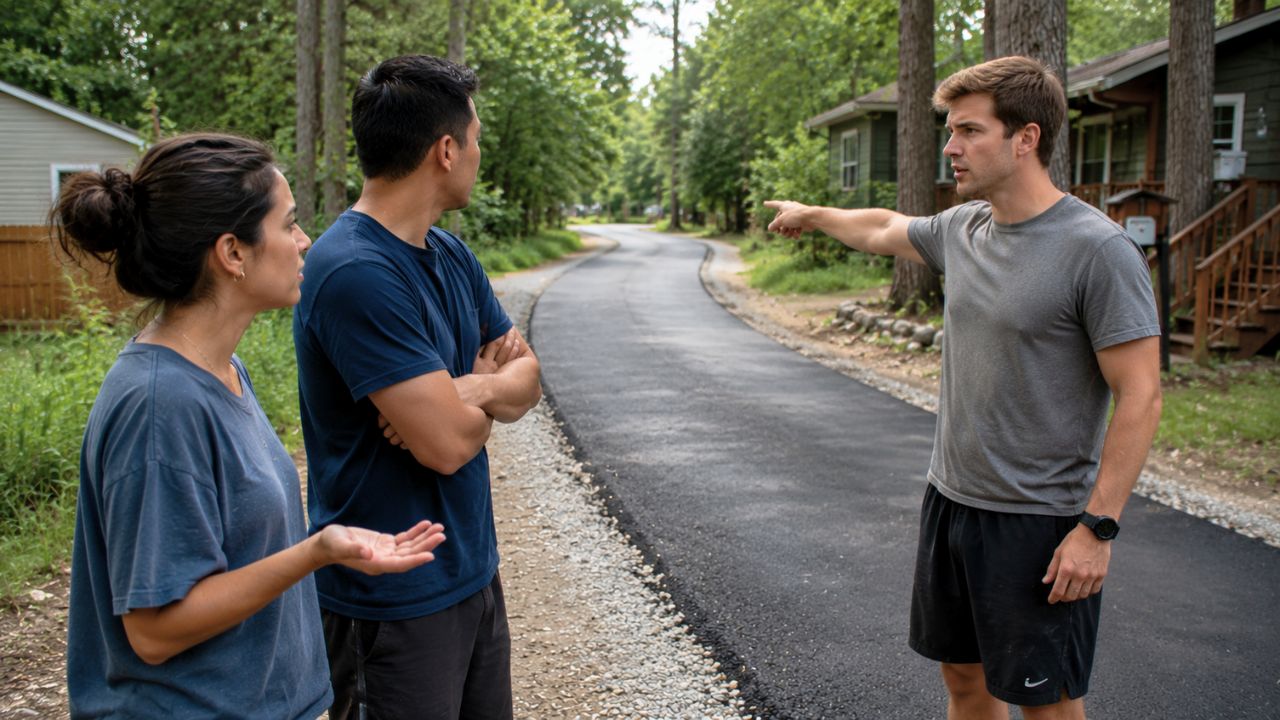
One property owner found that out when a neighbor paved part of a private lane without asking the others first.
Then, after the work was already done, the neighbor expected everyone else to pay their share.
What may have started as a road improvement quickly turned into a dispute over permission, cost, and whether one neighbor gets to make expensive decisions for everyone.
The lane was shared, but the decision was not
Private lanes can be complicated because the road may serve multiple properties even if ownership and maintenance responsibilities are not always obvious.
Some lanes are covered by recorded road-maintenance agreements. Some have easements. Some are owned by one person while others have access rights. Others are informal arrangements that have survived mostly because no one forced the details into writing.
That is where trouble begins.
A neighbor may look at a rough private lane and decide something needs to be done. Potholes, mud, washouts, dust, and ruts can make daily access frustrating. Paving may feel like the obvious upgrade.
But even if the improvement is useful, the cost still matters.
The other property owners did not get to approve the project, compare quotes, ask questions, choose the materials, or decide whether paving was even the right solution.
Then they were handed the expectation that they should pay.
The surprise bill changed the tone
If the neighbor had gathered everyone before the project, the conversation might have gone differently.
They could have discussed options. Maybe gravel would have been enough. Maybe only one section needed repairs. Maybe someone would have asked for multiple bids. Maybe another owner was not in a financial position to contribute right then. Maybe the lane agreement, if one existed, required a specific process before major work.
Instead, the neighbor acted first.
That made the payment request feel less like shared maintenance and more like a bill for a decision the others never made.
For the property owner, the issue was not necessarily that the lane looked better. It was that someone else had chosen the scope, timing, contractor, and cost, then expected the neighbors to help cover it after the fact.
That is a hard sell.
Private road maintenance depends on paperwork
The key question was whether there was a written agreement.
If the properties were governed by a road-maintenance agreement, it might say how costs are divided, what counts as ordinary maintenance, who can authorize work, whether owners need advance notice, and how major improvements are approved.
If the lane was only covered by an access easement, the rules might be different. An easement may give someone the right to pass over the road, but that does not always mean one person can unilaterally upgrade it and bill everyone else.
And if there was no clear agreement at all, the dispute became even messier.
The neighbor who paid for paving may feel cheated if others benefit from the smoother lane without contributing. The other owners may feel pressured to pay for something they never requested.
Both sides may believe they are being reasonable, but without written rules, the argument can quickly become personal.
Paving may have created new problems too
A paved lane is not always a simple upgrade.
Depending on how the work was done, paving can change drainage, speed, access, maintenance needs, and future repair costs. Water that once soaked into gravel may now run toward yards, ditches, culverts, driveways, or low spots. Snow, ice, cracking, and edge damage may become new maintenance concerns.
If the paving was done poorly, the other owners might be stuck looking at a road that costs more to fix later.
That is another reason the property owner may have objected to being charged.
They were not only being asked to pay for an unauthorized project. They may also have inherited the consequences of that project.
Once pavement is down, it is not as simple as undoing the decision.
Commenters focused on consent and agreements
When private-road disputes come up, people usually tell owners to pull the deed, easement documents, title paperwork, and any recorded maintenance agreements.
The answer often depends on what those documents say.
If the agreement allows one owner to arrange necessary maintenance and bill the others, the paving neighbor may have a stronger argument. But if major improvements require approval, or if there is no agreement requiring shared payment, the surprise bill may be much harder to enforce.
Commenters also tend to warn that “benefiting from the work” is not always the same as agreeing to pay for it.
A neighbor cannot usually make an expensive choice alone and automatically force everyone else to reimburse them just because the road is nicer afterward.
At the same time, private lanes do require upkeep, so the owners may still need a clearer plan going forward.
The real issue was who gets to decide
The paved section of lane may have looked cleaner, smoother, and more finished.
But the argument was not only about asphalt or concrete.
It was about control.
If one neighbor can pave part of a private lane without asking, then send everyone a bill, what stops them from making the next decision too? Widening the lane? Changing drainage? Adding a gate? Hiring a contractor for more work? Deciding when everyone else has to pay?
For the property owner, that was the part that made the situation feel unfair.
Shared access does not mean one person gets to make shared financial decisions alone.
And when a neighbor improves a private lane first and asks for money later, the question becomes painfully simple:
Was this really a shared road project, or did one person make a choice and try to turn it into everyone else’s bill?
Like Fix It Homestead’s content? Be sure to follow us.