New Landowner Finds an Old Barn Sitting Over the Boundary Line — Then the Neighbor Claims It Comes With the Property
Photo credit: Fix it homestead
Old barns can make rural property feel like it has history.
They sit there weathered and quiet, looking like they have always belonged exactly where they are. A buyer may see one near the edge of the land and assume the boundaries around it are already understood.
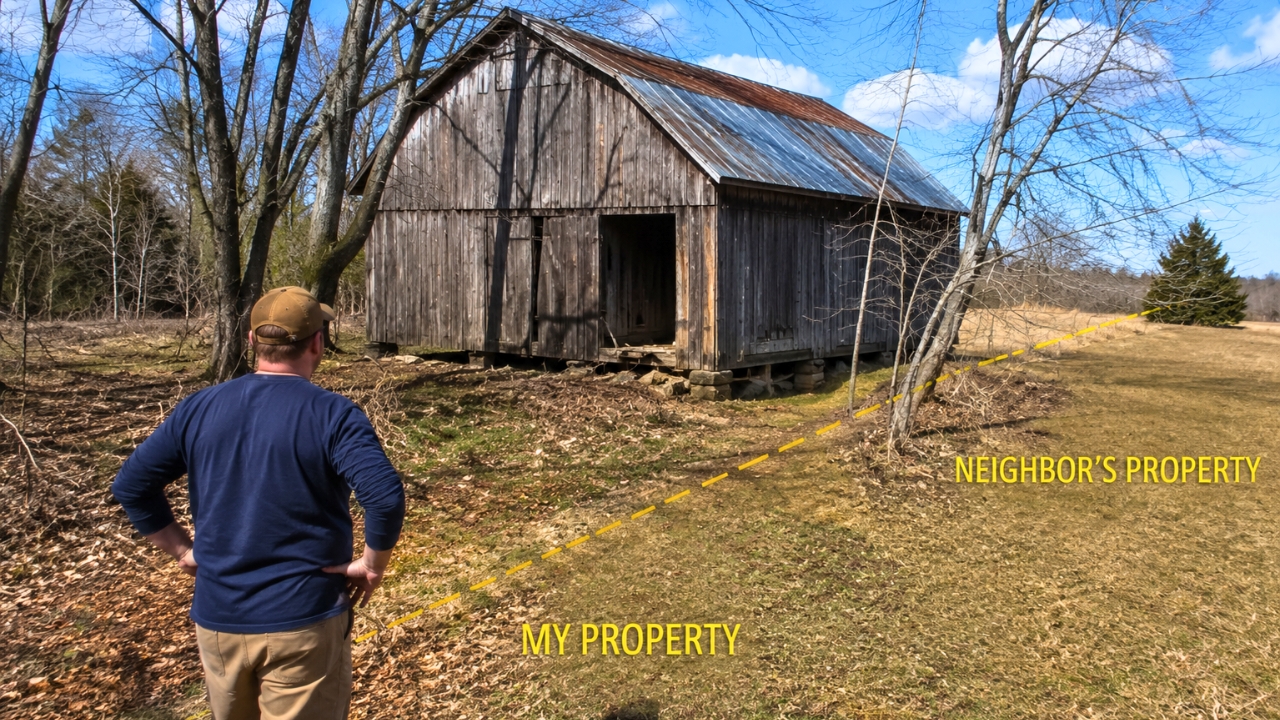
But one new landowner learned that an old barn near the property line can turn into a much bigger problem once the survey comes out.
After buying the land, the owner discovered that an old barn appeared to sit over the boundary line. Part of it may have been on their side. Part of it may have been on the neighbor’s side. And instead of making the issue simple, the neighbor reportedly claimed the barn came with their property.
That left the new owner facing an awkward question.
Who actually owned the barn, and what happens when a structure is sitting across the line?
The barn had probably been treated as settled for years
Rural properties often carry old assumptions.
A fence line gets treated like a boundary. A tree row becomes the marker everyone uses. A barn, shed, well house, or driveway sits in one place for decades, and eventually nobody questions whether it was built exactly where it should have been.
That may have been what happened here.
The barn was old enough that the current neighbors may not have been the ones who built it. It may have been placed before a modern survey was done. It may have belonged to a previous owner, a family member, or a farm setup that was later split into separate parcels.
Over time, the structure simply became part of the landscape.
But a survey can make old assumptions uncomfortable very quickly.
If the barn crosses the legal boundary, the issue is not just sentimental. It becomes a property problem.
The neighbor claimed the barn was theirs
The neighbor’s argument made the situation more tense.
From their point of view, the barn may have always been associated with their property. Maybe they stored equipment in it. Maybe their family had maintained it. Maybe they believed the sale included it. Maybe the previous owner told them it was theirs.
But the landowner had a survey telling a different story.
If part of the barn sits on the new owner’s land, then the neighbor’s claim becomes more complicated than simply saying it “comes with” their property.
A structure cannot usually ignore a boundary line just because people have gotten used to seeing it there.
That does not automatically mean the new owner gets to do whatever they want with the barn. But it does mean the situation needs more than a casual neighbor opinion.
It needs records.
A structure over the line creates real problems
A barn crossing a boundary can cause several headaches at once.
Who maintains it?
Who is liable if it collapses?
Who pays if the roof blows off and damages something?
Who controls access?
Can either owner repair it, tear it down, insure it, or sell the property without dealing with the encroachment?
If animals, tools, hay, vehicles, or equipment are stored inside, the conflict gets even messier. If the barn is unsafe, abandoned, or deteriorating, the landowner may worry about being tied to a structure they did not build and may not want.
A misplaced fence can be moved. A garden can be replanted.
An old barn is a heavier problem, literally and legally.
The new owner had to think about resale and liability
Even if the barn was not bothering anyone day to day, the boundary issue could follow the property.
A future buyer may ask about it. A title company may flag it. An insurance company may want clarity. A lender may dislike unresolved encroachments. A survey during a later sale could bring the same issue back at the worst possible time.
That is why ignoring the barn may not be wise.
The landowner may not want a fight, especially right after moving in. But leaving a structure half-claimed by a neighbor can make the property harder to use, improve, or sell.
And if the neighbor keeps insisting the barn belongs to them, the owner needs to know whether that claim has any legal support.
Commenters focused on deeds, surveys, and written agreements
In situations like this, people usually warn property owners not to rely on memories or assumptions.
The deed matters. The survey matters. The title documents matter. Any recorded easements, boundary agreements, old sale records, or written permissions matter too.
The landowner would likely need to find out whether the barn was mentioned in any closing documents, whether the boundary has been disputed before, and whether there is any agreement allowing the structure to remain where it is.
If the neighbor claims the barn came with their property, the owner should ask for the document showing that.
Not a story.
Not “everyone knows.”
Not “it has always been ours.”
Actual paperwork.
The real issue was not just the barn
The barn may have been the visible problem, but the deeper issue was control of the land.
A new landowner bought a property expecting the boundaries to mean something. Then they found a structure crossing the line and a neighbor claiming ownership as if the survey did not matter.
That puts the owner in a difficult position.
They can try to stay friendly, but they cannot ignore the fact that part of their land may be occupied by a structure someone else claims. They can push for a formal resolution, but that may start the neighbor relationship off with conflict.
Either way, the barn is not something that can be casually brushed aside.
Because when an old structure sits across a boundary line, the problem is not only who uses it today.
It is who gets to decide what happens to it tomorrow.
Like Fix It Homestead’s content? Be sure to follow us.