Tenant Says the Ceiling Mold Was Marked “Low Priority” — Then Water Starts Dripping Into the Light Fixture
Photo credit: Fix it homestead
A little discoloration on a ceiling can be easy for a landlord or apartment office to minimize.
Maybe they call it staining. Maybe they say maintenance will take a look eventually. Maybe they mark the request as “low priority” because the ceiling has not collapsed and the tenant is still technically able to use the room.
But for one tenant, the problem did not stay small.
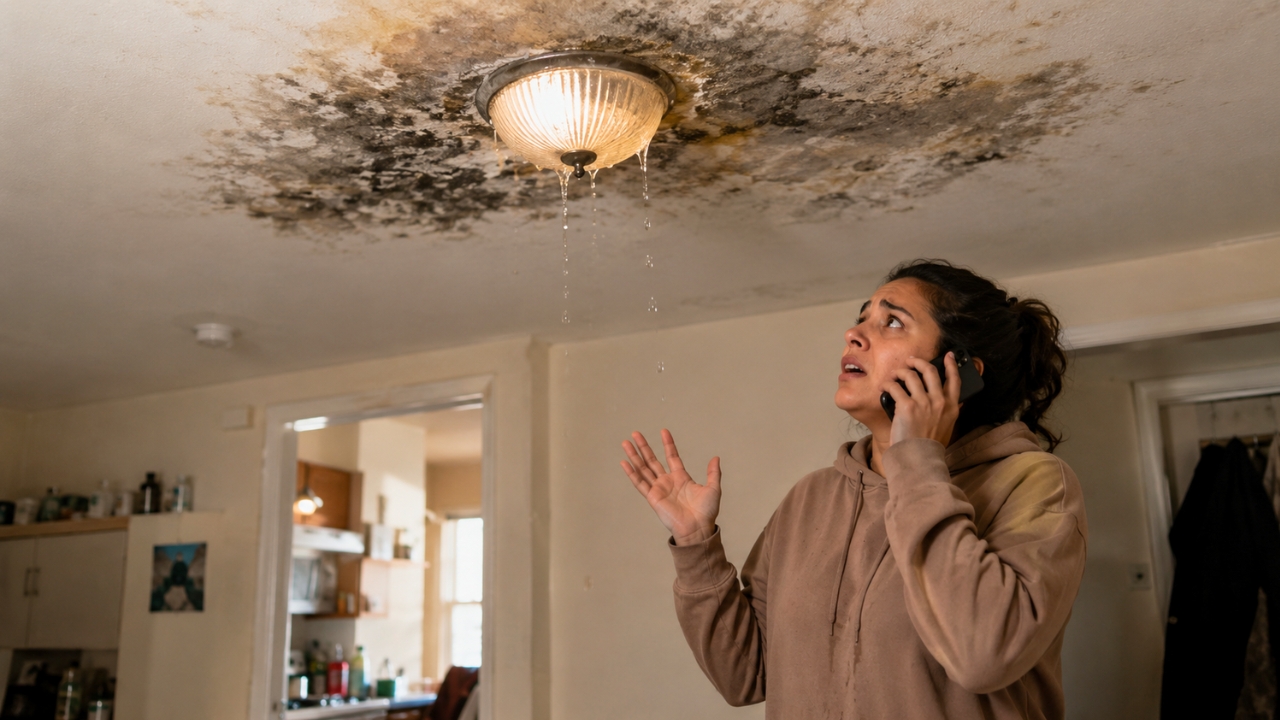
What started as ceiling mold became much more alarming when water began dripping into the light fixture.
At that point, the issue was no longer just ugly, frustrating, or unpleasant.
It started to feel unsafe.
The mold was already a warning sign
Mold on a ceiling usually means moisture is coming from somewhere.
It might be a roof leak, plumbing leak, condensation problem, bathroom ventilation issue, upstairs unit leak, or water trapped behind drywall. Whatever the cause, mold is often the visible symptom of a problem that has already been active for a while.
That was why the tenant was concerned.
They were not just complaining about a stain. They were looking at a ceiling that appeared to have moisture damage, and they wanted the source addressed before it got worse.
Instead, the issue was reportedly treated as low priority.
That kind of response can make a tenant feel powerless. They do not own the building. They cannot simply open the ceiling, repair the roof, replace the drywall, or hire a contractor without creating a new conflict with management.
So they wait.
And while they wait, the water problem can keep spreading.
Then the light fixture started dripping
Water and electrical fixtures are a terrifying combination.
Once water is dripping into or around a light, the situation feels very different from a cosmetic maintenance request. A tenant may start worrying about electrical hazards, ceiling collapse, hidden mold growth, and whether the room is safe to use at all.
The dripping light fixture also raises the urgency.
If water has reached that point, it is likely not just sitting on the surface of the ceiling. It may be traveling through drywall, insulation, framing, or wiring areas before finding the fixture opening.
That means the visible drip may only be one part of the problem.
For the tenant, the “low priority” label likely felt absurd once water started coming through the light.
The delay may have made the damage worse
Maintenance delays can turn manageable repairs into major problems.
A small roof leak might be easier to fix early. A plumbing leak might be contained before drywall is saturated. A ceiling stain might be investigated before mold spreads.
But when a moisture issue is ignored, water keeps doing what water does.
It finds paths. It soaks materials. It damages paint, drywall, insulation, framing, and fixtures. It creates the conditions for mold to grow. And by the time the damage is obvious, the repair may be far more invasive than it would have been at the beginning.
That is what makes these tenant situations so frustrating.
The tenant reports the issue early, management delays, and then the tenant is left living with the consequences of that delay.
The tenant had to think about safety first
Once water reaches a light fixture, the tenant’s concern has to shift from inconvenience to safety.
They may need to stop using the light, avoid the area, document the dripping, and notify management again in writing with the updated severity. Depending on the situation, they may also need emergency maintenance, code enforcement, the local housing authority, or other tenant resources.
The exact options depend on local law and lease terms, but the basic concern is clear.
A ceiling with mold and water dripping into a fixture is not something that should be handled like a routine work order.
It needs urgent attention.
Commenters focused on documentation
In rental disputes like this, people usually urge tenants to document everything.
Photos of the mold. Videos of the water dripping. Screenshots of the maintenance requests. Dates and times. Any responses from management. Any signs of worsening damage. Any health or safety concerns.
That documentation matters because a tenant may need to show that the problem was reported, that management knew about it, and that the condition worsened.
Commenters also often recommend using written communication instead of relying only on phone calls or casual conversations with office staff. A written record can become important if the tenant needs to escalate the issue.
The tenant may also need to avoid making the situation look like they caused the damage. Keeping records helps show the timeline.
The real issue was the “low priority” response
Ceiling mold was already a sign that something needed to be checked.
But the bigger outrage came from how the issue was handled.
Calling it low priority may have made sense to someone looking at a maintenance queue, but it did not make sense to the tenant watching the ceiling get worse.
And once water started dripping into the light fixture, the original response looked even more careless.
The tenant was not asking for a cosmetic upgrade. They were asking for a water problem to be fixed before it created mold, electrical concerns, and possible damage to the unit.
By the time the light fixture started dripping, the question was no longer whether the ceiling looked bad.
The question was why the problem had been allowed to reach that point at all.
Like Fix It Homestead’s content? Be sure to follow us.