Rural Landowner Finds the Neighbor’s New Landscaping Is Sending Runoff Straight Onto the Property — Then the Neighbor Says They Have the Right to Drain Water Downhill
Photo credit: AI-generated image created using ChatGPT. Illustrative only.
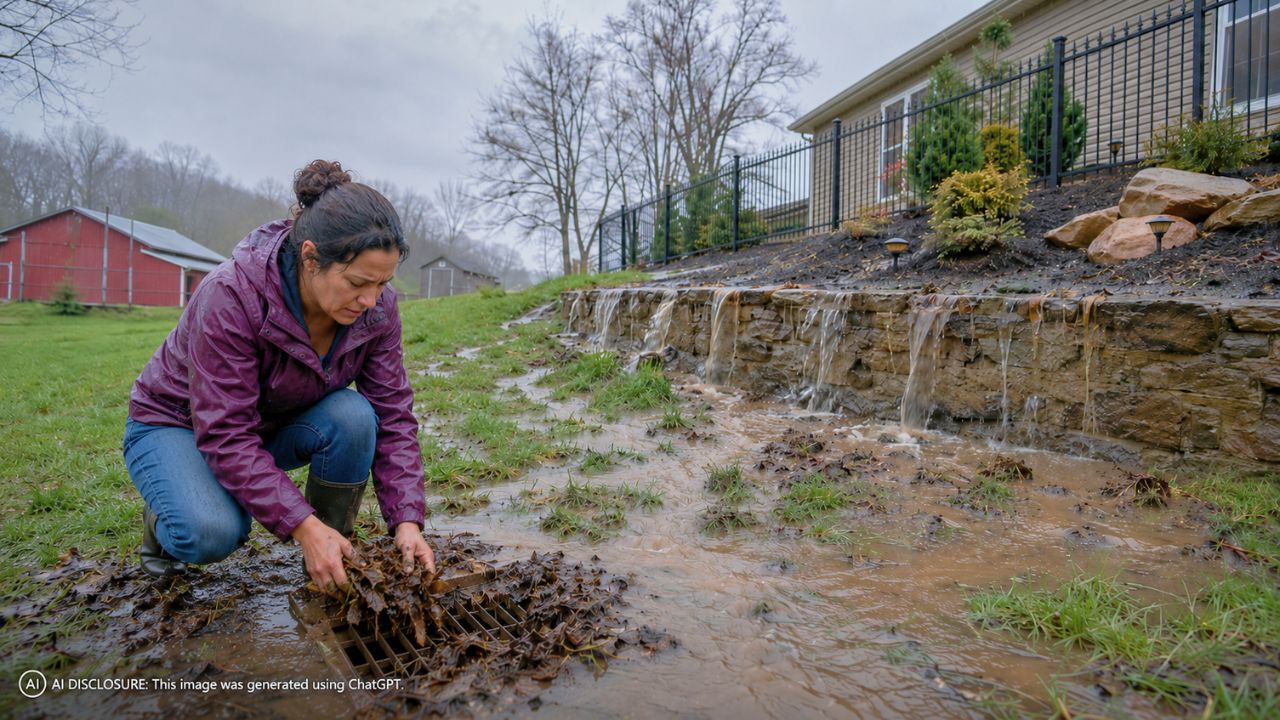
The rain came down hard in the Ohio Valley, the kind of storm that makes you listen for strange new sounds—gutters overflowing, sump pumps cycling, water slapping against the foundation. After the downpour, one rural homeowner stepped into the backyard and found something worse than soggy grass: a yard that had turned into a shallow pool, holding water in a way it hadn’t before.
In the source post, the homeowner described rushing outside in a panic and heading straight for a catch basin to clear leaves, thinking it was just a clogged drain. But when they looked uphill, the cause felt uncomfortably obvious. Water from the neighbor’s property appeared to be pouring over an old retaining wall and pushing directly into their yard.
The backyard flood wasn’t just “heavy rain”
The homeowner said all the backyards in the area slope toward the houses, which is stressful enough during big storms. But this time, the flooding didn’t look like general saturation. It looked like a concentrated flow—rainwater being funneled and redirected by something that had changed next door.
From their view, the neighbor’s yard had been left unattended since before they moved in, and now that neglect seemed to be turning the old retaining wall into a spillway. Instead of slowing runoff and holding soil back, the wall area had become a place where water could gather and then surge over in sheets.
That’s the part that makes homeowners’ stomachs drop: when the problem isn’t just your own drainage anymore, but the way someone else’s property is shedding water. Once water starts consistently traveling the same path, it doesn’t take long for it to carve channels, weaken edges, and find the lowest point—often near a foundation.
Then the personal history made it harder
The homeowner wasn’t only dealing with water. They were dealing with neighbors they already felt were hostile. According to the post, when the homeowner moved in, the neighbor told them she stopped taking care of her backyard specifically to spite the previous owners because the two households were “always at each other’s throats.”
That confession changed the tone of everything. An overgrown yard is one thing; intentional neglect as a form of payback is another. Even if the neighbor’s comment was partly bluster, it left the homeowner expecting any conversation about runoff to go badly.
And that matters because drainage disputes are the kind that can spiral fast. Once someone feels accused—especially if they believe they can do whatever they want as long as water flows downhill—they may dig in, deny, or retaliate with more changes to the landscape.
The retaining wall became the big question mark
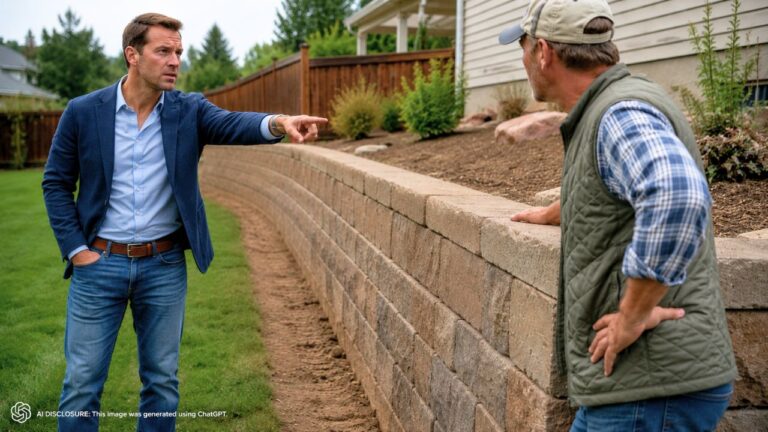
One detail kept looming over the whole problem: nobody seemed fully sure whose retaining wall it was. The homeowner described it as “all one wall” that curls around and supports part of their back hill. Depending on where the property line actually falls, the wall could be on the neighbor’s lot, on theirs, or straddling both in some awkward, decades-old arrangement.
That uncertainty is more than paperwork. If the wall is failing or being overtopped and undermined, repairs can be expensive and time-sensitive. And if you pay to fix something that sits on someone else’s property—or you alter drainage in a way that affects their lot—you could be signing up for a whole second round of conflict.
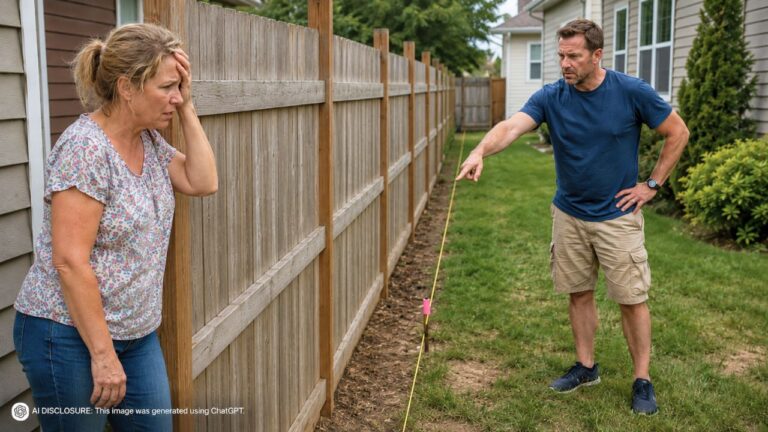
To get ahead of that, the homeowner said they planned to call a surveyor to mark the property line. It’s not the most exciting phone call to make, but it’s the kind that gives you something solid to stand on before the first tense conversation happens across a fence line.
Fix it yourself… or force the issue?
The homeowner’s practical question was the one most people ask once they realize water doesn’t care about social boundaries: who is responsible for fixing this? They were considering whether they’d be forced to handle it on their side by installing a French drain system at the base of the retaining wall to catch and divert the flow.
But they also worried that doing their own fix might feel like accepting the problem. If the neighbor’s yard condition is what’s driving the runoff, and if the homeowner builds a new drainage system without addressing the source, it could become a permanent patch for a neighbor-created issue.
At the same time, water damage doesn’t wait for a handshake agreement. Standing water in a backyard can turn into muddy seepage, saturated soil near the house, and the slow creep of moisture toward basements and crawlspaces. Even without visible interior damage, repeated flooding can rot fence posts, loosen retaining structures, and create mosquito-heavy pockets that make summer miserable.
The homeowner also hinted at the next step if a direct talk goes sideways: contacting the township or county. That’s where these disputes often land when polite conversation isn’t an option—especially when one homeowner believes they’re entitled to drain water downhill and the other is staring at a flooded yard.
People pushed documentation before confrontation
The post carried a clear theme: before saying anything to the neighbor, the homeowner wanted their facts lined up. That mindset tends to bring out a specific kind of advice from other homeowners—less about winning an argument in the moment, and more about building a record.
When emotions are high, “I saw water coming from your yard” can turn into a shouting match in thirty seconds. But property markers, photos after storms, and a timeline of when the flooding started are harder to dismiss. Even basic details—like the direction of flow, where it overtops the wall, and whether the catch basin was clear—can help separate “extreme weather” from “redirected runoff.”
There’s also a practical reason for that approach: if the homeowner does end up involving local officials, they’ll likely be asked for specifics. Having the survey done and evidence of repeated overflow can keep it from being framed as a one-time weather event.
A simple yard problem rarely stays simple
What started as a routine post-storm check turned into a bigger fear: that the neighbor’s neglected slope and the old retaining wall together are creating a new water path straight into the homeowner’s yard. And because the neighbor relationship is already sour, the homeowner isn’t expecting a friendly “sure, let’s fix it” response.
So now it’s a race between two clocks. One is the weather—because the next heavy rain could refill the backyard and push more water over that same point. The other is the human clock—survey scheduled, property line confirmed, conversation attempted, and, if needed, escalation to the township or county.
In rural and semi-rural neighborhoods, a lot of peace is built on unspoken cooperation. When water starts crossing lines, those unwritten rules get tested fast. For this homeowner, the immediate goal is simple: stop the flooding. The harder part is doing it in a way that doesn’t lock them into paying for someone else’s runoff for years to come.
Like Fix It Homestead’s content? Be sure to follow us.