New Homeowner Finds the Neighbor Built a Privacy Fence That Cuts Off a Recorded Pedestrian Easement to the Creek — Then the Neighbor Claims No Easement Was Ever Disclosed to Them at Closing
Photo credit: AI-generated image created using ChatGPT. Illustrative only.
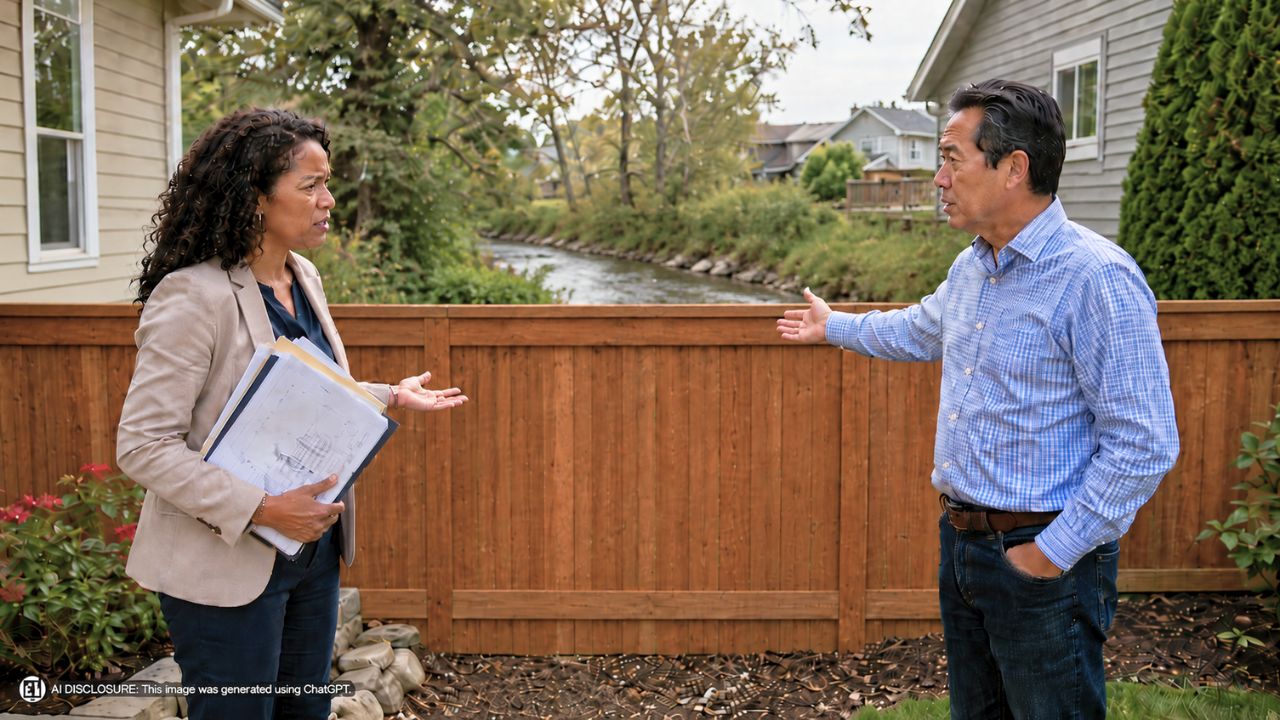
The new homeowner thought the creek access was one of those “nice-to-have” perks you don’t truly appreciate until a hot afternoon when you want to walk down and check the waterline. Then they looked over and saw the neighbor’s brand-new privacy fence running like a hard stop across the route—right where a recorded pedestrian easement was supposed to pass through.
When the homeowner brought it up, the neighbor’s response wasn’t an apology or a quick plan to add a gate. It was a flat denial: no easement had ever been disclosed to them at closing, so as far as they were concerned, no one had a right to cut through. It echoed the kind of standoff described in the source post, where one property owner described neighbors treating an easement like a chunk of yard they could control—trampling plants, mowing over flowers, and insisting they could “traverse anywhere within that path.”
The first sign was a fence that didn’t match the map
At first glance, a privacy fence can look like a normal upgrade—clean lines, fresh boards, the classic “good fences make good neighbors” logic. But this one didn’t just hug a property boundary. It cut straight across where the homeowner believed the easement ran, effectively turning a pedestrian right-of-way into a dead end.
That’s when the stakes changed from “annoying neighbor project” to “you just blocked a recorded property right.” Easements aren’t casual favors; they’re written into the land records. And once something is recorded, it usually survives sales, remodels, and even misunderstandings at closing.
The neighbor’s argument—“it wasn’t disclosed to me”—is the kind of line that sounds powerful in a driveway conversation. But it doesn’t automatically erase whatever was filed with the county. Still, in real life, that doesn’t stop a fence from going up, and it doesn’t magically reopen access to the creek.
Then the argument shifted to “how much access is too much?”
One of the messiest parts of easement fights is that they almost never stay narrow. Even when the original purpose is simple—walking access, ingress and egress—people start fighting about the width, the rules, and who gets to decide what’s “reasonable.”
In the Avvo post, the property owner wasn’t trying to eliminate the easement. They wanted to fence and gate it so neighbors could pass through “by gate only,” because the neighbors were “destroying plants and property all along a 30 Ft easement.” The neighbors claimed they could roam anywhere within that 30-foot path, not just stick to a single line of travel.
That detail matters because it shows how quickly an easement can feel like a takeover. The post describes the neighbors mowing over flowers on purpose, insisting it was their right. The owner says the neighbors have ingress and egress rights only—yet the neighbors were “controlling my land including altering the landscape as they wish.”
Now add a privacy fence into that mix. A fence doesn’t just block people; it becomes a statement about whose interpretation wins. And once someone spends money on lumber and labor, they get emotionally invested in the idea that they’re right.
Damage makes it personal, fast
It’s one thing to argue about lines on a plat map. It’s another to watch your landscaping get flattened because someone believes a strip of your yard is their personal sidewalk—or worse, their personal mower lane.
In the source material, the property owner paints a picture most homeowners can feel in their gut: plants destroyed, property damaged, and a sense that the neighbor is using the easement not just to pass through, but to punish. “They dont need 30 Ft to get in and out,” the owner wrote, frustrated that what should have been a limited access right had turned into a wide corridor of impact.
That’s where these disputes often escalate. People stop waving at each other. They start watching. They start marking where tires or footprints go. They stop planting near the easement because it feels pointless. The yard becomes contested territory, and every trim job or “maintenance” pass looks like a flex.
Even if the easement is legitimate, most easements aren’t meant to authorize unnecessary destruction. But what counts as “unnecessary” when one side says they’re just using their right-of-way and the other side is staring at crushed flowers?
Gates sound simple until someone calls it “interference”
The homeowner idea in the Avvo post—fence and gate the easement so neighbors can only pass through a controlled point—sounds like the practical fix a lot of people want. You’re not blocking access, you’re just channeling it. In theory, it protects plants, keeps people from wandering, and creates a clear route.
In practice, gates are where neighbors start using big words: obstruction, interference, denial of access. If a gate sticks, if it’s locked, if it’s hard to open while carrying gear, or if it “suddenly” appears without agreement, the easement holder may claim their rights are being narrowed.
And from the property owner’s perspective, leaving a 30-foot-wide open runway can feel like giving up control of your own yard. Especially when the people using it are mowing over flowers and altering the landscape “as they wish.”
That’s why these fence-and-gate plans tend to become the next battleground, not the solution—unless the easement language is specific, the route is clearly established, and the gate is designed so access is still genuinely available.
What neighbors tend to focus on: paperwork, proof, and a paper trail
When people swap stories about easement fights, the practical voices usually go straight to documentation. Not because it’s fun, but because friendly conversations have a way of evaporating once a fence goes up or landscaping gets destroyed.
Homeowners in this position typically start collecting the unglamorous stuff: the recorded easement language, the legal description, any map exhibits, and photos showing how the path has been used. If damage is happening—plants run over, areas mowed down—people document it before it gets “cleaned up” and denied.
They also tend to get specific about terms like “ingress and egress.” If that’s truly all the easement grants, it can be a big difference from a broader right to improve, maintain, or alter the area. The owner in the source material clearly believed the neighbors were acting beyond simple travel rights.
And when the neighbor claims the easement “wasn’t disclosed” at closing, that’s often when the conversation stops being neighbor-to-neighbor and starts becoming document-to-document. The land records don’t care what someone remembers from a stack of closing paperwork.
Living next to a locked-off creek is a daily reminder
The thing about a blocked path to the creek is you don’t forget it. You see the fence every time you look out the window. You remember why you bought the place. And every week the fence stays put, it starts feeling more permanent—like the neighbor’s version of reality is becoming the new normal.
Meanwhile, the underlying frustration described in the Avvo post lingers in the background: even when an easement exists, the way it’s used can grind down the homeowner who actually owns the ground underneath it. Whether it’s a fence that cuts off access entirely or “ingress and egress” turning into a 30-foot-wide free-for-all, the emotional weight is the same—your property doesn’t fully feel like yours.
This kind of dispute rarely ends with one perfect conversation. It usually ends with someone producing the recorded language, someone else realizing they built something in the wrong place, and both sides trying to save face while undoing a decision that already cost money. Until then, it’s a quiet, stubborn standoff—one fence line, one gate idea, and one strip of land that suddenly matters a lot more than anyone expected.