Rural Property Owner Discovers the Neighbor Has Been Charging Hunters a Trespass Fee to Cross Through the Deeded Easement Road to the Back Forty — Then the Neighbor Says the Easement Does Not Prevent Profiting From Use of Private Land
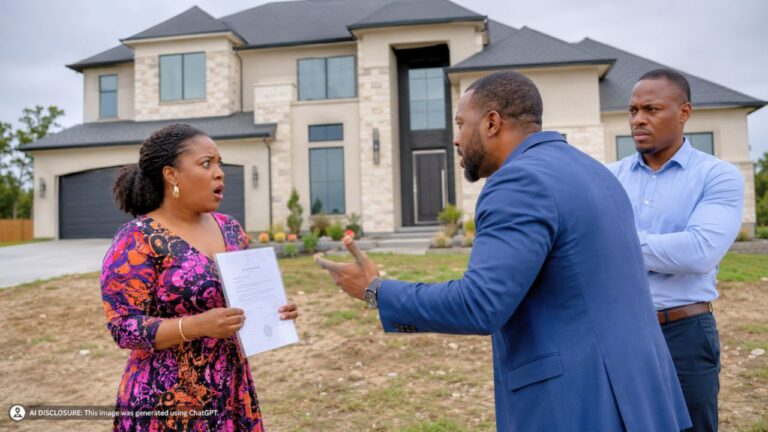
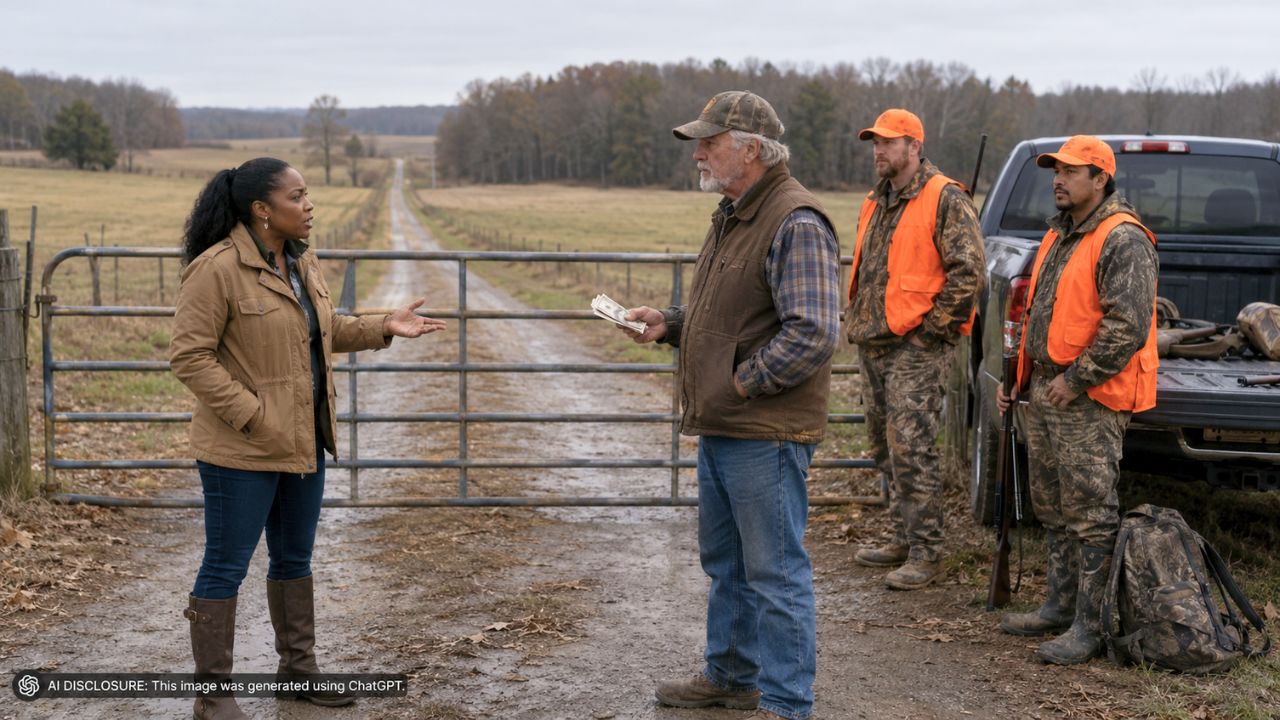
Photo credit: AI-generated image created using ChatGPT. Illustrative only.
The gravel road to the back forty is the kind of thing rural owners stop thinking about—until something changes. One week it’s just a lane you maintain so you can get a tractor back there. The next week there are tire tracks you don’t recognize, trucks parked where they don’t belong, and strangers acting like they’ve got permission.
That’s how this one starts: a property owner realizes hunters have been paying the neighbor for “access” across a deeded easement road. The neighbor’s position is blunt: the easement doesn’t stop them from making money off “use of private land.” And that’s where everyday country living slams into the fine print of easement law, the kind of nuance laid out in the original post on whether an owner can block or interfere with an easement.
The first clue wasn’t the money—it was the traffic
It’s rarely the paperwork that tips people off first. It’s the feeling that your place is suddenly busier than it should be. More headlights at dawn. A gate left in a different position. Spent shells on the shoulder. Ruts where the road usually packs down smooth.
If you’ve got an ingress-and-egress easement, it’s already a shared reality: one owner has a limited right to use a defined strip, and the other owner still holds the underlying land. The law calls them the “dominant estate” (the one benefiting from the easement) and the “servient estate” (the one whose land the easement crosses). Most folks just call it “my driveway” and “their driveway,” right up until a stranger shows up acting entitled.
“It’s my land” meets “it’s your easement”
The neighbor’s argument sounds simple when it’s said out loud: the road sits on their property, so they can charge people to cross it. The problem is, an easement isn’t a casual favor once it’s created and recorded—it’s a property right to use someone else’s land in a specific, limited way.
The key word is limited. An affirmative easement for ingress and egress generally means access—getting in and out—not running a side business or turning the lane into a toll road. And while having an easement doesn’t equal ownership, the servient estate typically isn’t allowed to interfere with the dominant estate’s ability to use the easement for its stated purpose.
That “interference” part is where a lot of these fights live. You can almost hear the escalation: first it’s a fee, then it’s “permission,” then it’s “rules,” then it’s a gate, then it’s a padlock, then it’s somebody stuck on the wrong side of a barrier with a trailer full of feed.
The gate question turns a neighbor fight into a legal one
Once money changes hands, control usually follows. If the neighbor is charging hunters, they may also want to control when and how those hunters pass through—especially if they’re trying to show they’re “managing” the access.
In Virginia, there’s a statute (Virginia Code § 33.2-110) that people love to cite in arguments about private roads and right-of-way, because it mentions that an owner “may… erect and maintain gates” in certain fence-and-road scenarios unless a contract provides otherwise. But the source material makes a point that this is not open season on access easements.
A recent Virginia Court of Appeals decision, Forbes v. Cantwell (September 12, 2023), dealt with a 40-foot easement that included a driveway plus a fencing and landscape buffer. The servient owner installed a gate across the driveway. The trial court ordered it removed, and the Court of Appeals agreed—while also clarifying something that matters to rural owners: a gate might be allowed only if it’s purely for the dominant estate’s “use and convenience,” and it has to remain unlocked and easy to open and close.
Even the details get picky. The opinion cited an earlier case disapproving a gate that blocked only part of an easement area, suggesting any new gate must span the full easement width rather than pinching it down to a narrow choke point.
When “reasonable use” becomes a moving target
The neighbor charging a trespass fee isn’t just about dollars. It changes the use pattern of the easement road, and that’s where the law starts asking whether the use stayed “reasonable” and within the easement’s stated purpose.
The source material explains that easements must be used for their stated purpose, and any variation has to remain reasonable. Some increase in traffic might still be okay, depending on the circumstances. But changes can’t create an “additional burden” on the servient estate.
That phrase—additional burden—does a lot of work in real life. More trucks during hunting season can mean dust, noise, road washboarding, culvert wear, and the kind of shoulder damage that makes your own maintenance costs creep up. It can also mean safety issues: dogs reacting to strangers, livestock spooking, kids waiting for a school bus near a road that suddenly has unfamiliar drivers.
And importantly, even when someone abuses an easement, the remedy isn’t automatically that the easement disappears. The source notes that abuse doesn’t necessarily terminate the easement; instead, the servient estate may be entitled to damages or an injunction to stop the expanded use.
People focused on proof before going back to the porch talk
In these neighbor disputes, the “fix” often starts with the unglamorous basics: figuring out what the easement actually says and where it actually runs. Not where people think it runs. Not where the ruts happen to be.
The source material is clear that resolving easement disputes isn’t as simple as pointing at a plat and saying, “My driveway is here.” Surveys may be required. Experts might get involved. History matters—how the easement has been used over time, and whether that use drifted beyond what was granted.
That practical reality is why so many homeowners and landowners start documenting before they confront. Dates of increased traffic. Photos of road condition. Copies of the deed and recorded easement language. Anything that shows whether the neighbor’s new “trespass fee” scheme is actually changing the character of the easement use or interfering with access.
And yes, many people jump straight to “lawyer up,” because early legal advice can prevent the kind of self-help escalation that backfires—like installing your own barrier, moving a fence, or doing something that looks like you’re obstructing access yourself.
The hardest part is living next to someone who thinks access is a business model
What makes this kind of rural drama so draining is that it’s not only about the road. It’s about whether your land stays private, whether your insurance and liability risks go up, and whether every hunting season turns into a negotiation with someone who’s treating your boundary lines like revenue.
The law doesn’t treat an easement like full ownership, and it doesn’t give the servient owner a free pass to interfere—especially if the interference makes the dominant owner’s access harder. But it also doesn’t offer a quick, tidy fix. As the source points out, these disputes can become seriously complex, and they often require surveys, documentation, and attorney involvement before anyone gets real clarity.
Meanwhile, the road is still there. Trucks still want to use it. And the property owner who just wanted to get to their back field is now staring down a neighbor who thinks a deeded right-of-way is an opportunity to run a toll booth.