New Homeowner Finds the Seller Added a Full Bathroom to the Basement Without Pulling a Permit — Then the County Inspector Says the Plumbing Fails Code and the Entire Addition Must Be Torn Out or Brought Up to Standard
Photo credit: AI-generated image created using ChatGPT. Illustrative only.
Moving into a new place has a way of making you feel like you can finally exhale—until the house starts handing you little surprises. In this case, the “surprise” was a full basement bathroom that looked modern and functional… right up until someone checked whether it was ever approved.
The basic playbook for what happens next is laid out in the original post about undisclosed, unpermitted work. And it’s the kind of thing that turns a normal homeowner project into a clock-ticking problem: once the county is involved, you don’t get to treat it like a weekend DIY upgrade anymore.
The first clue wasn’t a leak—it was paperwork
Basement bathrooms are the classic “nice to have” feature that sells a home. They make the lower level feel finished, make guests easier to host, and can quietly bump up what buyers think they’re getting for the price.
But unpermitted work often doesn’t announce itself with dripping pipes. It shows up when a homeowner pulls records, tries to plan a remodel, or ends up talking to the building department for some totally unrelated reason. That’s why the first step in the source material is so blunt: confirm it’s actually unpermitted, because sometimes records are messy or filed under odd address variations.
Once you compare what exists in the basement to what’s on file—and the bathroom doesn’t appear anywhere—that’s when the pit-in-your-stomach feeling kicks in. The room may look finished, but legally it might as well not exist.
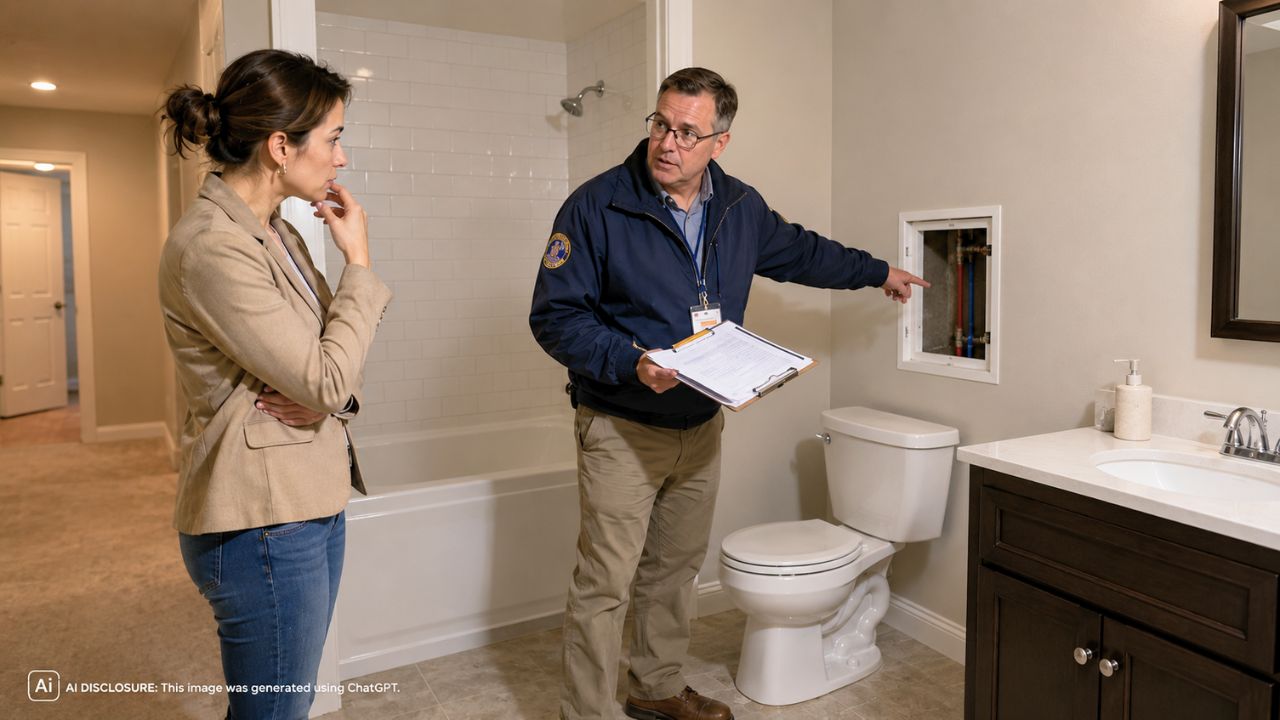
Then the inspector showed up, and the bathroom stopped being “cute”
The moment an inspector says the plumbing fails code, the entire vibe changes. This isn’t “we’ll fix a vent later” or “we’ll swap a valve next month.” Plumbing and electrical are the big-ticket, high-stakes categories because failures aren’t just cosmetic—they can create safety issues and property damage.
And once code violations are on the table, the remedy usually isn’t a small patch. The homeowner is staring down the two outcomes that matter: legalize the work or remove it. The source material puts it plainly—retroactive permits can require walls to be opened for inspection, which means cutting drywall, exposing drains and vents, and potentially rebuilding sections so the county can see what’s inside.
In the basement-bath scenario, “bring it up to standard” can look an awful lot like tearing it out anyway, just with extra steps and extra oversight.
Everyone’s first instinct is to panic—then document everything
Homeowners in this position tend to do the same thing at first: they replay the closing in their head. Was it mentioned? Did the listing hint at it? Was the bathroom counted as finished square footage? Did anyone say the magic words “permits pulled”?
This is where the source material gets practical in a way that matters. Documentation is what protects you if this turns into a dispute. Photos and video of the bathroom as-is, the listing description, the seller disclosure form, inspection reports, and every email or message with the seller or agent—those become the backbone of whatever you do next.
It’s not dramatic. It’s just reality. If the seller marked “no known unpermitted work” on disclosures and the paper trail suggests otherwise, that detail can become a major lever. If you don’t have that paperwork organized, you’re negotiating blind.
The ugly middle: risk, resale, and the stuff lenders and insurers care about
Some homeowners try to convince themselves an unpermitted bathroom is a “future problem.” It works, the toilet flushes, the shower drains, nobody’s getting hurt—so why stir it up?
Because unpermitted work doesn’t stay contained to one room. The source material points out where this tends to bite: resale value, financing, and insurance. When you go to sell, buyers may check permit history. Lenders can get picky when an appraisal and the county records don’t match. And insurance claims can get complicated if damage is connected to unpermitted work.
There’s also the simple risk question: was it done well? A licensed contractor can tell you whether you’re looking at a straightforward correction or whether the plumbing routing and venting are a bigger mess hiding behind finished walls. The worst part is that you often can’t know until you open things up—exactly what the county may require anyway.
What people push you to do: verify, don’t confront, and talk to a lawyer early
The most common reaction in homeowner circles is a practical one: don’t start with a confrontation. Start with proof.
That aligns with the source material’s order of operations—confirm permit history at the building department, compare records to what exists, and keep your documentation tight. It even suggests asking neighbors if they remember construction crews, because sometimes that “local gossip” timeline is more accurate than a database.
Then comes the part many people try to avoid: getting a real estate attorney involved if this is more than minor. The point isn’t to jump straight to court. It’s to find out whether the facts support something like failure to disclose, misrepresentation, fraud, or breach of contract—and to understand deadlines that can quietly run out while you’re still deciding what to do.
A demand letter is often the first serious step, because it signals you’re not going to eat the cost without a fight. And if you’re hoping your title insurance might help, the source material suggests digging out the policy and calling—coverage is usually about title issues, but it can be worth asking whether anything applies.
The decision nobody wants: legalize it or rip it out
Once the county has flagged a basement bathroom’s plumbing as noncompliant, the homeowner gets forced into a decision that feels unfair: spend money to fix something you didn’t do, or spend money to remove something you thought you bought.
Retroactive permits can be common, but they’re not gentle. The city may require plans, engineering reports, and corrections. And because inspectors need visibility, that can mean opening walls and redoing parts of the system just so it can be inspected properly. Sometimes legalizing costs less than removal. Other times, tearing out is faster and cleaner because you’re not trying to salvage questionable work.
If the homeowner goes after the seller, the source material makes one point that’s easy to miss: be specific about what you’re trying to recover. Not a whole house refund—more like the cost of permits, the repairs needed to make it safe, or the difference in value now that the home isn’t what it appeared to be.
And hanging over everything is the tension that never fully goes away: doing nothing can feel easiest today, but it can become an expensive trap later. For this homeowner, the basement bathroom stopped being a “bonus feature” and turned into a deadline—either bring it up to code, or watch it get torn out piece by piece until the house matches the records again.