New Homeowner Finds the Neighbor’s Thirty-Year-Old Septic System Leaking Directly Onto the Land — Then the Health Department Confirms Contamination
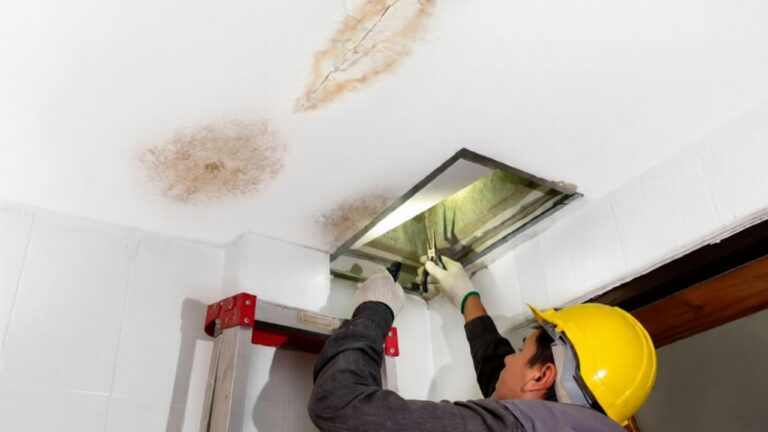
Photo credit: AI-generated image created using ChatGPT. Illustrative only.
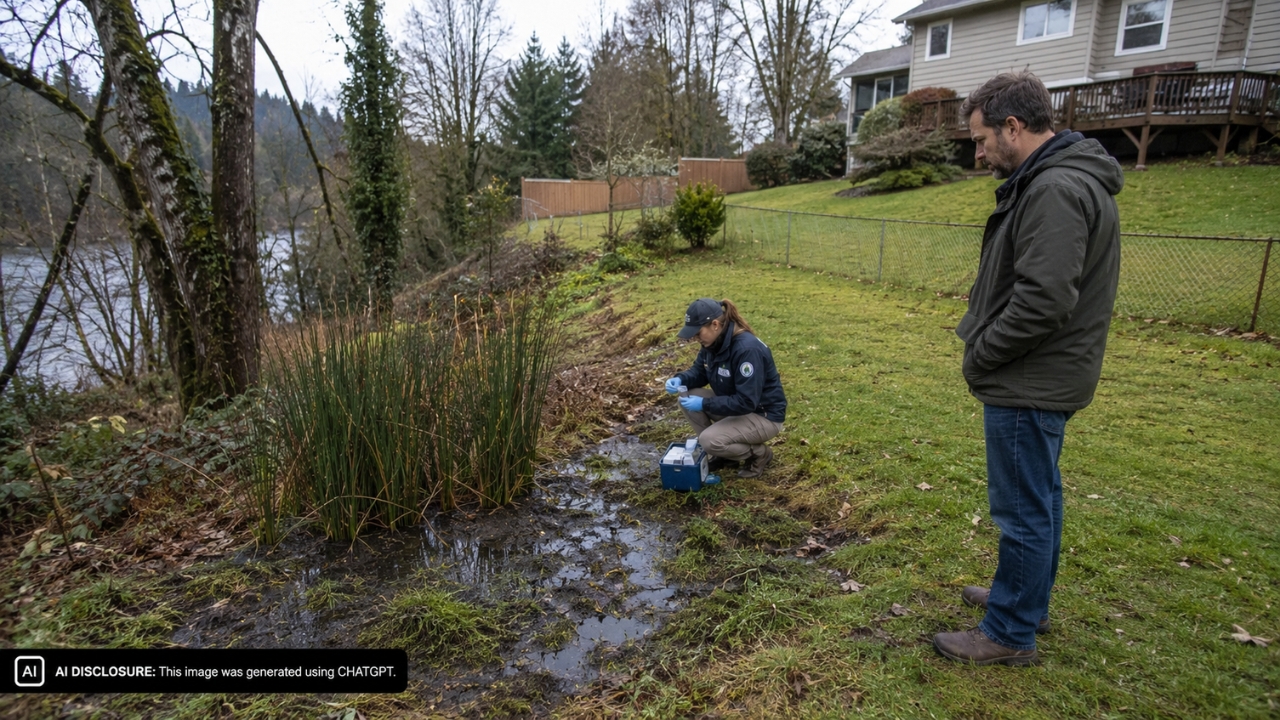
It started as one of those backyard weirdnesses that doesn’t look like an emergency—just a patch of ground that never dries out. A new homeowner noticed an area of their land that stayed “very boggy,” carried an unpleasant smell, and had rushes growing thick where normal grass should have been. It didn’t match the rest of the yard, and it didn’t behave like the low spots near the waterline either.
When they posted photos and details in the original post, the question was simple: could this be a neighbor’s septic system leaking onto their property, or was it just natural drainage? The ground in question sat a few meters higher than the slope leading down to trees and a river, which made the constant wetness feel especially wrong.
The first sign was easy to brush off
Lots of properties have one soggy spot. A hidden spring, a pocket of clay, runoff from a heavy rain—there are a dozen explanations that don’t involve anyone else’s plumbing. But this wasn’t just wet. The homeowner described the area as unpleasant smelling, and the vegetation was a clue: rushes are famous for colonizing saturated ground.
What really messed with their logic was the location. The land sloped down toward trees and then into a river. You’d expect the lower areas to hold water. Instead, the lowest areas weren’t wet at all until the river itself. The persistent bogginess was higher up, like moisture was being “added” there rather than collecting naturally.
When the wet patch sits uphill, people start asking harder questions
Homeowners can live with a damp corner of the yard. What they struggle to live with is the suspicion that it’s not rainwater. A soggy patch uphill from a river starts to feel less like normal drainage and more like a constant discharge point—something feeding it day after day.
That’s where neighbor septic systems come into the picture. If a tank is failing, if a drain field is saturated, or if an outlet pipe has cracked, wastewater doesn’t always stay neatly contained. It follows the path of least resistance through soil, along hidden channels, and sometimes—especially on a slope—straight toward the property line.
And once the thought is in your head, you can’t unthink it. Every whiff of odor feels louder. Every step that sinks a little too much feels like proof.
The health risk isn’t theoretical once contamination is on the table
The headline version of this kind of dispute is dramatic for a reason: if the wetness is sewage, it’s not just an annoying landscaping issue. It becomes a health issue. Wastewater contamination can mean bacteria in soil, potential runoff into nearby water, and the kind of exposure nobody signed up for when they bought a home.
In cases like this, the stress isn’t only about smell. It’s about what you can’t see—what pets might track inside, where kids might play, and what happens when the ground finally sheds that moisture downhill after a storm. A river nearby raises the stakes because water connects everything. Even if the soggy patch is “only” in one place, it can migrate.
And emotionally, it’s hard not to take it personally. Even if the neighbor isn’t being careless on purpose, the impact lands on the person downhill: the one with the wet yard, the weird plants, and the gnawing fear that their land is becoming someone else’s dumping ground.
The neighbor problem: proof, property lines, and not making it worse
This is where real-life homeowner drama starts. You can’t just accuse a neighbor of leaking sewage without evidence, but you also can’t ignore a persistent bog and smell and hope it fixes itself. The homeowner’s post captured that early-stage tension—still asking “could it just be natural?” while clearly not believing the natural explanation fits.
The awkward part is that septic problems don’t respect fences. If the failing component is near a boundary, the wet spot might show up on the “wrong” side. The uphill neighbor might not see much at all—no puddle, no smell, no obvious clue—while the downhill neighbor gets a swampy patch that never resolves.
It also gets complicated fast because land near slopes and rivers often has its own drainage quirks. A person can be right that something is wrong and still struggle to prove exactly what’s causing it. That gap between suspicion and certainty is where neighbor relationships get wrecked.
What people urged: document first, talk later
Even when a post is just a question, you can feel where experienced homeowners’ minds go next. When the complaint is “boggy,” “unpleasant smelling,” and weirdly located, the instinct is to treat it like a problem that needs documentation before emotions take over.
In these disputes, homeowners tend to focus on things that stand up under scrutiny: photos over time, notes about when the smell is strongest, and clear markers of where the wet ground begins and ends. It’s not about being dramatic—it’s about being able to show that the problem is persistent and localized, not just a rainy week or seasonal runoff.
Because once you involve any official channel—whether that’s a local authority or a formal complaint—you want your story to be consistent: where it is, how long it has been happening, what it smells like, and how it behaves compared to the rest of the property.
The part nobody wants: you can’t unsee the yard the same way again
There’s a particular kind of dread that comes with discovering a hidden problem after you move in. The yard was supposed to be your space—garden, play area, peaceful view toward the trees. Instead, you’re standing over a patch of ground wondering if it’s contaminated.
And the river in the background changes the whole vibe. What might have been dismissed as “gross but harmless” starts to feel like something that could spread. The homeowner’s confusion about elevation—why the top is wet while the bottom isn’t—reads like someone trying to solve a puzzle that has real consequences.
If it turns out to be septic-related, it’s not just a repair issue for the neighbor. It becomes a cleanup question, a safety question, and a relationship question. The new homeowner is left staring at the same soggy patch, but now it’s loaded with meaning: not just water, but where it might have come from and what it might carry.
For now, the yard is still boggy, still smelly, still growing rushes like it’s claiming a new identity. And the homeowner is stuck in that uncomfortable in-between—where something feels wrong, the landscape doesn’t make sense, and the next step could change the neighbor dynamic permanently.