New Landowner Finds the Electric Company Ran a Line Across Two Acres of the Property Without Permission — Then Says the Neighbor Approved It on the Owner’s Behalf
Photo credit: AI-generated image created using ChatGPT. Illustrative only.
Buying a home is supposed to come with a clean slate: fresh keys, a new routine, and a property line you can finally call your own. For one new landowner, that “mine” feeling got rattled when the electric company showed up with plans that would cut straight across the yard to serve a brand-new house going up on the empty lot next door.
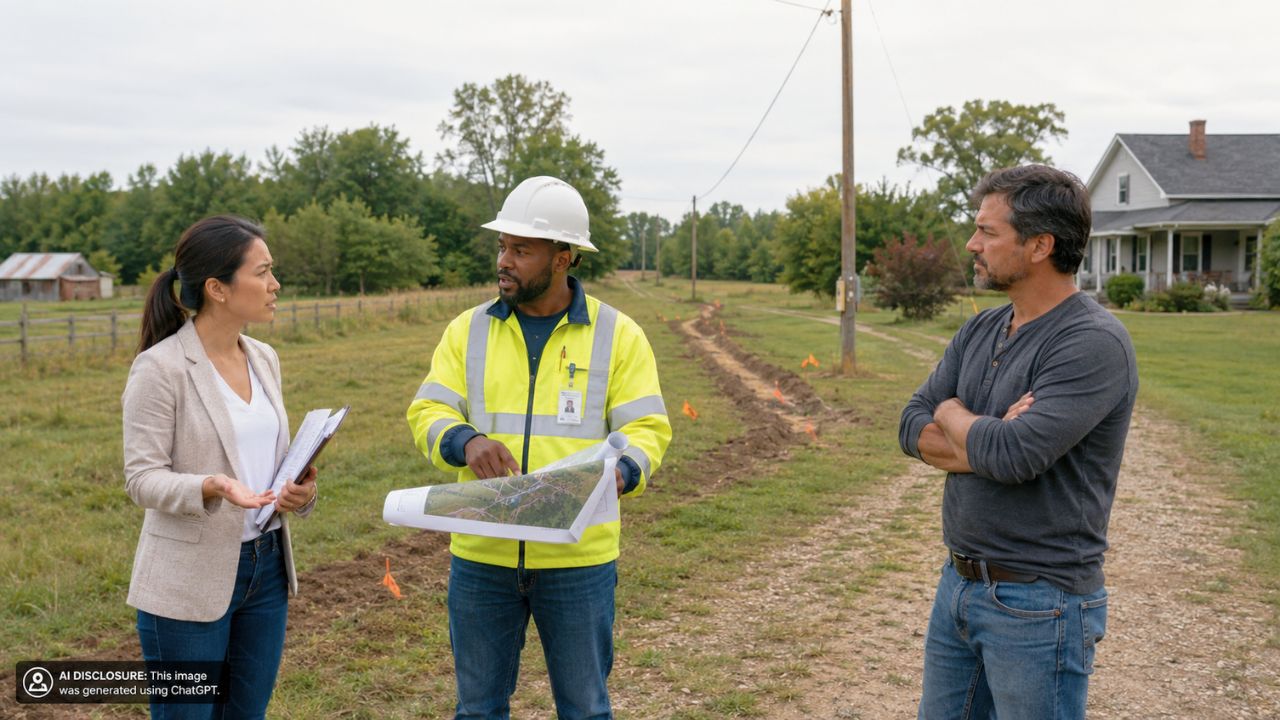
In the original post, the homeowner explained that he and his wife bought their house in March 2023. The lot beside them sat empty until recently—then, while he was deployed, his wife got a visit from the electric company asking to run a line for the new build “instead of going around our property.” He didn’t want to be the person blocking power to a future neighbor. He also didn’t want to be the person stuck fixing the yard after a utility crew rolled through.
A quiet empty lot turned into a new build overnight
The timeline is part of what made it feel so unfair. When the couple bought the house, the neighboring lot was empty. No construction traffic. No trenching. No stakes in the ground. Just space.
Then the lot changed. A new house was happening, and with it came the unglamorous reality that every build needs water, sewer, and electricity. Suddenly, the homeowner was staring at a decision that would affect two acres of land he’d barely had time to enjoy.
And complicating it further: he wasn’t even home. He was deployed, leaving his wife to field the knock on the door and the pressure of an on-the-spot request from a utility company.
The ask sounded simple: “Can we go through your property?”
Utility requests can come across as casual, like it’s no bigger than letting a neighbor cut through your driveway for a weekend. In this case, the electric company wanted permission to run a line across the property because it was easier than routing it around.
The homeowner’s hesitation wasn’t about being difficult. It was about what happens after the trucks leave. He wrote that their electric company had a reputation in the area for messing up yards and not making a real effort to restore them properly once the line is placed.
If you’ve ever watched a crew trench through grass, you know why that matters. “We’ll fix it” can mean anything from a careful restoration to a rough patch of dirt that turns into weeds, ruts, and drainage issues for the next five years.
The real fear was the yard: not just aesthetics, but damage that sticks around
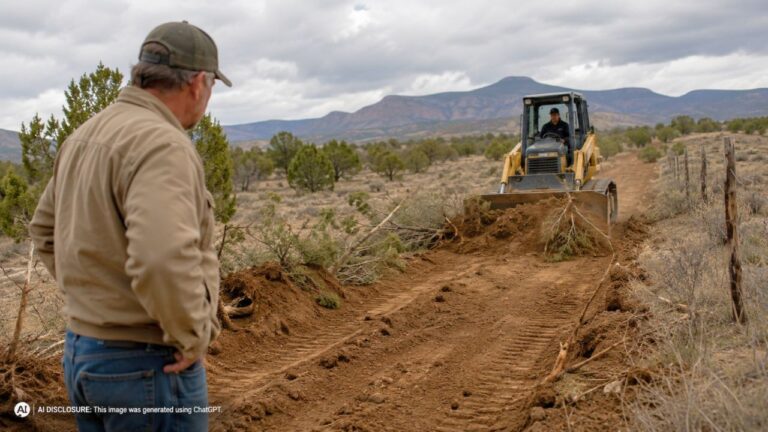
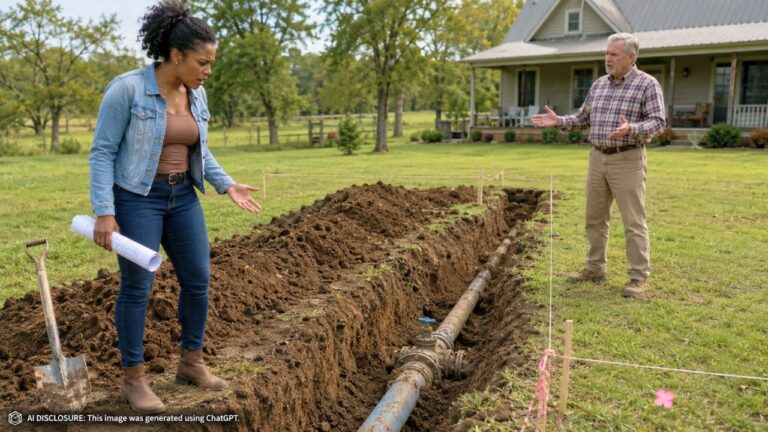
It’s easy for someone who doesn’t live there to underestimate what “messing up the yard” actually costs a homeowner. A trench line can leave a scar that shows up every time it rains. Soil compaction can kill roots. A rushed backfill can settle into a long sunken stripe across the property, and then you’re mowing over dips and trying not to twist an ankle.
And when you’re dealing with acreage—two acres, in this case—the impact isn’t always confined to a tidy little corridor. Crews need access. They need staging space. They drive where it’s convenient. They turn around where it’s flat. They park where they can. That’s how you end up with broad tire damage and torn-up edges far beyond where the actual cable ends up.
The homeowner’s question cut right to the practical issue: if the electric company is pushing for the shortcut, what can he legally ask for as compensation, especially if they damage the property and don’t restore it properly?
The neighbor angle made it feel even messier
Requests like this can put a homeowner in the worst social position: the gatekeeper who looks like the bad guy either way. Say no, and you’re “withholding power” from someone who’s about to live next door. Say yes, and you may be signing up for long-term headaches—plus the uncomfortable feeling that your land became the default solution because it was convenient.
The headline framing around a neighbor “approving it on the owner’s behalf” captures a fear many homeowners recognize: that someone will treat a property line like a suggestion and try to smooth it over later with a shrug. Even when a utility company is the one doing the work, neighbors sometimes play a role in how projects get pitched and pushed forward.
When the person who owns the land isn’t present, that pressure can land on the spouse at home—who may be forced into making a quick call without the benefit of a survey map, a lawyer, or even time to breathe.
Most reactions focused on paperwork, proof, and not agreeing to anything casually
Even without seeing a full comment thread in the source material, the most common homeowner instincts in a scenario like this are predictable—and they tend to be practical. People want to know: is there already an easement? Is the utility company asking for a permanent easement, or just temporary construction access? Are they offering anything in writing, or is it all being handled with friendly conversation on the porch?
Homeowners who’ve been burned before usually push for three things before anyone digs: documentation, clear boundaries, and a plan for restoration. “Restore the yard” can’t be a vague promise. It has to mean something concrete—topsoil, grading, seed or sod, and a timeline that doesn’t drag until the next season when the crew is long gone and the homeowner is left calling into a customer service loop.
And then there’s the simplest point: if you’re not comfortable, you don’t have to be talked into a yes on the spot. Especially not when the owner is deployed and the person being asked to decide is the one who’ll be living with the aftermath.
Now the couple is stuck between being decent and being careful
The homeowner made it clear he didn’t want to turn this into a feud with a future neighbor. He just wanted to protect the property he bought months ago and avoid getting stuck with a torn-up yard that never really recovers.
This is the part of homeownership nobody puts in the listing photos: the moment you realize “your land” is also part of a system of roads, lines, and shortcuts that other people will try to route through if you let them. And once a utility line goes in, it’s rarely the end of the story. Repairs happen. Access gets needed again. A quick trench can become a permanent corridor of inconvenience.
For now, the tension sits right where these disputes usually start—at the edge of the property, with a simple question that isn’t simple at all: how do you help a neighbor get power without giving up control of your own ground?