New Landowner Digs a Trench for a Garden Bed and Uncovers a Neighbor’s Water Supply Line Running Through the Middle of the Property — Then the Neighbor Says the Previous Owner Gave Permission and a Formal Easement Is Unnecessary
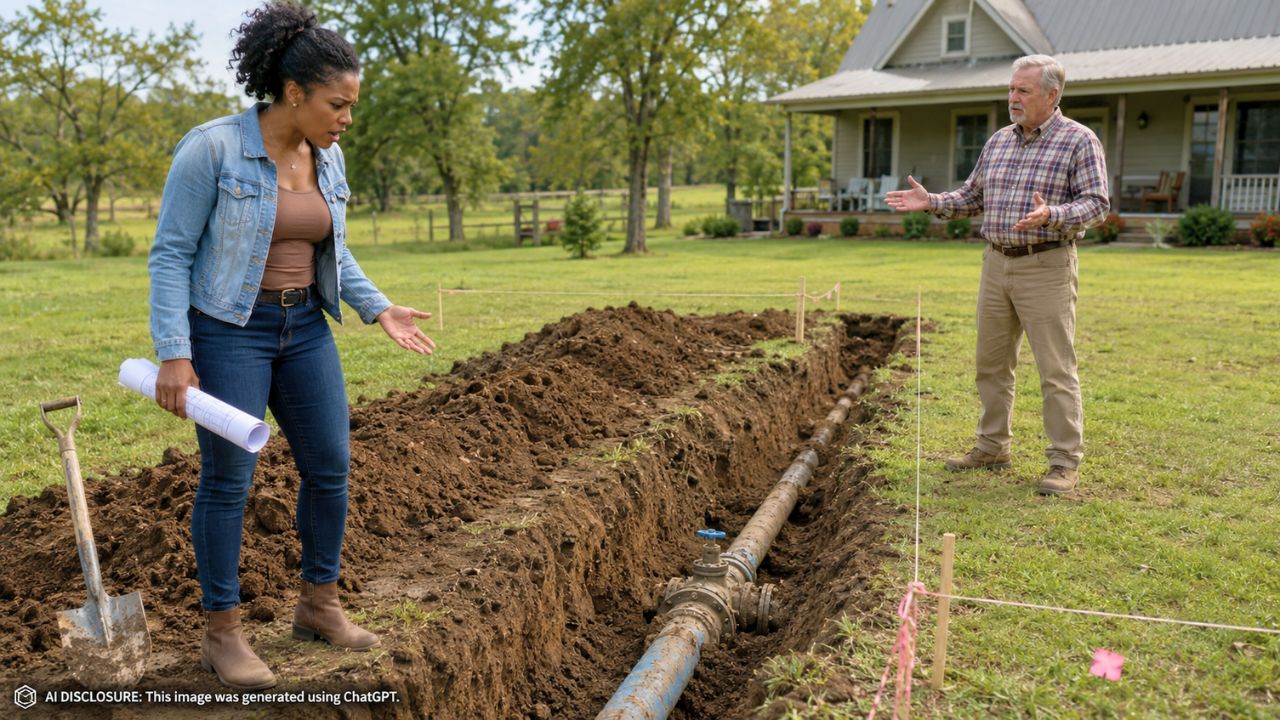
Photo credit: AI-generated image created using ChatGPT. Illustrative only.
You buy land, start planning your garden beds and utility runs, and you expect to fight rocks and roots—not someone else’s water supply. But that’s exactly where one new landowner found themselves after discovering a neighbor’s waterline crossing their property with no recorded easement, right where new work needed to happen.
In a detailed question shared in the discussion, the property owner explained they’d tried to do the “right” thing early: they notified the neighbor that utilities would be installed for a home added to the back of the property, and they even offered to split the cost of a private line locator. The neighbor didn’t respond—then the line got hit anyway.
It started with a buried line no one wanted to talk about
The homeowner says they own property where a neighbor’s waterline runs across it. The big catch: there’s no recorded easement. That means there’s no formal paperwork spelling out where the line is, who has access, how repairs are handled, or what happens when the landowner needs to dig.
This wasn’t a casual landscaping project either. The owner had added a home toward the back of the property and needed utilities installed. That’s when the waterline became more than a weird fact on a mental map—it became a real obstacle with real consequences.
According to the account, they attempted to contact the neighbor before any installation work started, specifically to locate the waterline so it wouldn’t be damaged. They didn’t get cooperation. No locating help, no acknowledgment, no coordination.
When the utility work began, the risk got put in writing
Anyone who has ever tried to get power run to a building knows the drill: crews show up with schedules, machines, and a tight window to get it done. In this case, the local power company was installing service to the new home.
Before the work, the homeowner signed a release with the power company. The release stated they understood the power company wouldn’t be liable for damages if they hit any lines. In other words, if something buried and unmarked got cut, the homeowner had already agreed the utility company wasn’t going to pay for it.
Then it happened: the power company accidentally cut the neighbor’s waterline—not once, but in two places. That detail matters, because a single nick can sometimes be patched quickly. Two breaks can mean more digging, more fittings, more labor, and potentially a bigger section of pipe to replace.
It’s the kind of moment that turns a “we’ll deal with it later” neighbor issue into a same-day emergency.
The neighbor went silent, and the clock started ticking
After the line was cut, the homeowner tried contacting the neighbor to inform them about the break. No response. And that silence creates its own pressure, because waterlines aren’t decorative. If the neighbor is without water, the situation escalates fast—even if the neighbor refuses to pick up the phone.
Now the homeowner is stuck in a familiar property-owner squeeze: they didn’t install this line, they don’t own it, and they tried to prevent damage. But the damage happened on their property during work they initiated, and they signed paperwork that appears to shield the utility company from liability.
On top of that, the location is specific: Laurens, South Carolina. That matters because easement rules, “implied easement” arguments, and repair responsibility can shift depending on state law and local practice—even when the buried pipe looks the same everywhere.
The repair question turned into a fight about responsibility
The homeowner’s core question is the one that makes everyone’s stomach drop: who pays now?
They’re asking whether they’re responsible for repairs, or whether the neighbor—who owns the line and didn’t assist with locating it—should be. And in the background is the lack of a recorded easement. If there’s no formal right for the neighbor to have the line there, it feels unfair that the landowner should have to bankroll repairs to a line they never agreed to host.
But the practical reality is messier than what feels fair. The digging and installation were connected to the landowner’s project. The release signed with the power company complicates any straightforward blame on the crew that actually cut the pipe. And the neighbor’s refusal to coordinate early—then refusal to respond afterward—creates a paper trail of its own, if the homeowner saved those outreach attempts.
There’s also the unspoken tension most rural and semi-rural landowners know too well: even if you “win” the argument, you still have to live next to the person you just fought with.
Readers zeroed in on documentation and leverage, not yelling matches
Even without a full comment thread, the themes that usually surface in disputes like this are predictable because they’re grounded in what actually works when things get ugly: proof, paper, and boundaries.
People tend to focus first on documenting every attempt to coordinate—especially the offer to pay half for a private locator and the lack of response. That kind of detail can matter later, not just for court, but for getting an insurer, mediator, or attorney to take the timeline seriously.
Another common reaction in these waterline-through-your-yard stories is that the buried pipe is only half the issue. The other half is access. If there’s no recorded easement, the neighbor may not have a clear right to enter the property later to repair or replace the line. But at the same time, a longstanding line can lead to arguments about prior permission or implied rights, especially if previous owners allowed it informally.
And then there’s the leverage question: if the neighbor wants their water restored, they may have to come to the table to formalize what should’ve been formalized years ago—route, depth, access terms, and who pays for what when it breaks.
One cut line can turn into a long-term land problem
The biggest gut-punch in stories like this is that the broken pipe is just the start. A waterline crossing property without a recorded easement is a future conflict waiting for the next fence post, the next trench, the next driveway, the next tree planting, the next outbuilding.
This homeowner wasn’t out looking for a fight. They were trying to add utilities for a home on their own land. They tried to coordinate. They even offered money to make locating the line more reliable. The response they got—no help before, no response after—left them holding the stress and the uncertainty.
Now they’re staring down repairs caused by work they initiated, damages done by a crew protected by a signed release, and a neighbor who may insist the line has every right to be there even without paperwork to prove it. The garden bed and trench may get finished someday, but the bigger project is figuring out how to live with a buried line—and a buried disagreement—running straight through the middle of the property.