Homeowner Asks the Neighbor Multiple Times to Reroute a Flooding Sump Pump and Even Offers to Help Dig — Then the Neighbor Calls Himself “Too Busy” While the Yard Keeps Flooding
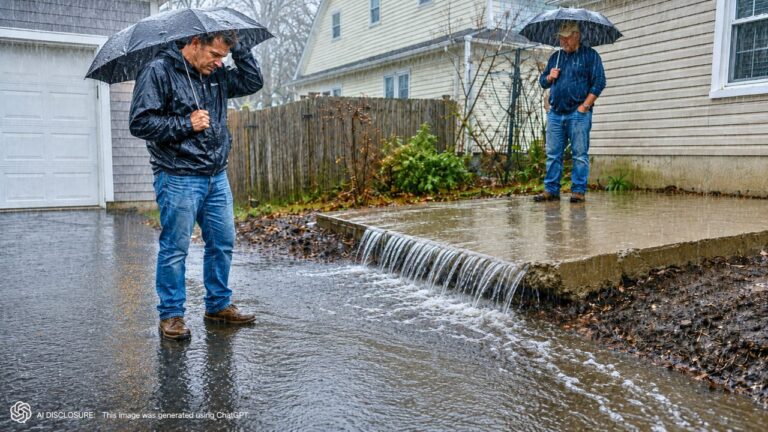
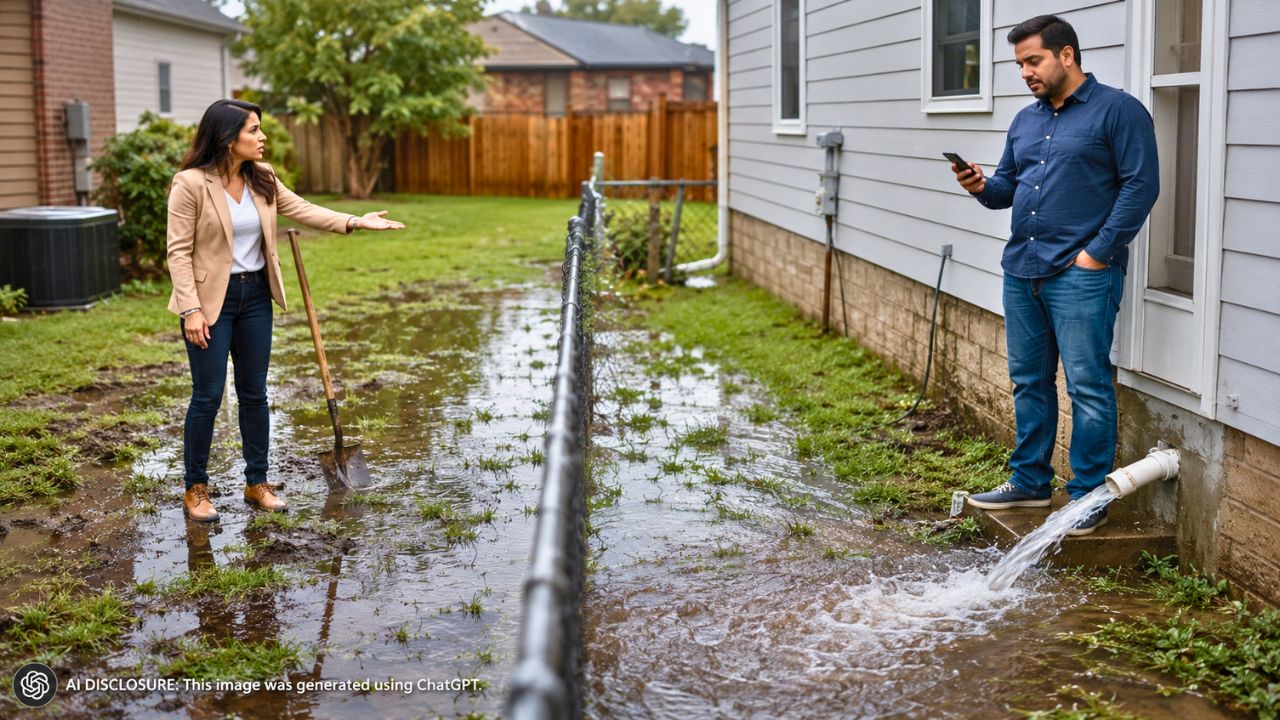
Photo credit: AI-generated image created using ChatGPT. Illustrative only.
It starts like a lot of yard problems do: one side of the property stays soggy long after the rest dries out. Then you realize it isn’t “bad soil” or “a low spot.” It’s a steady stream of water coming from next door—right where it shouldn’t be.
That’s the corner a homeowner found themselves in, laid out in the original post. Their neighbor’s sump pump discharge was draining into their yard and flooding it, and repeated, polite asks to reroute the line went nowhere.
When “just a wet patch” turns into a daily headache
Sump pumps are supposed to keep basements dry by sending groundwater away from the foundation. But “away” can become someone else’s problem fast, especially when a discharge hose is aimed at a property line or set up to dump wherever it’s easiest.
In this case, the homeowner says the neighbor’s setup is flooding their yard. Not splashing a little during a storm—flooding enough that it became a recurring problem worth confronting multiple times.
The frustration is baked into the details: this wasn’t a one-and-done conversation, and it wasn’t an aggressive demand. They asked more than once, and even offered to help dig, which is about as neighborly as it gets when you’re talking about moving piping or burying a line.
They tried the friendly route—then got the “too busy” wall
Drainage disputes have a way of turning small talk into tension. The homeowner’s approach was straightforward: ask the neighbor to reroute the sump pump discharge so it stops pouring into their yard.
But instead of progress, they got “all excuses,” including the neighbor saying they were “too busy.” And that’s the part that makes these conflicts simmer—because water doesn’t care about someone’s schedule.
The homeowner wasn’t asking for a landscaping makeover or a pricey regrade. They were asking for the discharge to be redirected, a fix that can be simple in concept even if it takes some effort to do right. Hearing “too busy” repeatedly while watching the yard turn into a swamp is the kind of thing that makes a person start counting the days until the next rain.
The quick fix didn’t fix it
At some point, people stop waiting. The homeowner says they “ended up manually rerouting back into his yard,” essentially trying to undo the damage and get the water flowing away from their side.
That move says a lot about how bad it felt on the ground. When you’re manually redirecting someone else’s discharge, you’re not trying to win an argument—you’re trying to save your grass, your soil, and whatever sits near that saturated area.
But even after that effort, it “still floods.” That’s the quiet nightmare of drainage issues: once the flow has carved a path, once the yard is already holding water, the problem can persist even if you change the direction a little. If the discharge is still too close, or the yard is already graded to hold runoff, the flooding can keep coming.
And then there’s the stress of touching anything near a property line. Homeowners know how quickly “I was just trying to stop the flooding” can be interpreted as “don’t touch my stuff.”
Calling the city feels like dropping a match
With the neighbor not acting, the homeowner reached out to the city. They learned that code enforcement could issue a violation, but they weren’t sure whether pulling that lever would “stir the pot.”
That phrase is relatable for anyone who’s lived next to someone for more than a year. Once you bring in the city, you’re no longer in the realm of casual neighbor favors. You’re building a paper trail. Sometimes that’s the only thing that works, but it can also change the relationship permanently.
The homeowner’s hesitation doesn’t read like fear of being wrong. It reads like someone trying to avoid turning a water problem into a cold war: glares over the fence, passive-aggressive mowing patterns, and a neighbor who suddenly finds every other tiny issue to complain about.
But yard flooding isn’t just “annoying.” Standing water can wreck grass, kill plantings, soften soil, and create a permanent muddy zone that gets tracked onto patios and into the house. In the wrong spot, it can also push water where you really don’t want it—toward foundations, crawlspaces, or low areas that never fully dry.
What other homeowners zero in on: proof, boundaries, and leverage
Even without a full comment thread included in the source material, this is the kind of dispute where other homeowners typically focus on the practical steps that keep emotions from driving the next move.
First is documentation. People in these disputes often start taking dated photos and short videos during pump cycles or after heavy rain, showing exactly where the water originates and how it spreads. Not because they want to “build a case” for fun, but because drainage arguments turn into he-said-she-said fast.
Second is clarifying boundaries. When water is crossing a property line, folks tend to recommend confirming where the line actually is—especially if the discharge hose is near a fence, a hedge, or an area that’s been treated as “no man’s land” for years. The more vague the line feels, the easier it is for both sides to claim the other is overreacting.
Third is choosing the right kind of leverage. Some people avoid code enforcement as long as possible; others go straight to it because it’s the only mechanism that makes “too busy” stop being an answer. In many places, sump discharge has rules about where it can go, whether it can be tied into storm systems, and whether it can be directed onto neighboring property. A formal complaint can force a timeline where neighborly requests didn’t.
A yard full of water doesn’t stay a “yard problem” for long
The hardest part of this homeowner’s spot is that they’re stuck between two bad options. Keep asking nicely and risk months more flooding, or push it into official territory and risk a neighbor feud that doesn’t end when the water stops.
Meanwhile, the yard keeps flooding. That means lost use of the space, constant cleanup, and the nagging feeling that the ground is being slowly reshaped by someone else’s pump cycle. Even if the visible pooling is the main complaint today, people worry about what comes next: soil erosion, damage to fences or landscaping, and water creeping toward structures.
They already tried being helpful. They already tried a hands-on workaround. Now they’re staring at the one tool that tends to get results—city enforcement—and wondering what it costs in neighbor peace.
That’s the thing about water between properties: it doesn’t take a dramatic blowup to become personal. It just takes one hose pointed the wrong way, one “I’m too busy,” and a yard that won’t dry out.
Like Fix It Homestead’s content? Be sure to follow us.
- Man Says He Found Out the Fence He Paid For Wasn’t Actually on His Property
- Woman Says Her Neighbor Started Taking Mulch From Her Delivery Pile Before She Could Even Spread It
- I made Joanna Gaines’s Friendsgiving casserole and here is what I would keep
- What Caliber Works Best for Groundhogs, Armadillos, and Other Digging Pests?