First-Time Buyers Discover an Unpermitted Bedroom and Bathroom Addition Weeks Before Closing — Then Their Own Agent Calls It “Common” and Urges Them to Move Forward Anyway
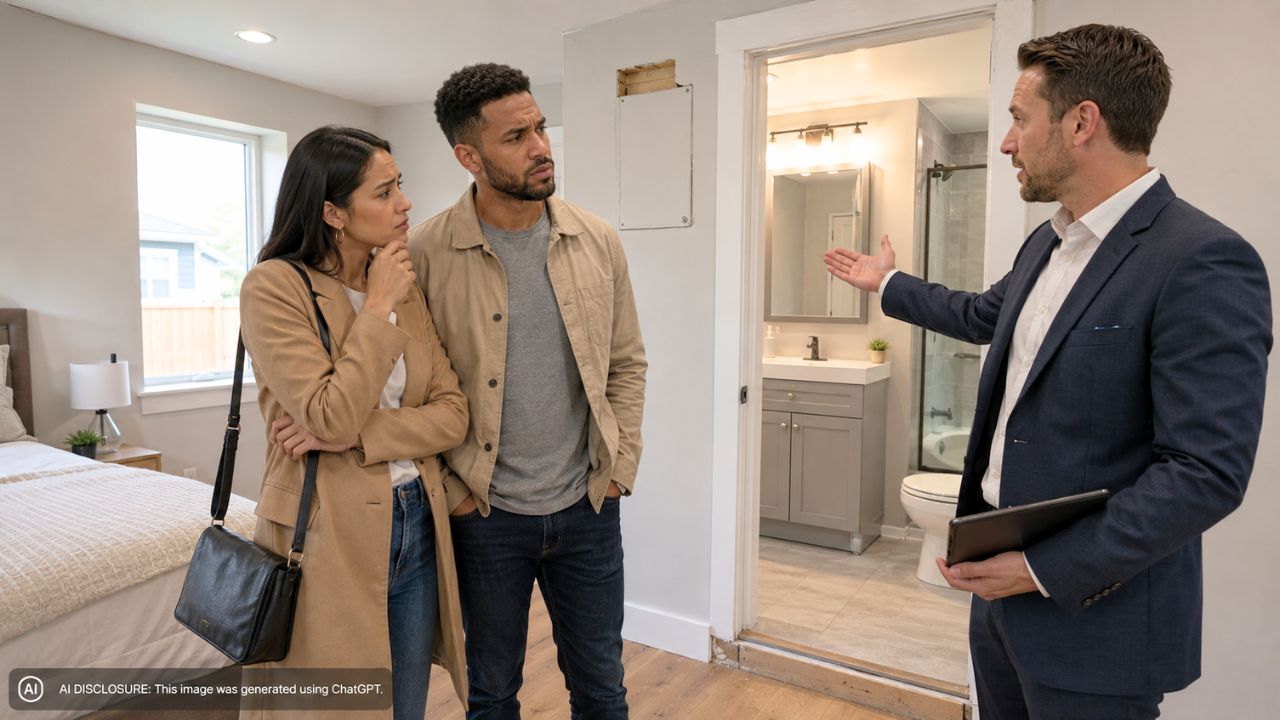
Photo credit: AI-generated image created using ChatGPT. Illustrative only.
Three weeks from closing is when most first-time buyers start imagining paint colors and moving boxes, not pulling the thread on a surprise that could unravel the whole deal. But that’s exactly where one buyer found themselves after realizing the home they’re under contract for has an added bedroom and bathroom that were never permitted.
In the original post, the buyer says their own agent brushed it off as “common” for older homes and encouraged them to keep going. The buyers, new to the whole process, weren’t reassured. They immediately started thinking about the stuff that doesn’t show up in listing photos: insurance headaches, resale problems, and what happens if the work doesn’t meet code.
The discovery that changed the tone of the whole purchase
The buyer describes “recently” realizing there were unpermitted modifications—specifically an added bedroom and an added bathroom. That’s not a missing outlet cover or a DIY deck railing. That’s living space and plumbing, the kind of change that can affect how a home is valued, insured, and even whether it’s considered safe.
The timing is what makes it feel like a gut punch. They’re about three weeks from closing, deep enough into the process that money has already been spent and momentum is real. A lot of buyers at this stage feel like they’ve come too far to stop, even when the house starts revealing its sharp edges.
But the post makes it clear this wasn’t a quirky “old house” detail they were willing to accept. They’re not comfortable with the risk, and they list the exact kinds of worries that keep people up at night: insurance, resale, and possible code issues.
When your own agent downplays it, the pressure gets weird
In a clean transaction, the professionals around you help you slow down when something looks off. Here, the buyer says their agent framed unpermitted work as normal and pushed them to proceed anyway.
That’s where the stress spikes. First-time buyers already feel like they’re learning a new language—contingencies, disclosures, earnest money, closing dates. If the person guiding you is saying “this is common” while your instincts are screaming “this is a liability,” it can start to feel like you’re the only adult in the room.
And because it’s an added bedroom and bathroom, it’s not just a paperwork concern. It’s a functional part of the home. People will use that bathroom. Someone will sleep in that bedroom. If something later forces the space to be removed, rebuilt, or reclassified, the buyer is the one left holding the bag.
Money already spent, but one big payment not made yet
The buyer has already paid for the appraisal, which is the kind of expense that makes backing out feel painful. It’s also the kind of expense buyers tend to treat like a point of no return, even though it isn’t.
But one detail in their post stands out: they have not submitted the earnest money deposit yet. In many deals, earnest money is where the consequences start to feel real—where backing out can turn into a fight over who gets to keep that deposit, and whether you’re protected by a contingency.
Without earnest money turned over, the buyer is trying to figure out how much leverage they still have and how to minimize fallout. They’re asking what contract terms or contingencies they should be looking at, and whether this is the moment to involve their attorney.
The risks buyers picture with unpermitted additions aren’t hypothetical
The post doesn’t claim the addition is unsafe, and it doesn’t say how the buyers discovered the lack of permits—only that they “recently realized” it. Still, the worries they list are the same ones that pop up whenever a house has mystery work hidden behind finished drywall.
Insurance is one of those quiet landmines. Buyers worry about whether an insurer will cover damage connected to unpermitted work, or whether the existence of the addition changes the coverage picture. Even when an insurer issues a policy, homeowners fear the nightmare version: something goes wrong later and the paperwork becomes the battleground.
Resale is the other big shadow. Today’s buyer becomes tomorrow’s seller. An unpermitted bedroom and bathroom can complicate listing details, future appraisals, and buyer confidence. Even if the space looks great, “Where are the permits?” is the kind of question that can freeze a deal or force a price cut.
And then there’s code. Plumbing and electrical in particular make people nervous for a reason. A bathroom isn’t just tile and paint—it’s water lines, drains, venting, and often wiring. If something was done wrong, the damage can stay invisible until it gets expensive.
What readers pushed: stop relying on vibes and get everything in writing
The buyer’s questions point to what people in these scenarios usually want most: a clean exit or a clean fix. They’re asking about “specific contingencies or contract terms” and what to say to an attorney. That’s the practical fork in the road—either find a contractual path to back out, or force the issue into daylight before closing.
While the pasted post doesn’t include a full comment thread, the tone of the buyer’s request reflects the kind of crowd wisdom that tends to come next: don’t treat “common” as the same thing as “safe,” and don’t let anyone rush you past the paperwork. When permits are missing, the only thing that really calms nerves is documentation—what was done, when, and whether the city or county ever signed off.
Buyers in this spot often start thinking about verification: confirming with local permitting offices, asking for disclosures, asking what the seller is willing to do, and putting all promises into writing. Because once you close, the leverage flips. The house becomes yours, and so does the mess.
The final weeks before closing are when the house stops being an idea
This is the part of buying a home no one romanticizes. You’re close enough to smell the finish line, but far enough away that you can still walk. The buyer isn’t just worried about losing money on an appraisal—they’re worried about buying a problem that could follow them for years.
They’re also staring at a tough reality: the professionals around them may not feel the risk the same way they do. To an agent, “common in older homes” can sound like a shrug. To a first-time buyer, it sounds like a warning label.
For now, their story is still in the decision phase—how to back out with minimal consequences, what to look for in the contract, and whether to bring their attorney into the conversation immediately. What’s clear is that an unpermitted bedroom and bathroom turned what should have been an exciting countdown into a three-week scramble to figure out what, exactly, they’re being asked to buy.
Like Fix It Homestead’s content? Be sure to follow us.
- Man Says He Found Out the Fence He Paid For Wasn’t Actually on His Property
- Woman Says Her Neighbor Started Taking Mulch From Her Delivery Pile Before She Could Even Spread It
- I made Joanna Gaines’s Friendsgiving casserole and here is what I would keep
- What Caliber Works Best for Groundhogs, Armadillos, and Other Digging Pests?