Georgia Homeowner Asks the Neighbor to Rebuild His Rotting Deck Inside the Property Line — Then He Insists on Keeping It the Exact Same Size It’s Always Been
Photo credit: AI-generated image created using ChatGPT. Illustrative only.
A backyard deck is supposed to be a simple thing: a place to grill, sit, and watch the trees move. For one Georgia homeowner, it turned into a slow-burn property line mess the moment a neighbor admitted his deck wasn’t fully on his own land.
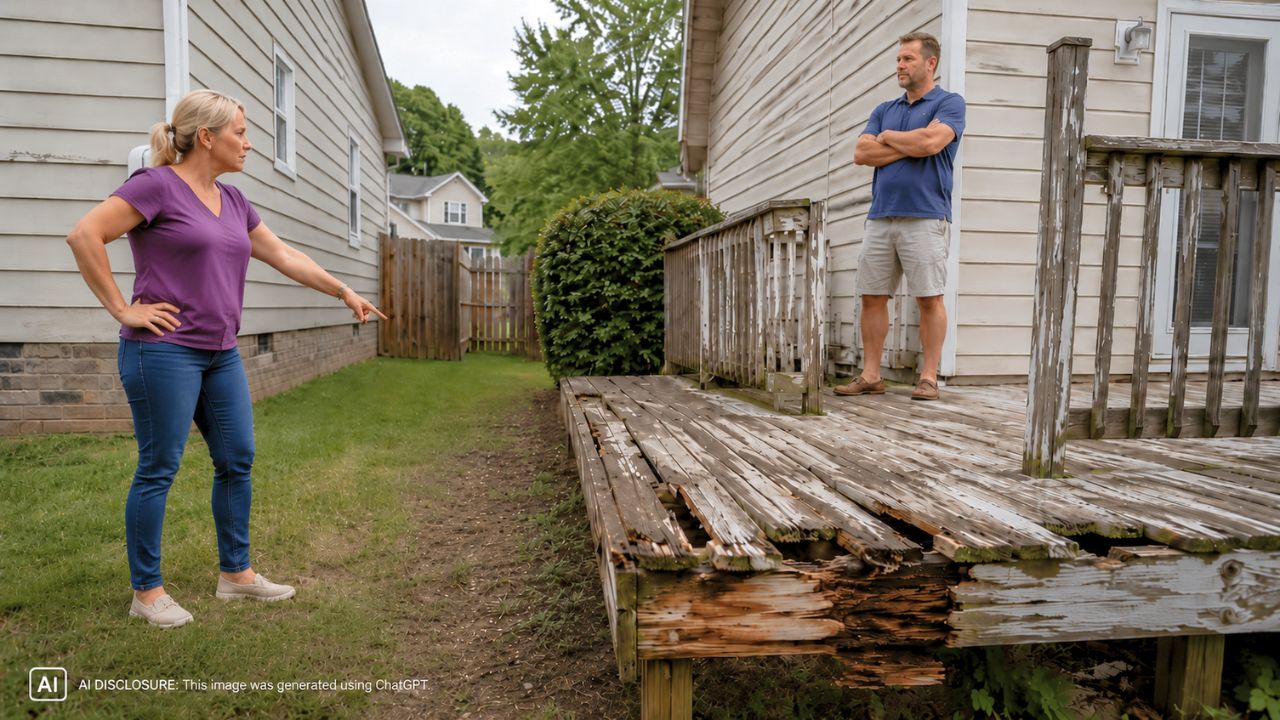
In the original post, the homeowner explains that the neighbor behind them built a deck about 10 years ago. It looked normal from day to day—until an appraisal brought in a surveyor and the lines on paper didn’t match the lines everyone had been living with.
The survey changed the whole feel of the backyard
The neighbor was the one who surfaced the problem. During an appraisal the year before, he had a survey done and discovered his deck extended “a few feet” into the homeowner’s backyard.
At the time, it was the middle of the pandemic and the homeowner had other issues going on—trees, landscaping, the usual list that keeps a property from ever feeling finished. So they made a choice a lot of people would make: don’t blow up the neighbor relationship over a few feet of decking. Deal with it later.
“Later” arrived when the deck started rotting and the neighbor wanted to rebuild. Suddenly it wasn’t just an old boundary mistake sitting quietly in the corner of the yard. It was a construction project about to lock the mistake in for another decade.
Rotting boards turned into a deadline
Once rebuilding was on the table, the homeowner saw a chance to reset everything cleanly: rebuild the deck inside the correct property line. No arguing about the past. Just rebuild it right.
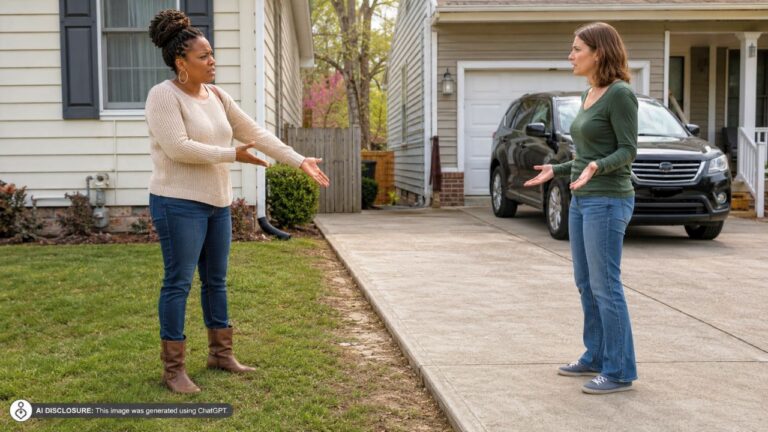
The neighbor’s response was where things got tense. He said the deck had been the same size for years and he wanted to keep it that way. In other words: yes, part of it is on your land, but it’s always been that size, so that’s what I’m sticking with.
The homeowner didn’t want a confrontation, but they also didn’t want to hand over part of their yard by default. And because this was an HOA neighborhood, it didn’t feel like a “just between us” problem. They worried about the practical fallout: liability insurance, mortgage implications, and what it means to have someone else’s structure on your deeded property.
The unspoken fear: do you lose land if you wait too long?
There was another concern beneath the surface: if the deck has been there for many years, does the neighbor gain rights to that slice of yard?
The homeowner asked directly whether the neighbor might have “already acquired some right” because the deck had been encroaching for so long. That’s the nightmare version of these disputes—where being nice and avoiding conflict turns into losing control of your own property.
Even without going deep into legal theory, homeowners recognize the basic risk: if you let an encroachment sit, it starts to feel “normal.” Contractors treat it like it’s correct. Future buyers assume it’s correct. And the longer it stays, the harder it is to make the case that it needs to change—especially once someone pours new footings and fresh lumber where the old problem used to be.
Commenters pushed paperwork, boundaries, and not relying on “he’s nice”
The homeowner said they came away with “a huge wealth of information,” and the tone of their follow-up makes it clear what the crowd emphasized: facts and documentation beat friendly assumptions.
The big theme was to treat it like a property problem, not a personality problem. In practice, that means leaning on surveys, property markers, and written expectations rather than verbal promises.
And it also means remembering that “he’s been very nice” is not a plan. Nice people still sell their houses. Nice people still change their minds. Nice people still have relatives, guests, and future buyers who may not feel bound by a casual agreement made during a stressful year.
The homeowner didn’t quote commenters directly, but their next steps read like someone who’d been coached to keep it calm, keep it firm, and keep it anchored to something defensible.
The conversation went differently once “liability” entered the chat
In the update, the homeowner talked to the neighbor again—this time prepared. The neighbor agreed the old deck was unsafe and “falling apart,” and he planned to rebuild.
The homeowner didn’t just say “move it back.” They asked for a fence or a barrier of trees to clearly mark the property line. That detail matters, because one of the sneakiest ways these disputes drag on is when the physical boundary is still fuzzy. Even if the deck gets moved, the next project—pavers, a shed, a garden bed—can creep right back over if nobody can see where “over” begins.
They also used “liability” as the reason. Not as an insult, not as a threat—more like an adult excuse that’s hard to argue with: if someone gets hurt on a structure on your land, you don’t want to be the one getting dragged into it.
The neighbor tried to wave that off. He insisted his family would never sue, and argued that even if he trespassed and hurt himself, the homeowner would still be liable anyway, so the deck location didn’t matter. The homeowner describes it as “blah blah,” and kept going: they stood firm.
When the deck line held, new complaints popped up
Once it was clear the homeowner wasn’t going to bless the rebuild as-is, the neighbor pivoted. He suggested he might sell the house and move because he “doesn’t want a tiny deck.”
Then came another curveball: he claimed there was a grading issue, and that water from the homeowner’s yard had flooded into his basement and caused damage. That’s the kind of allegation that can turn a simple encroachment fix into a bigger war—because drainage disputes don’t stay polite for long, and they’re expensive to investigate and correct.
The homeowner’s response was measured but telling. They suggested bringing in a landscaper and a lawyer to look at it. According to the update, the neighbor backed down after that.
By the end, the homeowner felt the balance shift. They wrote that the neighbor “knew he didn’t have a leg to stand on.” They still worried he might try something “sneaky,” but they didn’t think he had real options.
It’s the kind of property-line standoff that doesn’t end with applause—it ends with someone rebuilding, someone installing a fence, and both sides watching each other’s yards a little more closely than they used to. But in a neighborhood where a few feet of deck can turn into a decade of assumptions, the homeowner’s timing mattered: the best moment to correct an encroachment is usually the moment the old structure is already coming down.
Like Fix It Homestead’s content? Be sure to follow us.