New Homeowner Finds the Neighbor’s Paved Driveway Crossing Three Feet Onto Her Property — Then the Neighbor Says Removing the Slab Would Cost “More Than the Land Is Worth”
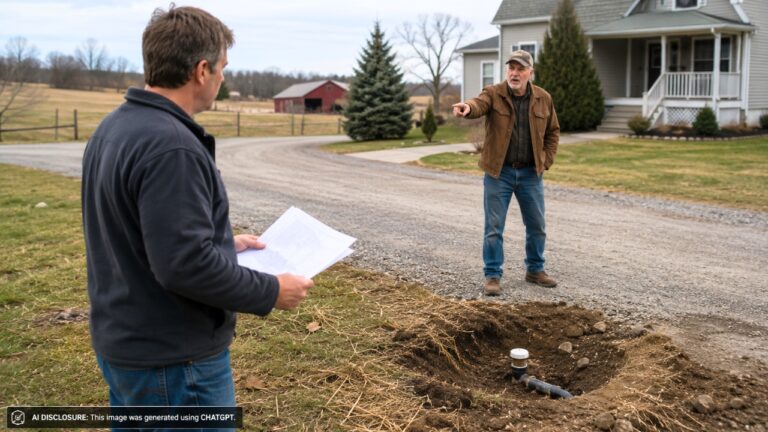
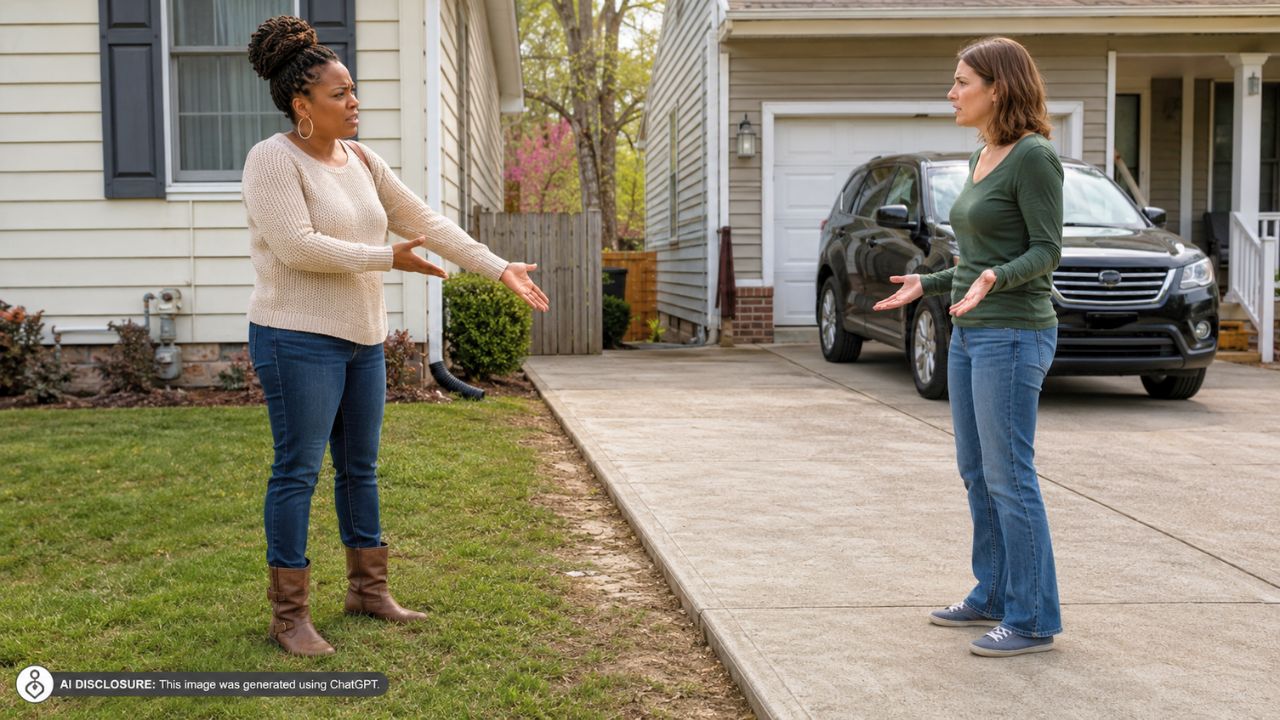
Photo credit: AI-generated image created using ChatGPT. Illustrative only.
Buying a new place is supposed to mean you’re done negotiating. You sign, you get the keys, you start figuring out where the couch goes. But for one new homeowner in Vermont, the first surprise wasn’t a leaky faucet or a funky smell in the basement—it was realizing a driveway she thought was “the neighbor’s” actually clips through the corner of her land.
In the source post, the homeowner said she recently purchased the property and only later discovered the paved drive cuts across a corner of her lot. It wasn’t disclosed in the seller’s paperwork, and she couldn’t find any recorded right-of-way in her deed or the neighbor’s deed. Now the neighbor uses that strip to tow a pop-up camper, and the new owner is stuck staring at a hard slab of pavement that—on paper—may not belong where it sits.
The discovery you don’t make during the walk-through
It’s the kind of detail that can hide in plain sight. A driveway looks like a driveway, and if it leads to the neighbor’s place, most buyers assume it’s fully on the neighbor’s land. Unless you’re walking the boundary lines with a survey in hand, a three-foot bite out of a corner can be invisible during the rush of showings and closing deadlines.
The homeowner described a corner-crossing driveway that she “didn’t know” ran through her property. That’s not just an annoyance. A paved encroachment is physical, permanent-looking, and immediately changes the feeling of what you actually bought.
And unlike a misplaced shed or a fence panel, you can’t just drag a driveway back into place. Asphalt and concrete aren’t negotiable materials. They sit there like a statement.
When the paperwork says one thing and the pavement says another
The part that made this feel especially unsettling is that the documents didn’t match the reality on the ground. The homeowner said the seller’s disclosure did not list any right-of-way. Her deed didn’t mention one either. To double-check, she went to town hall and pulled the neighbor’s deed, and she didn’t see an easement there, either.
That’s the moment when a “neighborly chat” turns into “I need a file folder.” If there’s no recorded right-of-way but there’s an obvious path being used, it raises all sorts of practical questions: Is this an old handshake agreement that never got written down? Is it a long-standing use that could turn into a claim later? Or is it simply a mistake that everybody got used to?
In rural places especially, long habits can start to feel like law. A gravel track becomes a paved drive. A corner-cut becomes “the way we’ve always done it.” And then a property sells, and the new owner is the first one to ask whether it’s actually allowed.
The neighbor’s use wasn’t theoretical—it was active
This wasn’t a forgotten strip of asphalt nobody touched. The homeowner said the neighbor uses the driveway to tow a pop-up camper. That detail matters, because it’s ongoing use, and it suggests weight and movement that could affect the property over time—ruts at the edge, crumbling shoulder, drainage issues where the pavement meets soil.
It also changes the emotional temperature. It’s one thing to learn a driveway technically crosses your property. It’s another to watch someone regularly roll equipment across land you just paid for, land you’re paying taxes on, land you might want to fence, landscape, or keep private.
And once you notice it, it’s hard to unsee. Every tow becomes a reminder that the boundary is being treated as optional.
The first “fix” was not a shovel—it was homework
The homeowner wasn’t looking to go nuclear. She said her goal was to find a peaceful resolution and “come up with a more formalized agreement.” But she also wanted to do the homework before any conversation, which is usually the difference between a calm discussion and a front-yard blowup.
She planned to speak with a real estate attorney, and she also asked whether she should consider legal action against anyone for not catching it: the realtor, the seller, the title company, the attorney who handled closing, or the neighbor.
That’s where the real homeowner panic lives—not just in the slab of pavement, but in the worry that multiple professionals touched the sale and nobody flagged something that now feels obvious.
When you buy a house, you assume the system is designed to prevent this exact problem. When it doesn’t, you start looking around for who missed what.
What people pushed her toward: proof, then talking
Even without a full comment thread included, the direction of feedback was clear from her update: she appreciated the responses and wanted a formal agreement. In conflicts like this, homeowners tend to hear the same practical chorus from experienced folks: verify the lines, document everything, and don’t rely on casual assurances.
Because there’s a big difference between “my neighbor is nice, so it’ll be fine” and “my neighbor is nice, and we both signed something that’s recorded.” Nice doesn’t show up in a future title search. A recorded agreement does.
The “fix it” mindset here isn’t about ripping out pavement first. It’s about figuring out what’s legally true, what’s historically been happening, and what solution prevents the issue from growing teeth later—especially if either property changes hands again.
People also tend to warn against making threats or building barriers before you understand local rules, because a driveway can involve access needs, emergency considerations, and long-standing usage that may have legal weight even if it’s not spelled out in a deed.
The tension: you want peace, but you also want your land back
There’s no way around it—this is awkward. A new homeowner trying to introduce herself now has to open with, “So, about that part of your driveway on my property…” That’s not a welcome basket conversation.
And it’s not just about the square footage. It’s about control. Once a neighbor is accustomed to using that path for a camper, asking them to stop can feel, to them, like you’re taking something away—even if it was never theirs to begin with.
The homeowner’s instincts were grounded: talk to an attorney, figure out options, and aim for something formal. That approach gives her the best chance to keep the relationship workable while still protecting herself from a future where the corner-cut becomes permanent by default.
For now, the driveway is still there, the neighbor is still using it, and the new owner is doing what homeowners end up doing more often than anyone wants to admit: learning that the real surprises don’t come from the house itself. They come from the lines on the map—and what someone built across them years ago.
Like Fix It Homestead’s content? Be sure to follow us.