Homeowner Pulls County Septic Plans Before a Yard Renovation and Finds Eighty-Four Feet of the Neighbor’s Leach Field Ending Just Ten Feet From the House — Then Realizes There’s No Room Left for the Pool
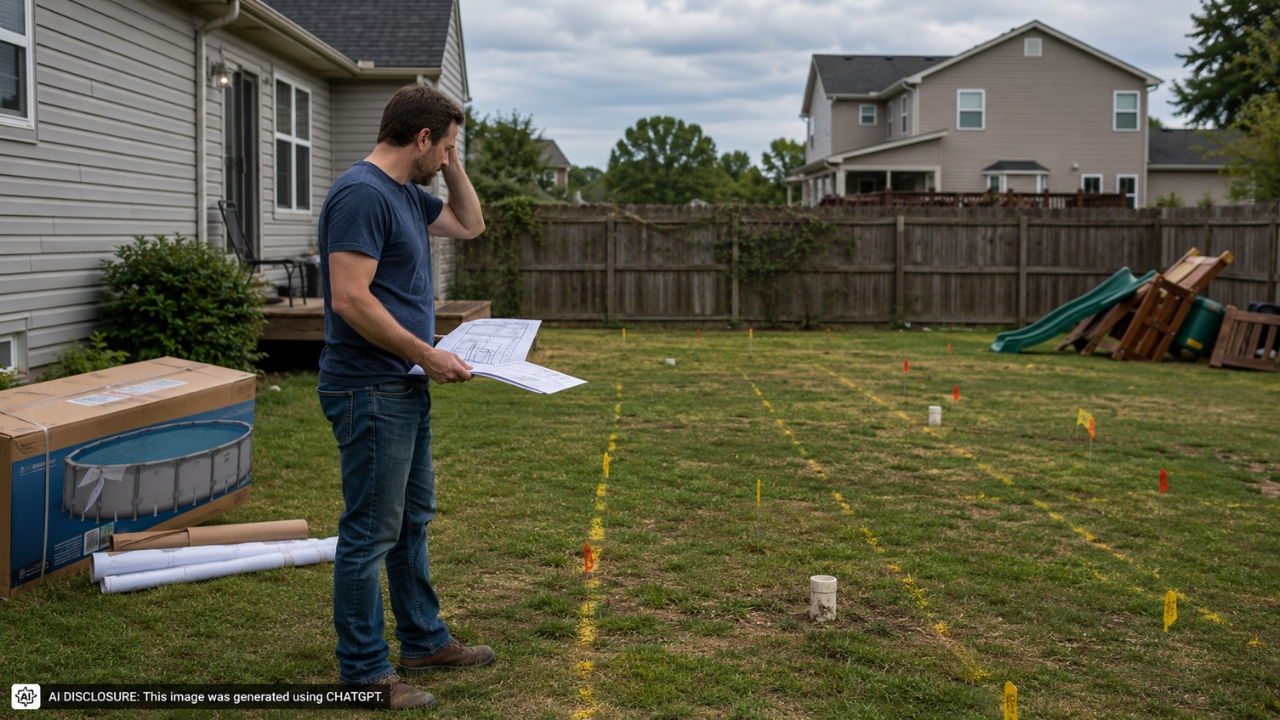
Photo credit: AI-generated image created using ChatGPT. Illustrative only.
It started as a normal “let’s finally make the backyard nice” project: trees for shade, a playground, and an above-ground pool for summer. Before anyone put a shovel in the dirt, an Idaho homeowner did the responsible thing and pulled the county septic and well plans to make sure they stayed clear of setbacks and underground lines.
That’s when the yard renovation turned into a property-line gut punch. In the original post, the homeowner says the records show the neighbor’s leach field isn’t just near the line—it runs through the homeowner’s backyard. Almost all of it. And it ends just 10 feet from the house.
They weren’t digging for a fight—just digging
The couple’s plan sounded straightforward: plant trees, set up an above-ground pool, build out a play area. The kind of improvements you map out on a weekend, then spend the next month measuring twice because you don’t want to hit anything important.
So they called the county office and requested the septic plans for their own lot. They wanted exact locations for their septic tank and well—two things that dictate where you can safely put anything permanent, and where you absolutely don’t want to disturb the soil.
That paperwork request is what opened the door to the bigger surprise: septic plans are public record, and the neighbor’s system documents were available too.
The lines on the plan didn’t match the fence line
When the homeowner looked at the neighbor’s leach field layout, it didn’t sit neatly behind the neighbor’s fence the way most people assume underground systems do. According to the homeowner, all but four feet of the leach field is on their property.
They estimated about 84 feet of leach field runs into their backyard. Worse, the end of it stops just 10 feet from their house. The neighbor’s septic tank itself appears to be just on the other side of the fence—on the neighbor’s lot—so the tank is “theirs,” but the drain field is effectively “not.”
In real-life backyard terms, that means the area you thought you could dedicate to a pool or a play set is suddenly a no-go zone. You can’t set posts, dig footings, compact soil, or plant certain trees over a leach field without risking damage or performance issues. And even if you could physically fit something, you might not be allowed to.
Then the backyard math got brutal: well, septic, and no space left
The homeowner describes a squeeze that will feel familiar to anyone on septic and well: everything has a “keep out” radius, and those invisible circles eat up yard faster than you’d expect.
Between their own well and septic components and the neighbor’s leach field occupying most of the backyard, the homeowner says they don’t have room for the improvements they wanted. The pool—one of the main goals—no longer has a viable spot.
And it’s not just about fun upgrades. Once you know sewage effluent is being distributed under your land—and it’s mapped ending close to your home—you can’t unknow it. It becomes a question of liability, future repairs, resale disclosures, and what happens if the system fails and someone has to dig up your yard to fix it.
How did it end up there in the first place?
The history adds to the frustration. The homeowner says the neighbor built their house in 2001. Later, in 2009, the neighbor subdivided their property and built the homeowner’s house. The current homeowners bought in 2019.
That timeline matters because it suggests the leach field may have been placed when the land was still one larger parcel, before the boundary lines were carved up the way they are now. In other words: it may not have been “on someone else’s property” at the moment it was installed. But the lots changed, and the drain field apparently didn’t.
The homeowner also notes the house was originally built for the neighbor’s son, but he sold it and moved away after the family farm went out of business. Now the homeowner is staring at the consequences of an old family plan that outlived the farm and outlasted the original owner’s intentions.
It’s the kind of rural property headache that doesn’t show up in a listing photo. The fence looks fine. The grass grows. Nobody is talking about sewage. Then you pull the county drawings and realize the backyard you thought you owned is functionally shared infrastructure.
The question nobody wants to ask: do you make the neighbor move it?
The homeowner’s first instinct wasn’t aggression—it was reluctance. They said they hate conflict and feel bad about the idea of pushing the neighbor to move the leach field. But they also suspect they never signed an easement, because they didn’t even know the leach field was there.
That’s where this turns from “bad luck” into “what are my rights?” If there’s no easement, no written agreement, and no disclosure that the neighbor’s septic field encroaches, the homeowner is left holding a problem they didn’t create and can’t build around.
On the other hand, the neighbor likely relies on that leach field to live in the home at all. Moving it isn’t like shifting a shed a few feet. It can involve design approvals, permits, excavation, and enough cost to make even decent neighbors defensive. And until it’s resolved, the homeowner is stuck with the most expensive kind of backyard limitation: uncertainty.
Practical reactions: proof first, feelings later
Even without a flood of quoted replies in the source material, the practical direction most homeowners take in this spot is predictable: verify everything before anyone knocks on a door with accusations.
County plans can be incredibly useful, but homeowners often want the on-the-ground reality confirmed—where the lines actually run, where the system was actually installed, and whether the paperwork matches the dirt. That usually means documentation, property boundaries, and professional confirmation before conversations escalate.
The homeowner is already doing one of the smartest steps: pulling records. It’s the difference between “I think your septic is in my yard” and “Here is the approved plan showing the field running 84 feet onto my parcel.” When you’re dealing with neighbors, fences, and something as sensitive as wastewater, the details are the only thing that keeps it from turning into a shouting match.
And the emotional part is real, too. It’s hard to ask for a fix that could cost someone a lot of money—especially when you’re the one who just wanted to plant trees and put up a pool.
For now, the homeowner is left with a backyard that looks normal but isn’t usable the way they planned. The pool dream is boxed out by circles and lines on a county drawing, and the next step depends on what’s documented, what was disclosed, and what can be changed without turning neighbors into enemies across the fence.
Like Fix It Homestead’s content? Be sure to follow us.