Homeowners Ask Renters Next Door to Stop Mowing Three Feet Onto Their Side Lot — Then Winter Plowing Tears Up the Grass to Expand Parking and Snowmobiles Start Cutting Through the Yard
Photo credit: AI-generated image created using ChatGPT. Illustrative only.
It started as one of those neighbor things you tell yourself isn’t worth turning into a whole ordeal. A strip of grass, a few feet wide, getting mowed “a little too far” over the line. But once winter hit, the line didn’t just get crossed—it got plowed.
In the original post, a homeowner describes living on an L-shaped property with an extra side lot they plan to use someday for a bigger garage. For now, it’s open space—grass, room, and a clear sense of “this is ours.” The new renters next door seem to have other ideas, and the small boundary problems have stacked up into something that feels like it’s headed for real damage and real costs.
The side lot was supposed to be “future plans,” not shared space
The layout matters here. The homeowner’s yard isn’t just a rectangle behind the house—there’s a side lot off to the side that’s part of their property, earmarked for a future garage build. It’s not fenced in, because they already fenced the backyard and don’t want to spend the money doing the same thing twice.
Next door, the rental’s driveway runs right along the property line. Past that is a fence and then an opening to the renters’ shed. The homeowner notes that to reach that shed, the renters either walk across the homeowner’s property or take the long way around their own house. That detail—access—hangs over everything that comes next.
The first sign was easy to brush off: three feet of mowing
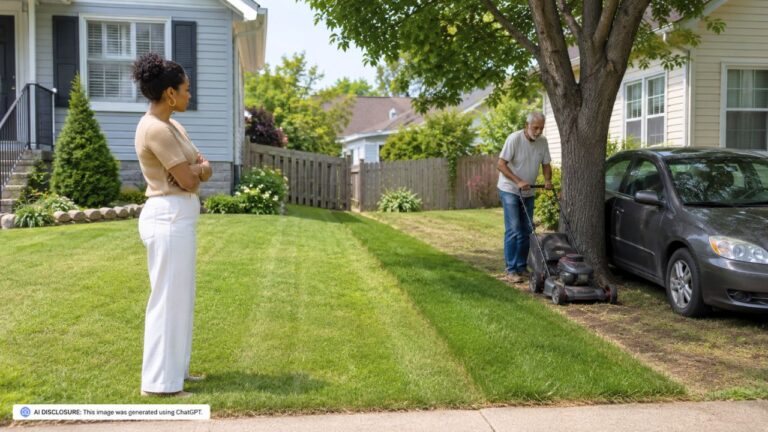
Shortly after the renters moved in, they began mowing about three feet onto the homeowner’s side behind the fence and shed. It’s the kind of overstep that can be chalked up to misunderstanding—until you say something and it keeps happening.
The homeowner’s husband went over and politely explained where the property line was, telling the neighbor he would handle mowing their own land. The renter offered to “take turns” mowing the lot, but the husband declined. It wasn’t a shared lawn-care agreement; it was a boundary.
Not long after that, the renters asked if party guests could park on the side lot. The answer was no. The homeowner’s husband held the line again, and from there, the dynamic shifted into a pattern: ask, get told no, and then do a version of it anyway.
Trash cans became the weekly reminder that “no” wasn’t sticking
The homeowners decided to tolerate the mower strip for a while. If it stayed at “annoying but harmless,” maybe it wouldn’t be worth escalating. But the next behavior wasn’t harmless—it was repetitive and pointed.
Every garbage day, the renters began putting their cans onto the homeowner’s property. The husband would move them back. The next week, they’d show up in the same place again. It wasn’t one forgetful morning; it became a loop.
Anyone who has dealt with boundary-pushing neighbors recognizes the grind of that kind of behavior. It forces the homeowner into constant policing of their own space, and it tests how long it takes before someone just gives up.
Then winter came, and the yard stopped being “just grass”
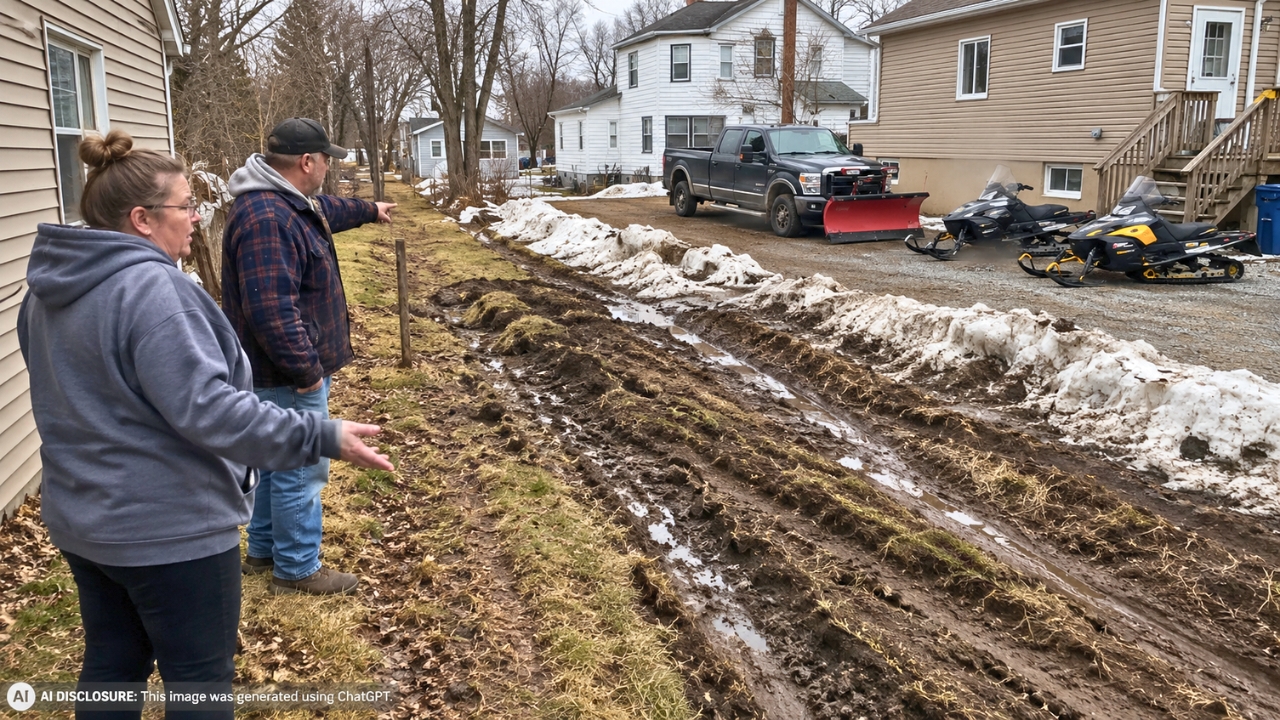
The real escalation arrived with snow. The renters started plowing their driveway and pushing the snow right into the homeowner’s yard, tearing up the grass like they were widening their parking area. In summer, a mower line can be corrected in a weekend. In winter, a plow blade can carve ruts, scrape topsoil, and leave a mess that doesn’t fully reveal itself until spring thaw.
At the same time, the traffic problem grew. The renters have a driveway that fits two cars, but they have three, and overflow parking began spilling onto the side lot. When visitors came over, some parked there too. The homeowner also says visitors arrive on snowmobiles and ride through the yard—another kind of damage that can chew up grass and compact the ground beneath.
This is where it stops being petty. Once vehicles and snow removal equipment are using your land as an extension of their driveway, you’re not arguing over aesthetics. You’re dealing with wear, rutting, broken turf, and the risk that “temporary” use turns into a presumed right.
The apology happened—and then nothing changed
The homeowner’s husband confronted them again, this time after watching the yard get torn up. The renters responded with “oh sorry,” but the behavior continued. That’s the part that leaves homeowners feeling trapped: you’ve done the polite conversation twice, and it still doesn’t stop.
The homeowner floated options that many people consider in the heat of frustration—like parking a vehicle right on the property line to block access. But they didn’t want to risk damage or turn the disagreement into a daily standoff. They also didn’t want to be “petty,” even though they’re already paying in time, stress, and lawn damage.
Meanwhile, the homeowner describes their husband as a “lawn guy,” someone who takes pride in keeping things neat. That makes repeated damage feel personal, and it also means he’s the one stuck dealing with the aftermath.
Most neighbors online focused on proof, boundaries, and a low-cost barrier
In an edit, the homeowner says they left a message with the city zoning department and are waiting for a call back. That’s a telling move: once you’re questioning access to a shed, property line use, and ongoing encroachment, people tend to want clarity on what’s permitted and what isn’t.
The homeowner also mentioned the shed existed when they moved in, but they don’t know how old it is. That detail matters because sheds near property lines can raise questions about setbacks and whether there’s an assumption of access across adjacent land. Even without getting into legal territory, homeowners often learn the hard way that older structures can create “this is how it’s always been” expectations—especially with renters who don’t have long-term investment in neighbor relationships.
The strongest practical suggestions the homeowner gravitated toward were simple physical boundaries: either installing a cheap fence temporarily until the future garage is built, or planting shrubs. They also liked the idea of turning the lot into more of a usable garden space in the meantime—something that makes it feel actively “owned,” not like spare land up for grabs.
That’s the common thread in these disputes: a visible boundary tends to do what repeated conversations don’t. It removes ambiguity and reduces the need for weekly confrontations over cans, tires, and plow piles.
For now, the side lot is still in limbo—too open to defend easily, too important to ignore, and increasingly shaped by the neighbor’s parking and winter routines. The homeowners aren’t just trying to save grass. They’re trying to keep future building plans from being complicated by a pattern that’s already getting comfortable on their land.
Like Fix It Homestead’s content? Be sure to follow us.