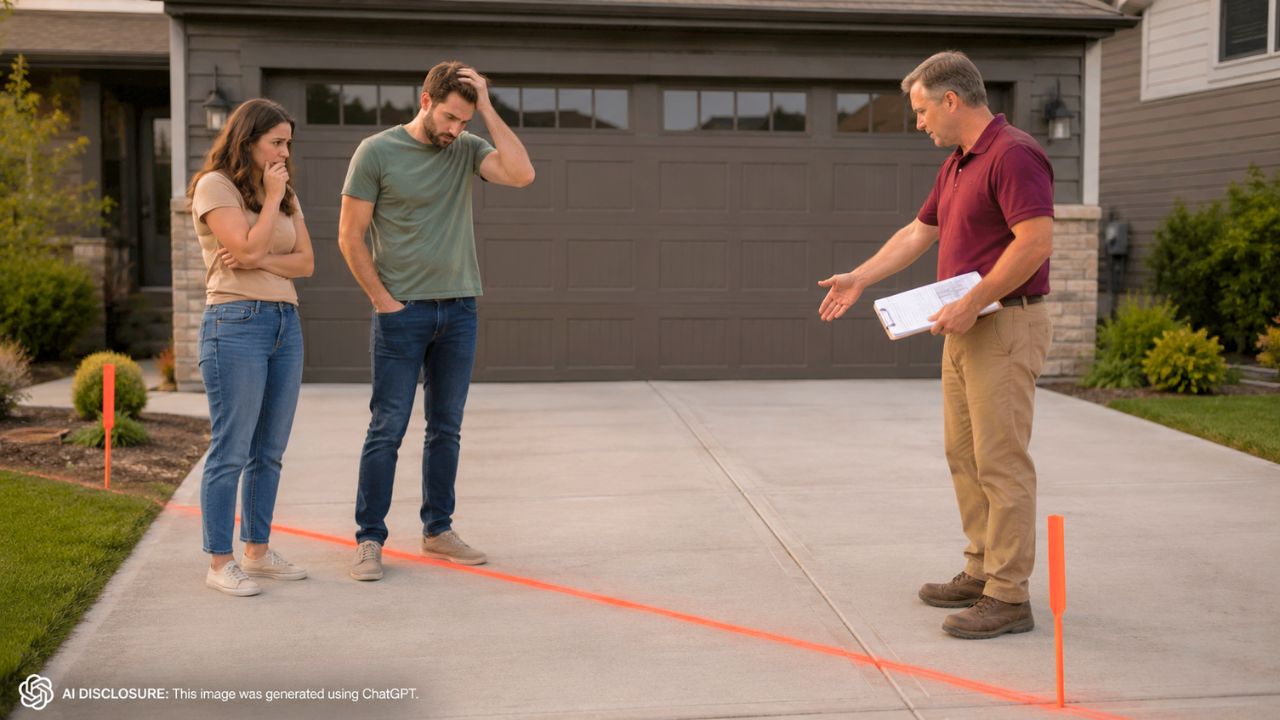
New Homeowners Learn From the Neighbor’s Survey That the Builder’s Stakes Were Twelve Feet Off — Then Realize the Neighbor Now Has a Legitimate Claim to Half Their Driveway
Photo credit: AI-generated image created using ChatGPT. Illustrative only.
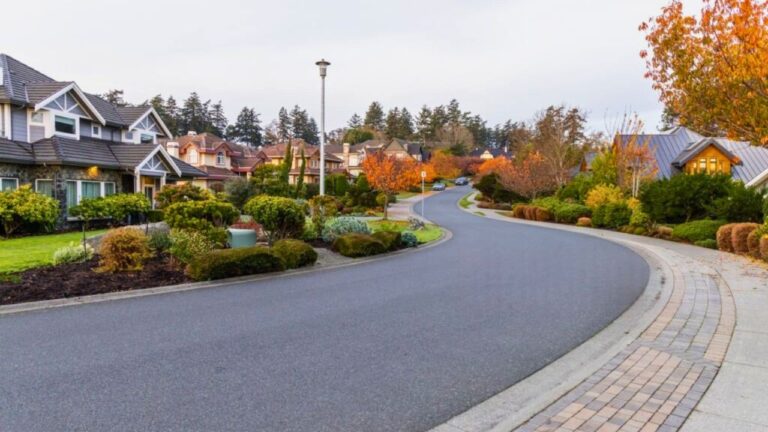
They moved in last July thinking the boundaries were a done deal. There were stakes in the ground, a new-build feel to everything, and a builder who talked like the strip of land beside the drive was part of the package.
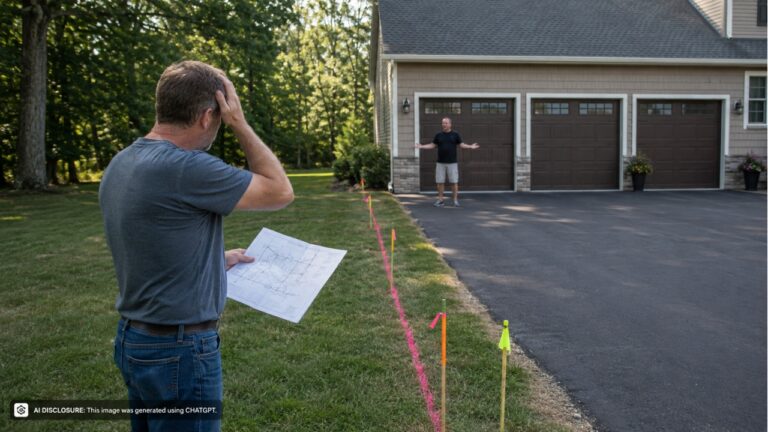
Then the neighbor paid for a new survey and the numbers landed like a brick: the true line sits about 12 feet into what the new homeowners believed was theirs. In the original post, the homeowner says the neighbor is now claiming ownership of half the driveway—and the plat map isn’t backing the homeowners up.
The “we thought we owned it” moment
This is the kind of problem that doesn’t start with a crack in the drywall or a leak under the sink. It starts with trust. The homeowners say they were under contract and relied on what they saw outside—survey stakes—and what the builder told them.
In their mind, the stakes were the physical proof. That’s where the lot ended. That’s what a lot of people assume: if it’s staked and graded, it must be correct.
The neighbor’s survey tells a different story, one with a very specific consequence. It’s not a couple feet of side yard where you can shrug and move a flower bed. It’s 12 feet. And it’s directly tied to the driveway—access, parking, future concrete work, and the uncomfortable reality that a neighbor can suddenly claim rights to something you’ve been using daily.
When the builder’s explanation doesn’t fix anything
The homeowner didn’t ignore it. They called the builder, expecting some kind of clean correction—maybe a mistake in marking, maybe a paperwork issue, maybe an easy “we’ll handle it.” Instead, they got a shrug dressed up as a story.
According to the homeowner, the builder said he didn’t know the property line ended short. He also claimed the graders moved the stakes before the sale. That’s the kind of explanation that might be true, might be convenient, and either way doesn’t change where the recorded line actually is.
Because even if someone moved stakes, stakes aren’t the legal boundary. They’re an attempt to show it. If they were off, it’s still the homeowners who are left standing in the driveway wondering what they really bought.
The plat map made it worse, not better
Plenty of homeowner disputes live in gray areas: old fences, missing corners, trees that grew over time. This one got darker when the homeowner checked the plat map and found it “also not in our favor.”
That detail matters because it shifts the argument from “maybe the neighbor’s survey is wrong” to “we may have been using land that never belonged to us.” And when the contested area is half a driveway, the stakes aren’t just about pride or landscaping. It’s about whether the neighbor can dictate what happens there—or even push for changes that make daily life harder.
It also puts a spotlight on the purchase process. If the homeowners closed without a survey of their own, or if they relied on builder markings as a substitute, they’re now learning the difference between what you were told and what’s recorded.
Half a driveway isn’t just land—it’s leverage
A driveway sounds simple until it’s not yours. If the neighbor truly owns part of it, that can affect who has the right to park there, who can widen it, who can replace it, and who’s liable if something goes wrong.
It can also create day-to-day friction fast. Imagine guests pulling in and the neighbor deciding it’s trespassing. Imagine a snowplow service, a delivery truck, or a contractor trailer sitting in the “wrong” half. The physical space doesn’t change overnight, but the social pressure does.
And there’s the long game. If the homeowners ever want to sell, a driveway straddling the property line is the kind of thing buyers’ lenders and title companies can get nervous about. Even if nobody sues anybody, uncertainty alone can cost time and money.
Most reactions focused on one thing: don’t argue, verify
The homeowner’s question—“Is there anything that we can do?”—is the same one people ask when they realize the problem isn’t cosmetic. The practical voices in these kinds of disputes usually land in the same place: stop treating it like a conversation and start treating it like a documentation problem.
When one survey says one thing and everyone’s memories say another, the next step isn’t a shouting match across the driveway. It’s getting your own licensed survey done, in your name, so you’re not fighting with a photocopy of someone else’s work. If the neighbor’s survey is correct, an independent survey will likely confirm it. If it’s off, you need your own professional proof to push back.
And if the plat map aligns with the neighbor’s claim, it becomes less about “winning” and more about figuring out what tools exist—whether that’s working something out with the neighbor, addressing any title issues from the purchase, or figuring out whether there’s an easement or a legal path that keeps the driveway usable.
Where this leaves a new homeowner: boxed in by paperwork
This is a rough lesson to learn in your first year in a home. You’re still getting used to the place, still paying for the move, still figuring out the little quirks. And suddenly you’re staring at a 12-foot discrepancy that might already be baked into the official records.
What makes it feel unfair is the timeline. The homeowner bought last July, believed the stakes and the builder, and likely made decisions based on that belief—how they used the driveway, how they pictured the property, what they thought they owned.
Now the neighbor has a survey and a claim, and the homeowners are left trying to figure out whether the real fight is with the neighbor, the builder’s representations, or the paperwork that should have protected them at closing.
For the moment, the driveway is still there, still being used, still physically connected to the house. But it no longer feels like a simple slab of concrete leading home. It feels like borrowed space—with a line on a map threatening to turn a daily routine into a permanent neighbor standoff.
Like Fix It Homestead’s content? Be sure to follow us.