New Lakefront Homeowner Buys a Side Lot for Her Septic System — Then Finds the Neighbor’s Boat Dock Extends Up to Thirty Feet Onto It, Right Where His Kids Play
Photo credit: AI-generated image created using ChatGPT. Illustrative only
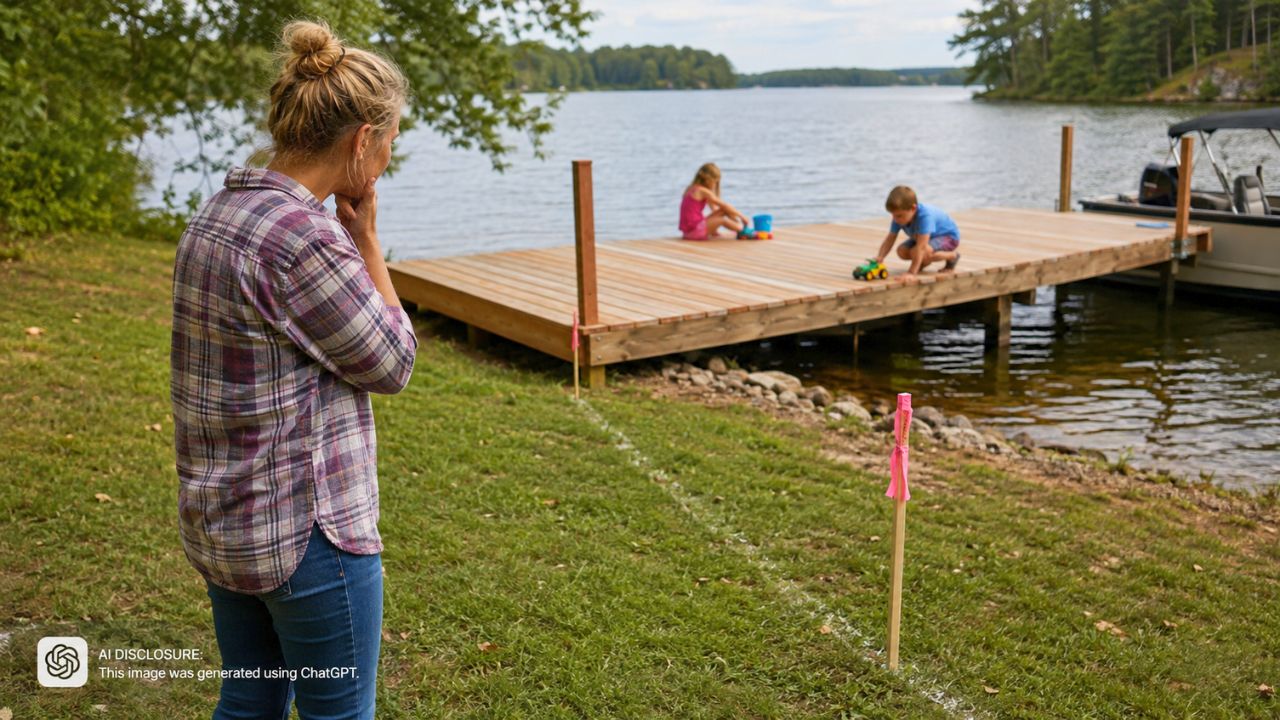
Buying lakefront property is supposed to feel like a victory lap: morning coffee near the water, a tidy yard, maybe a little dock of your own someday. For one new homeowner in Indiana, it turned into an immediate boundary headache when she realized her neighbor’s boat dock appears to stretch 20 to 30 feet onto the side lot she purchased for her septic system.
In the original post, she explained that the dock itself wasn’t what bothered her. What kept nagging at her was the question every property owner eventually runs into when “technically my property” and “someone else’s stuff” overlap: if something goes wrong out there—especially with the neighbor’s small kids—does the liability land on her?
The side lot wasn’t a “bonus”—it was for the septic
This wasn’t a case of buying an extra strip of land for fun. The homeowner said she purchased a lakefront home “along with a lot to the side for the septic system.” That detail matters because septic placement is not decorative. It’s infrastructure, tied to permits, setbacks, future repairs, and the kind of heavy equipment you might need to bring in when something fails.
So when she noticed the neighbor’s dock extending onto that lot by what she estimated was 20–30 feet, it didn’t just feel like a minor encroachment. It felt like a complication attached to a part of the property she can’t casually ignore.
Lakefront life has its own culture of informal lines—people get used to shared shoreline views, long-standing docks, and the “it’s always been that way” logic. But a purchased lot is a purchased lot, and septic land tends to become important right when you least want drama.
A dock that “doesn’t bother me” can still create real risk
What makes this story tense is how reasonable the homeowner sounds. She wasn’t furious about the structure being there. She didn’t say she wanted to rip it out or start a feud. She said, plainly, “The dock itself does not bother me,” then went straight to the fear underneath: responsibility if someone gets hurt on or around a dock sitting over her property line.
That’s the part that snaps a lot of homeowners to attention. It’s one thing to tolerate a neighbor’s garden edging crossing the line. It’s another to tolerate something that invites constant use—especially by children—on land you own but don’t control.
Docks are slippery, wet, full of hard corners, ropes, ladders, and moving boats. Even on a calm private lake, it’s the kind of structure where normal kid play can turn into an injury fast. The homeowner’s worry wasn’t abstract; it was rooted in the daily reality of what a dock is used for.
Private lake, blurry lines, and the “who owns what” question
She noted this is a private lake in Indiana, which adds another layer. Lakefront boundaries aren’t always as intuitive as a backyard fence. Depending on how the lots are platted, where the shoreline sits, and what rights exist for access or shared use, property lines at the water can be surprisingly messy.
Even when a deed is clear, the physical markers often aren’t. Water levels change. Shorelines erode. Old owners may have allowed things informally years ago. A dock may have been installed long before a side lot was split off for a septic field, or long before the current homeowner bought in.
That’s why these disputes can feel so personal, so quickly. One person sees “my dock I’ve always had.” The other sees “my land I just paid for.” And sitting between them is a real question: if the dock truly sits on her property, does that create duties for her as the owner, even if she doesn’t use it?
The liability fear is what turns this from awkward to urgent
Many neighbor disputes simmer for years because people don’t want to be the bad guy. This one escalates internally because the homeowner’s fear isn’t about aesthetics—it’s about a worst-case day that changes everything.
She described small children in the neighbor’s household and made it clear she doesn’t want to “risk liability should an injury or worse happen on what is technically my property.” That’s the moment a lot of homeowners recognize: you can be friendly and still need boundaries in writing, with documentation, because the stakes aren’t just feelings. They’re financial and legal.
And it’s not only injuries. A dock encroachment can complicate insurance questions, future property sales, and the ability to access or service the septic area. If a septic repair requires digging, trucks, or a replacement field, suddenly a structure sitting 20–30 feet onto the lot isn’t a harmless overlap—it’s a physical obstacle tied to a core system of the home.
What commenters tended to push: proof first, then paperwork
Even without a long comment thread pasted in, this kind of post typically draws the same practical homeowner playbook from experienced property folks: don’t start with accusations, start with proof. When someone estimates a dock is 20–30 feet over a line, the next step is usually confirming where the line actually is.
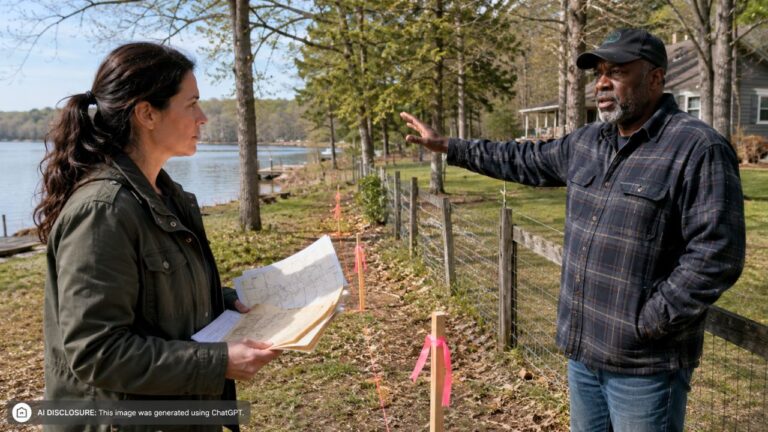
That often means pulling the survey from the home purchase, checking the legal description, and comparing it to any visible stakes or markers. If a survey wasn’t done recently—or if the shoreline makes it hard to interpret—people commonly recommend getting a new survey, because “I eyeballed it” doesn’t hold up well when you need a clean resolution.
After that, the advice tends to split into two tracks. One track is neighborly: talk to the neighbor with the facts, ask if they’re aware, and see if there’s an easy adjustment or agreement. The other track is protective: involve your insurer for guidance on liability concerns, and consider a formal written arrangement if you’re going to allow the dock to remain in place.
In property disputes, the order matters. Once voices get raised, people stop cooperating. Documentation keeps it from turning into a personality war.
The quiet pressure: fixing it without turning the lake into a battlefield
The hardest part in stories like this isn’t the math of feet and inches. It’s the social cost. Lake neighbors see each other constantly—on weekends, during holidays, while mowing, while launching boats. And when kids are involved, everyone is extra sensitive.
This homeowner didn’t present herself as someone eager to enforce a line just because she can. She sounded like someone who wants to enjoy her home and not inherit someone else’s risk. That’s a narrow path to walk: protect yourself without becoming “the new neighbor who hates the dock.”
But lakefront property has a way of forcing these decisions. A dock that crosses onto your septic lot may be tolerable today. The day you need septic work, sell the property, or deal with an accident, it stops being theoretical. It becomes the thing you wish you’d addressed when it was still just an uncomfortable discovery instead of an emergency.
For now, she’s left staring at a structure that doesn’t bother her—until she remembers where it sits, who uses it, and what it could mean if a fun afternoon on the water turns into a call nobody wants to make.
Like Fix It Homestead’s content? Be sure to follow us.