New Tennessee Landowner Buys Wooded Acreage for Hobbies — Then Learns the Neighbor Has Twice Won Adjoining Land in Court by Refusing to Remove Sheds and Junk He Placed There
Photo credit: AI-generated image created using ChatGPT. Illustrative only.
The new place outside Chattanooga came with exactly what the buyer wanted: a few acres, mostly wooded, the kind of land you can disappear into for weekend projects and quiet hobbies. The house was the easy part. It was the edge of the property—the part you don’t stare at during a showing—that started to feel like a trap.
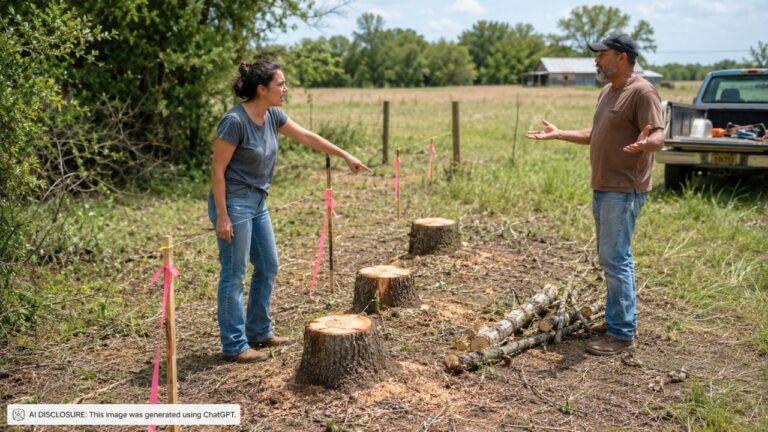
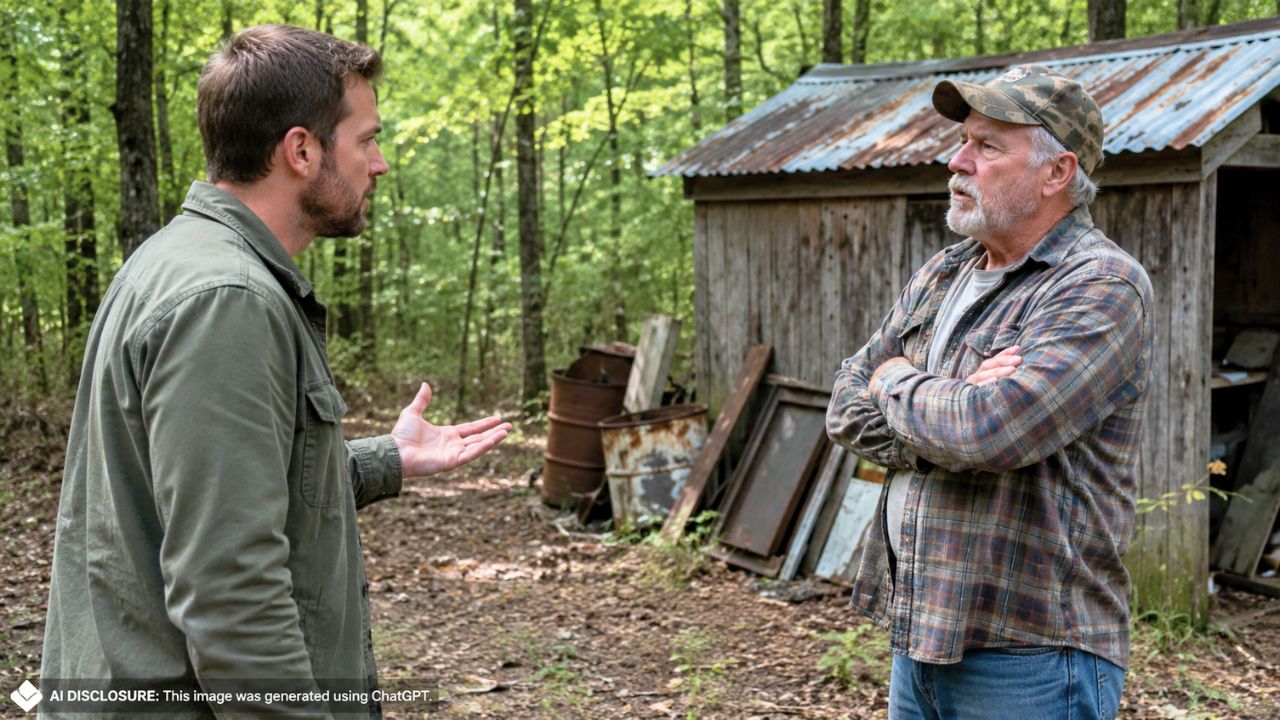
Not long after moving in, nearby homeowners delivered a warning about the bordering neighbor: this was someone who didn’t just push boundaries, but allegedly took them. Twice, they said, the neighbor had placed sheds, tarps, and junk over the line onto adjoining parcels and then, through court proceedings, ended up keeping the land for “little to no money.” The new owner laid it all out in the source post, hoping to figure out how to stop the pattern before it swallowed another slice of woods.
The wooded acreage was the whole point
The homeowner didn’t buy extra land for resale value or bragging rights. They bought it for use—space to roam, tinker, and keep a buffer of trees instead of another close neighbor. Wooded property isn’t like a manicured backyard where you notice every inch; it’s easy for a boundary to feel theoretical until something shows up where it shouldn’t.
That’s where the anxiety starts to creep in. If a “missing” strip of woods gets quietly absorbed, you may not spot it until you try to build, clear brush, or put up a trail. And by then, the other person might be acting like it was theirs all along.
The neighbor already had a history on this line
The warning wasn’t vague gossip. According to what the new owner was told, the prior owners of this same house had already been through it. The neighbor built a shed that intersected the original owners’ property and refused to move it or tear it down.
That refusal didn’t end in a handshake agreement. It turned into a long court battle, and the original owners eventually lost. For a new buyer, that’s the kind of backstory that changes how you see everything on the boundary: every tarp, every scrap pile, every “temporary” structure starts to look like the opening move in the same game.
This time it wasn’t a shed—just a big pile of junk
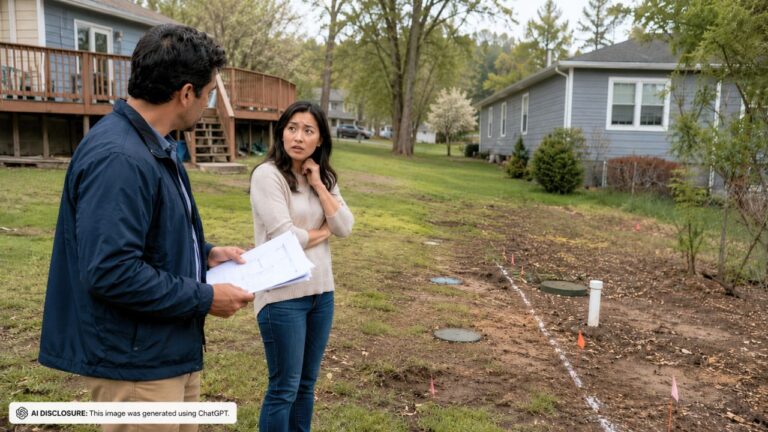
The new owner didn’t rely on a hunch. They had surveyors walk the property line and confirm what they feared: a new, very large junk pile was sitting on land that legally belongs to them.
And it wasn’t placed somewhere ambiguous, like a shared driveway edge or a corner where fences wander. The owner said the location was such that it couldn’t have been placed there by anyone else except that bordering neighbor. In the context of the neighbor’s past, it didn’t feel accidental. It felt like the start of another slow-motion land grab.
The practical problem is immediate and annoying. A junk pile in the woods isn’t just ugly; it can draw pests, become a dumping magnet, and complicate insurance questions if something catches fire or someone gets hurt. It also blocks the one fix the homeowner wants most: a “very large fence” along that side to make the boundary unmistakable.
The fence plan ran into one big obstacle
Fences are supposed to be the clean ending to messy property-line stories. You confirm the line, set posts, stretch wire or panels, and stop thinking about it. But you can’t build a proper fence through someone else’s debris pile, and you definitely don’t want to move the debris the wrong way and get accused of theft or dumping.
So the homeowner’s plan—build the fence first, then relax—got flipped. Before they can even start, the junk has to be moved, and the person most likely to move it is the same neighbor who allegedly refused to move a shed before.
That’s how a simple homestead upgrade turns into a high-stakes standoff. If you push too softly, the pile stays and time passes. If you push too hard, you risk escalation with someone who already seems comfortable rolling the dice in court.
Most reactions centered on documentation, not face-to-face arguments
Even without a full comment thread included, the tone of the homeowner’s question points to the kind of advice people usually give in these boundary fights: do not treat it like a casual neighbor chat when there’s a documented pattern and prior litigation. When someone has already “won” land after placing structures over the line, the next steps can’t be vibes-based.
The homeowner already took one of the most important steps by getting surveyors to confirm the line. From there, the typical practical reactions in situations like this focus on building a paper trail before emotions take over: keep the survey documentation, photograph and date the encroachment, and communicate in writing so timelines don’t get fuzzy later.
There’s also the reality that rural and wooded properties can be harder to monitor. A fence helps, but so can visibility—making it obvious the line is watched and maintained. When a boundary is ignored for long enough, it becomes easier for an aggressive neighbor to act like nobody cared.
Why it feels so personal: it’s not just land, it’s the reason they bought the home
This homeowner didn’t move for a bigger kitchen or a nicer neighborhood entrance. They moved for the woods. Losing a slice of that—especially to a neighbor’s tarp-covered pile—doesn’t just hit property value. It hits the day-to-day experience of living there.
There’s also the mental burden of never being able to “just enjoy” your acreage. Every time you walk the tree line, you’re scanning for new objects. Every time you hear a vehicle near the border, you’re wondering what’s being hauled in. That’s not the quiet rural life people picture when they buy a few acres.
For now, the homeowner is stuck at the most frustrating point in these stories: the problem is confirmed, the fix is obvious, and the person who needs to stop is the one with a track record of not stopping. The fence is waiting. The woods are waiting. But first, the boundary has to be defended—before a junk pile turns into something much harder to undo.
Like Fix It Homestead’s content? Be sure to follow us.