Buyer Finds Out the Septic Drain Field Extends Onto the Neighbor’s Land — Then the County Says the Entire System May Need to Be Rebuilt
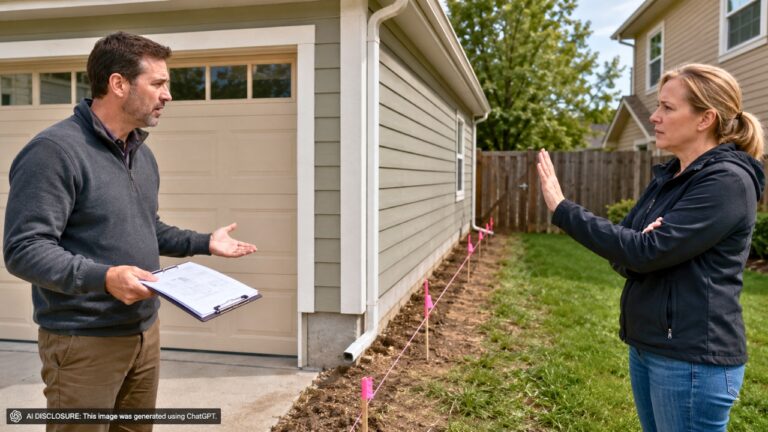
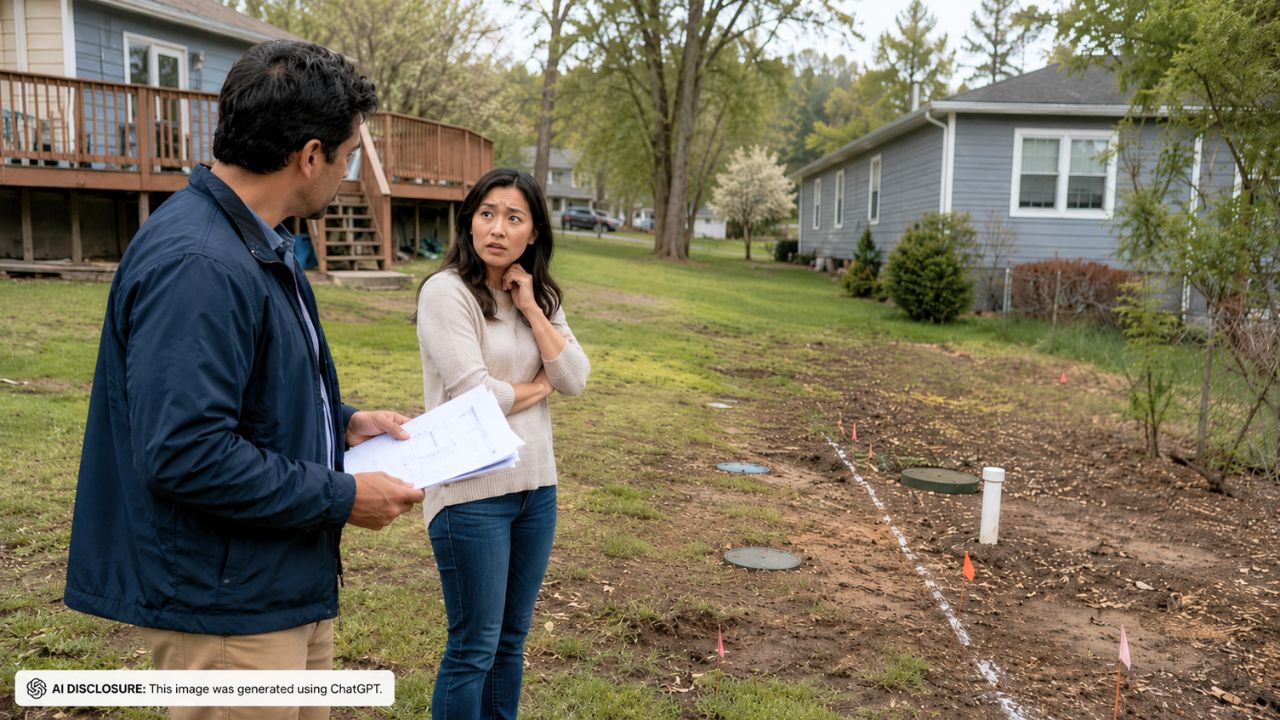
Photo credit: AI-generated image created using ChatGPT. Illustrative only.
It’s the kind of detail most buyers don’t think to ask about until someone points at a map and says, “That part isn’t yours.” One prospective buyer in Issaquah, Washington was getting ready to make an offer on a home when they learned the septic drain field doesn’t fully sit on the property they’d be purchasing.
In the source post, the buyer explains the land used to be one larger parcel owned by a single person. Back in 1992, that owner subdivided it. The house remained on one lot, but the drain field ended up extending onto what is now the neighbor’s lot—and no easement was ever recorded to make that arrangement legally usable long-term.
A “healthy” septic can still be a deal-breaker
On paper, the mechanical part sounded reassuring. The buyer said the septic system had already been scoped and inspected, and it was deemed healthy, with a drain field expected to have a long lifespan left.
But septic isn’t like a roof you can just replace without touching anyone else’s land. A drain field is literally in the ground. If it’s across the line, the home’s basic wastewater function depends on land the buyer wouldn’t own.
That’s where the panic starts to make sense: a working system can still be a major liability if the access and long-term rights aren’t locked down.
1992 paperwork meets 2026 reality
The backstory is familiar to anyone who’s lived around older rural and semi-rural properties: the owner “made it work” decades ago, then time passed, and nobody cleaned up the paperwork.
At the time of the subdivision, there was no easement in place. And the buyer says there still hasn’t been one acquired. That means the drain field might be physically there, and it might have been there for years without drama, but it’s not formally protected.
Things that felt informal and friendly in 1992 tend to become sharp-edged once properties change hands. A new neighbor may not care what the old owner “always did.” They care what’s in the county records and what affects their own resale value.
Where it gets ugly: repairs, access, and a neighbor who can say “no”
The buyer’s main fear wasn’t today’s performance—it was tomorrow’s emergency. Without an easement, if the drain field ever fails or needs work, the neighbor can potentially deny access because it’s their land.
And septic problems don’t wait politely. A failing drain field can show up as slow drains, sewage odors, soggy patches, or backups. At that point, you’re not negotiating from a position of comfort. You’re negotiating while trying to keep a home livable.
Even routine maintenance can get complicated. If a contractor needs to locate lines, dig, or bring equipment onto the neighbor’s property, that’s trespass without permission. Suddenly the “healthy septic” turns into a system you can’t legally service.
The county angle makes it even more tense
Once a property line problem touches septic, the county can become the third voice in the argument. The buyer framed it as a big worry: even if the current setup has “worked,” if it’s discovered to be noncompliant with current rules—or if any permit work is triggered—there’s a chance officials could require a proper fix rather than letting the old arrangement limp along.
That’s where the phrase every buyer dreads starts floating around: “rebuild the entire system.” Not because it’s currently broken, but because once the issue is in the open, there may be no clean way to “patch” it. Counties often want septic components to be located on the correct parcel, installed under valid permits, and spaced properly from wells, structures, and waterways.
The buyer noted there is space on the lot to relocate the drain field. That sounds like a relief—until you realize relocating septic isn’t like moving a shed. It can mean new design work, new trenches, possible soil testing, and potentially reconfiguring the whole system depending on site conditions and what the local health department requires.
“Just get an easement” isn’t always simple
In situations like this, the cleanest fix often sounds easy: negotiate an easement that permanently allows the drain field and grants access for repairs. But “easy” depends on one unpredictable factor—the neighbor.
If the neighbor is agreeable, it can be a straightforward recorded document with clear boundaries, maintenance responsibilities, and access language. If the neighbor is not agreeable, you’re looking at a major property dispute before you even buy the home.
Even with a willing neighbor, it can turn into a money question. A neighbor may ask to be compensated for giving up control of part of their land, especially for something as sensitive as septic use. And if they’re thinking about their own resale, they may want the drain field removed entirely, not formalized.
For the buyer, the pressure point is timing: you’re trying to buy a house, not start a multi-party negotiation with land records, surveys, and lawyers while the closing clock is ticking.
What people pushed for: proof, paper, and a Plan B
The buyer came looking for advice on how to navigate it, and the practical reactions in discussions like this tend to cluster around documentation and leverage.
The first theme is proving exactly where everything sits. It’s one thing to hear “it’s over the line,” and another to have a survey that shows the drain field footprint and any encroachments clearly. When a disagreement becomes expensive, vague descriptions don’t hold up.
The second theme is making the seller solve it, not the buyer. If the drain field is on someone else’s land without an easement, that’s not a cute quirk—it’s a title and use issue. Buyers in this position often push for one of two outcomes before closing: a recorded easement acceptable to their lender and title insurer, or a commitment to relocate the drain field onto the correct lot with proper permits.
And then there’s the Plan B mindset: if there’s space to relocate, some people would rather do that than be tied to a neighbor forever. Because even a signed easement doesn’t prevent future headaches—it just gives you rights to fight with, and fighting is still expensive and stressful.
In the end, the buyer is staring at a house that might be perfectly livable today, with a septic system that tests fine, but with a buried problem that can surface at the worst possible moment. The drain field doesn’t have to fail for this to cost money. It only has to become someone else’s leverage—whether that’s a neighbor who won’t grant access, a county that won’t approve repairs on the wrong parcel, or a lender who doesn’t like the risk. And once you see that, it’s hard to unsee it while you’re deciding whether to sign on the dotted line.