New Landowners Repair a 1970s Fence on Their Five Acres — Then County Records Show Their Property Extends Thirty Feet Into a Neighbor’s Yard Just as She Prepares to Sell
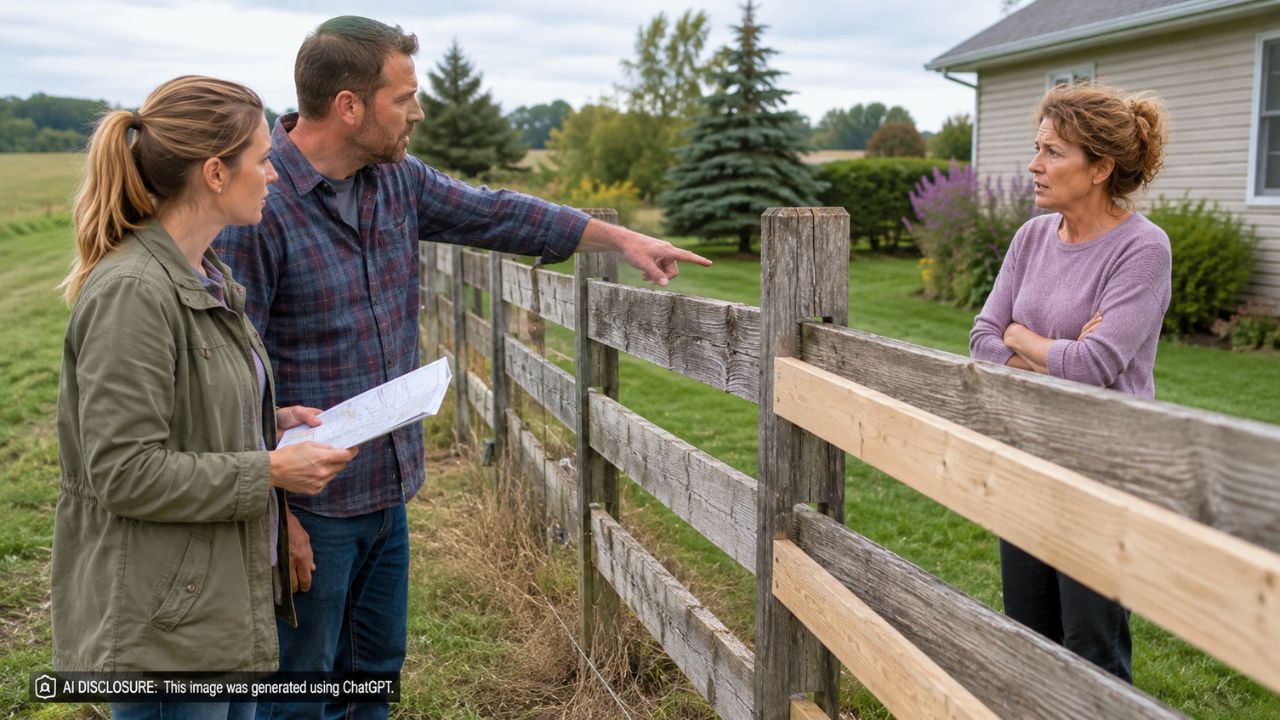
Photo credit: AI-generated image created using ChatGPT. Illustrative only.
They thought they were doing a simple, overdue piece of rural upkeep: fixing an old fence that’s been standing since the 1970s. The couple bought their five-acre place about a year and a half ago, and only recently started putting real effort into repairs.
Then a quick look at county assessor records turned the fence project into a boundary problem. Based on the measurements they pulled, their property line appears to run roughly 30 feet into what the neighboring homeowner has been treating as her yard—adding up to at least 4,000 square feet. The details come from the original post, where the new landowners asked what to do next.
The fence was old, but it “worked” until it didn’t
Plenty of country properties live with legacy fences. They’re not always pretty, not always straight, and sometimes they wander a little as trees grow, posts rot, and owners do patchwork fixes over decades. On five acres, it’s easy to focus on the big jobs first and treat the fence as a “later” problem.
That’s exactly how this one reads: a long-standing fence line that everyone got used to. The neighbor’s home wasn’t built until the late 1980s, meaning the fence was already there when she arrived, giving it an extra layer of “this must be the line” credibility. For years, the existing fence likely acted as the unofficial boundary, whether or not it matched the deed.
But the moment new owners start repairing or replacing an old fence, everything changes. A repair turns into a statement: this is the line we recognize, and we’re investing money in it.
County records suggested a very different property line
While checking their property boundaries through the county assessor’s office, the new owners noticed something that didn’t match what they saw on the ground. The measurements suggested their property extends at least 30 feet into the neighbor’s yard.
Thirty feet doesn’t sound like much until you picture it as a long strip running the length of a yard. That’s where the 4,000-square-foot figure starts to make sense. It’s not just a corner or a sliver; it’s a meaningful chunk of space that could affect how the land is used and valued.
And it creates a practical problem immediately: if you repair the fence where it sits, are you reinforcing the wrong line? If you move it to match the records, are you starting a fight and potentially impacting a pending home sale next door?
A single property marker raised the stakes
The owners said they found one property marker on the side of their property adjacent to the neighbor. That detail matters because it’s the first physical hint that the paperwork might not just be a map glitch.
But one marker can’t settle an entire boundary by itself, especially if the rest are missing, buried, or shifted over time. Still, finding even one can make the situation feel suddenly real. It’s no longer just “a website measurement”—it’s metal in the ground pointing to an uncomfortable possibility.
That’s when the question becomes less about fence boards and more about consequences. If the neighbor has maintained that strip as part of her yard for decades, moving the fence could feel, from her point of view, like land is being taken away—right when she’s preparing to sell. And for the new owners, leaving it alone could mean paying to repair a fence that doesn’t protect what they believe they bought.
The timing couldn’t be worse: she’s getting ready to sell
The neighbor is described as an elderly woman who is “literally preparing to sell her house soon.” That one sentence is where the tension lives. A sale means appraisals, inspections, disclosures, and buyers who will absolutely notice if a fence line and a property description don’t line up.
If the neighbor lists the property with a yard that includes this extra strip, it could get baked into marketing photos, showing the space as if it’s hers. Then, if a buyer later discovers the boundary issue, it can become a transaction problem—something that delays or derails a sale and leaves everyone angry at everyone else.
On the other hand, if the new owners wait until after the house sells, they risk facing a new neighbor who’s even less flexible. A buyer who thinks they purchased that yard space might treat any fence move as a serious escalation from day one.
There’s also the reality that the old fence being in the “wrong” place may have been convenient for previous owners on both sides. The longer a boundary looks settled, the more shocking it is when someone comes in with measurements and starts talking about shifting lines.
Most reactions centered on proof before posts get moved
The owners’ big question was straightforward: can they “just move” the fence based on what they’re seeing, especially now that they’ve found a marker? The strongest practical pushback you typically see to that idea is simple—don’t hang a major decision on assessor maps alone, and don’t turn a fence repair into a boundary declaration without solid proof.
Even when county records appear clear, the difference between an assessor’s map and an actual surveyed boundary can be where the trouble starts. Assessor tools are great for taxes and general reference, but they aren’t always precise enough for relocating fences, especially on older rural parcels where fences predate modern mapping.
There’s also a human element commenters often emphasize in property-line disputes: documentation and a calm approach can prevent a small land discrepancy from turning into years of bad blood. A fence moved without agreement can feel like a surprise attack, even if it’s technically correct.
And in a sale window, emotions run hotter. The neighbor may be stressed, sentimental, or simply focused on getting to closing without new complications. That doesn’t make the boundary disappear—it just makes the conversation more delicate.
How a “simple repair” turns into a long-term neighbor problem
This is the kind of homeownership surprise that doesn’t show up in paint colors and inspection checklists. You buy five acres, you inherit decades of assumptions: where the yard ends, where the pasture starts, which fence is “the” fence. Then one afternoon with county measurements flips the script.
Now the new owners are staring at two risky options. Repair the fence where it stands and potentially cement a line that doesn’t match the property they believe they own. Or move it and potentially disrupt a neighbor’s yard—and her home sale—by 30 feet.
Either way, it’s no longer just about keeping animals in or keeping weeds out. It’s about land value, future resale, and whether the next conversation over the fence is friendly or frozen.
For now, the fence boards can wait. The real job is figuring out where the line truly is—because once a new fence line goes in, it stops being a question on a screen and becomes the kind of “before and after” that a neighborhood remembers.
Like Fix It Homestead’s content? Be sure to follow us.