Homeowner Lets a Neighbor Tear Up the Yard for a Pool Under a $3,000 Restoration Deposit and a September 15 Deadline — Then Watches Him Blow Past It and Build a Large Wood Fence Where He “Believes” the Property Line Is
Photo credit: AI-generated image created using ChatGPT. Illustrative only.
It started like a friendly, neighborly favor: letting the people next door use a slice of yard access so they could install a pool. The homeowners figured it would be temporary, controlled, and made right in the end—especially since there was a signed agreement, a $3,000 deposit, and a firm completion-and-restoration deadline.
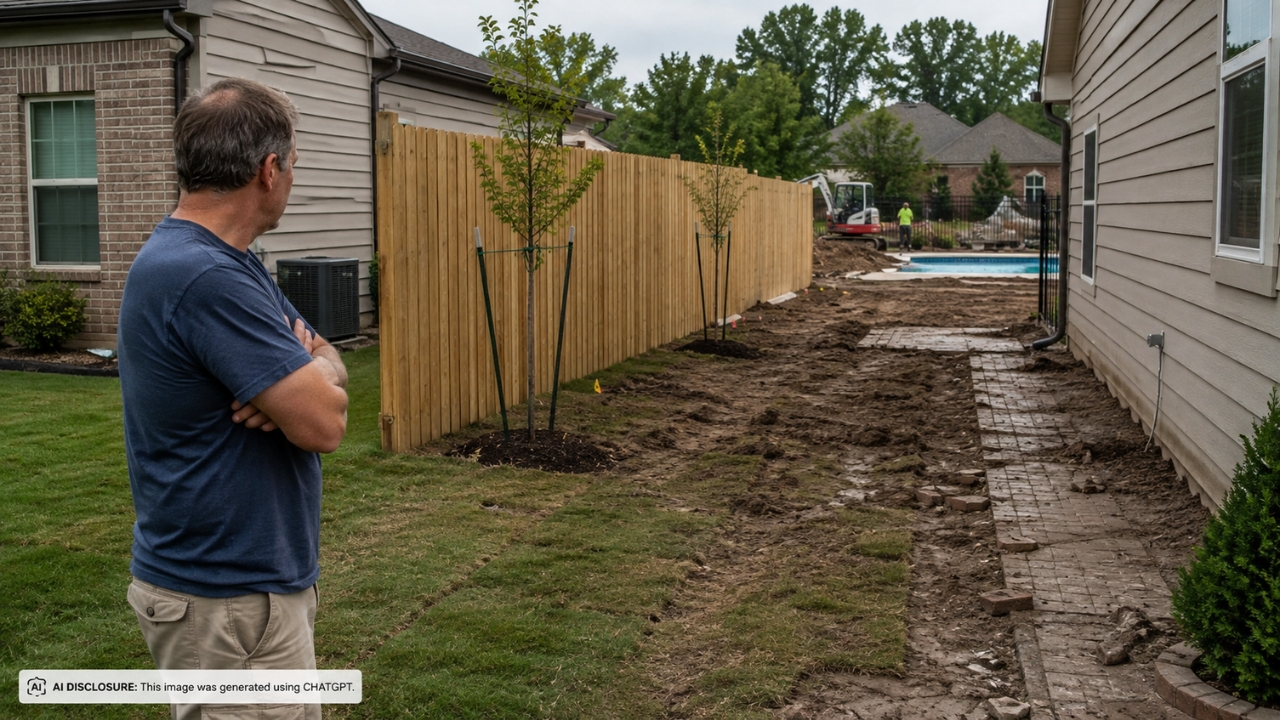
But in the account shared in the original post, the calendar flipped past the agreed date and the “temporary” mess turned into something that felt permanent. By the time the homeowners realized the leverage was slipping away, they were looking at torn-up lawn, fresh damage between the houses, and a brand-new wood fence placed where the neighbor “believes” the property line sits.
They said yes to access because there was a contract and a deposit
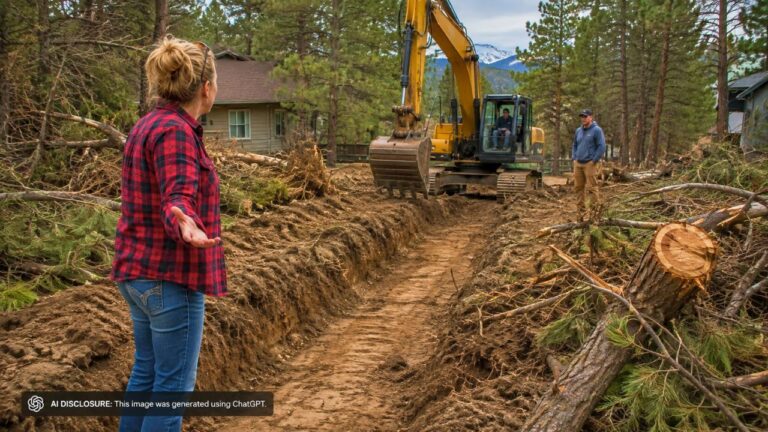
The homeowners describe letting the neighbor tear up part of their yard to get equipment in for the pool install. To keep it from turning into an open-ended project, they had a written agreement: restore the yard to its original state, put up a $3,000 deposit, and finish by September 15.
That’s the kind of thing that sounds safe on paper. A deadline. Money held back. A promise that the landscaping will go back the way it was. In real life, once the digging starts and heavy equipment is coming and going, the power balance shifts fast—especially when the neighbor controls the contractor schedule.
September 16 arrived with the yard still “destroyed,” and the homeowners say the neighbor wasn’t even close to being done with the access needs or repairs. That’s the moment when a favor starts feeling like an occupation.
The deadline passed, and the yard stayed wrecked
Once the date came and went, the homeowners tried to keep things moving without turning it into a shouting match. They even made a separate deal directly with the contractor: buying extra rocks with cash and having them placed at the rear of the homeowners’ property. The contractor said he had extras anyway and offered a deal.
That detail matters because it shows how blurred the lines got. Now it wasn’t just “neighbor and contractor restoring what they damaged.” It was side agreements, materials being moved around, and the homeowners trying to salvage something useful out of the disruption.
Meanwhile, the overall restoration still hadn’t happened on schedule. The yard wasn’t back. Access wasn’t done. And the longer torn-up soil sits, the harder it is to bring it back without spending real money—topsoil, grading, sod, watering, and time.
Then the fence went up—based on a belief, not a survey
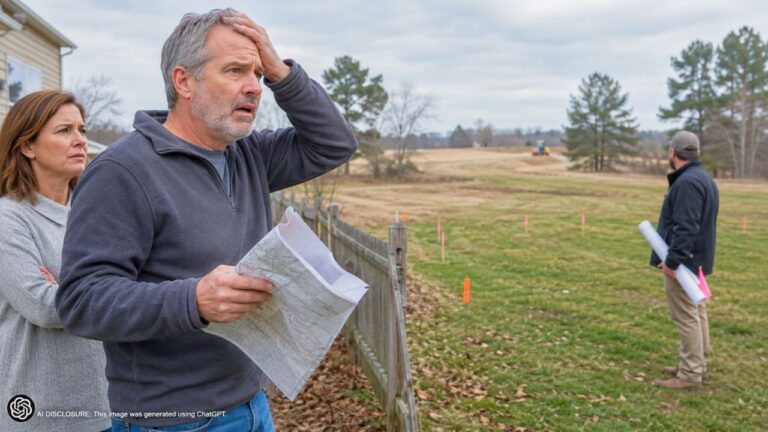
The dispute escalated when the neighbor built a large wood fence. The homeowners say the neighbor placed it on what they “believe” is their property. The homeowners didn’t want that style of fence at all and preferred a chain-link fence on the property line.
Even if the fence is entirely on one side, it changes the feel of the space instantly. A tall wood fence isn’t just a boundary marker. It’s a statement: this is mine, and this is where I’m drawing the line—literally.
And when a fence goes up before both sides agree on the property line, everything else becomes harder. Where do you plant? Where do you maintain? Where does your mulch stop? What happens if the fence is later found to be encroaching? Suddenly you’re not just dealing with a damaged lawn; you’re dealing with a long-term boundary problem.
Access got cut off, trees went in, and the walkway took a hit
After October 15, the homeowners planted trees along the border of their property and denied further access for machinery. They say they checked with the neighbor and the contractor, and were told it was okay.
But the cooperation didn’t hold. The homeowners say the neighbor then used machinery anyway and destroyed the walkway between the houses—without discussing it or asking permission.
That’s the kind of damage that feels personal because it’s so avoidable. Walkways aren’t just cosmetic; they’re daily-use paths, and repairing them can mean ripping out sections, re-leveling base material, and dealing with drainage changes. If water starts pooling where it didn’t before, you can end up with longer-term headaches that outlive the pool excitement by years.
Despite that, the homeowners still allowed the neighbor to continue restoration work, hoping it would at least end with a decent-looking yard. Instead, they say the finished “restoration” was half sod and half dirt-and-seed, leaving “a lot of our lawn” as bare dirt.
When the lawn fix looked bad, the neighbor threatened to sue
The homeowners tried one more step that sounds familiar to anyone who’s ever attempted to stay civil: they got a professional quote to fix the yard properly, then told the neighbor they were unhappy and wanted it corrected. They describe themselves as trying to be very nice.
That’s when the dispute took a hard turn. The neighbor responded by threatening to sue—specifically over the cost of moving the fence to the property line and for “encroachment” if the homeowners didn’t accept the work as-is. The homeowners say the neighbor claimed they were encroaching because the homeowners put mulch up to the fence the neighbor installed.
In other words, the neighbor put up a fence where they thought it belonged, then framed normal yard maintenance near that fence as an invasion. And they wanted the homeowners to pay to move a fence the neighbor chose to install.
By this point, the original problem—restoring a torn-up yard—had morphed into something stickier: threats, property-line ambiguity, and the fear of getting dragged into expensive legal sparring with the people next door.
Readers zeroed in on proof: boundaries, photos, and paper trails
In these kinds of homeowner disputes, the most practical outside reactions tend to focus on one thing: documentation. When someone claims “encroachment” over inches and “beliefs” about a property line, it stops being about who feels wronged and starts being about what can be shown.
The common theme in discussions like this is that a survey matters more than anyone’s confidence. A fence placed “where we believe” is fine right up until it isn’t, and then it becomes a costly problem that can poison a neighbor relationship for a decade.
People also tend to emphasize keeping records tight: the original signed agreement, the September 15 deadline, the $3,000 deposit terms, photos of the yard before and after, photos of the walkway damage, and copies of any estimates to restore the lawn correctly. When restoration is “sod here, seed there, dirt everywhere,” pictures do the talking.
Just as important: separating what was agreed to from what was tolerated. The homeowners describe giving access, then later denying it, then allowing it again under the pretense the neighbor would make it look good. That kind of back-and-forth is normal when you’re trying to live your life, but it’s also where confusion creeps in—and where someone looking for an advantage might claim they had permission when they didn’t.
The homeowners’ frustration comes through clearly: they wanted to de-escalate, not “lose thousands of dollars to litigious neighbors,” and they regretted granting access in the first place. Now they’re left with a yard that isn’t restored to what was promised, a damaged walkway, and a fence sitting as a daily reminder that goodwill can turn into a property fight fast.
In the end, it’s not the pool that changed the relationship—it’s the unfinished restoration, the surprise choices made on the boundary, and the shift from fixing damage to threatening lawsuits. And once a neighbor starts treating inches of mulch like a courtroom exhibit, it’s hard to go back to waving hello over the fence.
Like Fix It Homestead’s content? Be sure to follow us.