Canadian Homeowner Watches Construction Debris Pile Up on Their Property From a Renovating Apartment Building Next Door — Then Both the Contractor and Landlord Promise Cleanup That Never Comes
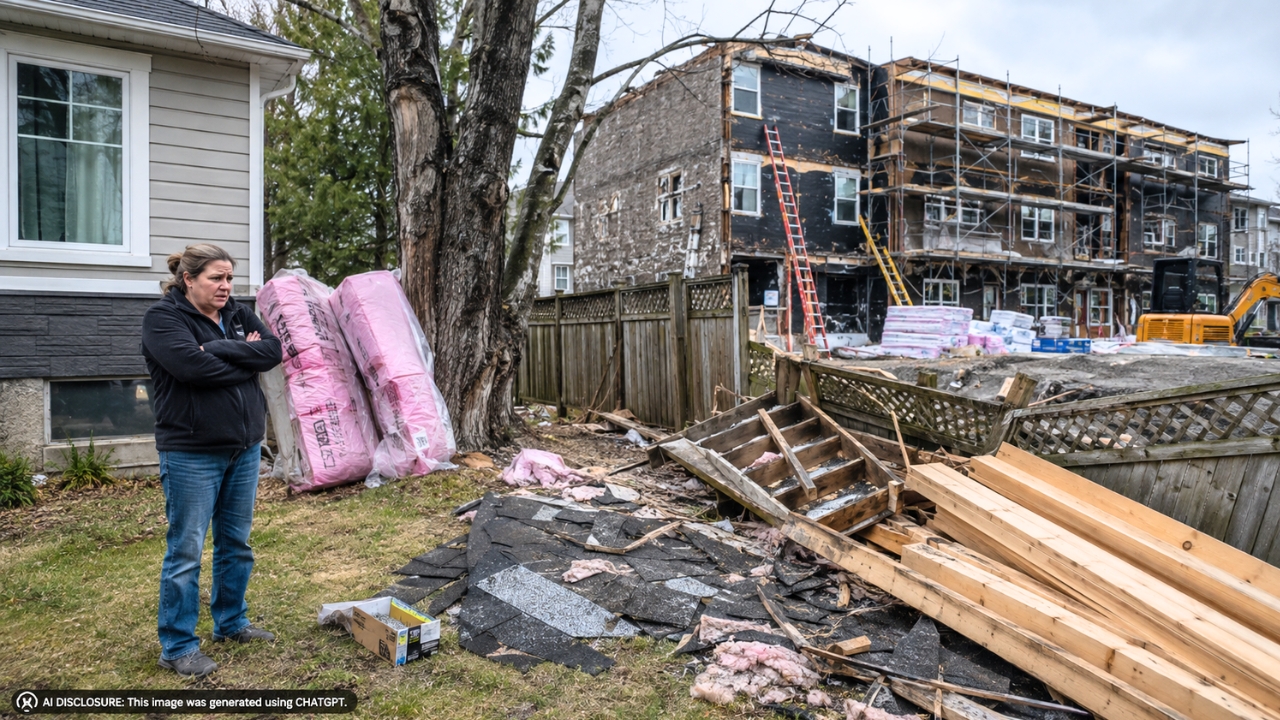
Photo credit: AI-generated image created using ChatGPT. Illustrative only.
The first scraps looked like the kind of mess you tolerate when a building next door finally gets fixed. A few shingle bits. Some insulation. An empty box of nails near the edge of the yard.
But for one Quebec homeowner, that “normal construction mess” kept creeping closer—until it turned into literal piles of lumber and a dismantled stairwell sitting on their property. In the original post, they described watching debris stack up day after day, hearing promises of cleanup from both the contractor and the landlord, and then realizing nobody was actually coming to collect any of it.
The first sign was easy to brush off
The home sits next to an apartment building that had been empty for years, supposedly because of major issues. This year, the city forced the owner to do something with it, and the renovation work finally started.
At first, the homeowner noticed “more and more trash on the border” of their property: small pieces of shingles, insulation, and nail boxes. It was annoying, but it still felt like the kind of thing you grumble about and move on from—especially when you know crews are tearing into a building next door.
Then the line between “a little litter” and “they’re using my yard as their dump” got crossed.
Then it turned into a staging area on someone else’s land
One day the homeowner came home to find the mess had escalated from loose scraps to full-on materials and demo debris. They wrote that there were piles of 2x4s, a dismantled stairwell, and bundles of insulation leaned against their house and a tree.
That’s not windblown trash anymore. That’s a worksite decision—someone picked a spot to set things down, and it wasn’t on the renovation property.
Even if nothing is broken yet, the consequences are obvious to anyone who maintains a home. Wood piled on soil can kill grass and invite pests. Insulation against siding can trap moisture. A heavy piece of demo material can scar a lawn, smash a planter, or damage a fence in a single bad drop.
The runaround: “Not my job” meets “I’ll take care of it”
When the homeowner called the contractor, they were told the landlord was responsible for materials and waste. The contractor’s role, the homeowner was told, was supplying the builder—not handling cleanup.
So the homeowner called the landlord, who promised to clean up. A week passed, and nothing changed.
This is the part that feels familiar to anyone who’s ever been caught between an owner and a contractor. Each side can point at the other, and the person living next door is left staring at the mess, wondering how long “soon” is supposed to last.
And the longer debris sits, the easier it becomes for everyone involved to pretend it’s normal.
The moment it got scary was the dog in the fenced yard
Up to that point, the homeowner said the scraps had ended up on their front yard. Still frustrating, but at least visible. Then they found their dog chewing on a piece of shingle that had somehow made it into their completely fenced backyard.
That’s when the problem stopped being about disrespect and started being about safety. Old shingles can contain gritty material, sharp edges, and tar-like residue. Insulation and nail packaging can be choking hazards. And if debris is getting into a fenced yard, it means it’s either being carried, tossed, or tracked beyond where it’s “supposed” to go.
Homeowners can ignore a lot until a pet gets involved. A dog doesn’t understand property lines or renovation schedules. If the animal eats something toxic or gets cut on a hidden shard, you don’t get to rewind the week and wait for someone else to finally do the right thing.
The city call didn’t bring the backup they expected
Trying to do this the normal way, the homeowner called the city to ask what to do. The answer they got was deflating: the city doesn’t inspect construction sites, they just issue the building permit and come back to re-evaluate after the job is done.
The homeowner found that “extremely weird,” and from a homeowner’s perspective, it does feel backwards. People hear “permit” and assume active oversight—someone checking whether a site is being run safely, whether debris is being contained, whether neighboring properties are being respected.
Instead, the homeowner was left with the practical reality: the renovation is happening now, the mess is happening now, and the official channels they hoped would step in weren’t offering immediate relief.
That’s how a simple boundary issue turns into daily tension. Every time you pull into your driveway, you see their lumber. Every time you look at your tree, you see insulation leaning against it. And every time you let your dog out, you’re scanning the grass like it’s a minefield.
How readers framed the next step: proof, paper trails, and protecting the yard
The post itself reads like someone hitting the wall most homeowners hit: “I’m not a lawyer,” they wrote, and they suspected that without damage to prove, suing wouldn’t go anywhere.
In these neighbor-versus-renovation messes, the most practical reactions tend to orbit the same themes: document everything, push communication into writing, and don’t wait for the pile to get big enough that you’re forced into a dangerous cleanup yourself.
Even without turning it into a courtroom fight, proof matters. Photos of debris on the property line. Time-stamped shots showing it’s not a one-time accident. Clear images of materials leaned against the house or stacked near a tree. If the backyard is supposed to be fully fenced, documenting that debris is getting in there is its own important detail.
It also changes the tone when the homeowner can stop calling and start sending a short message that simply states what’s on their property and asks for a specific removal date. Vague promises—“I’ll clean it up”—can stretch forever. Specifics don’t.
And while the homeowner didn’t mention cameras, this kind of problem often pushes people to add one aimed at the boundary line, not as a threat, but as a way to stop arguing about where the material came from in the first place.
For now, the debris is still the main character in the yard: visible, physical, and unwanted. The homeowner isn’t asking for special treatment—just the basic expectation that a renovation next door shouldn’t turn their front and back yards into an extension of the worksite.
Until the landlord follows through, the homeowner is left doing what neighbors in this position always do: watching the pile, watching their dog, and trying to figure out how to force a cleanup without turning a bad boundary problem into an all-out war next door.
Like Fix It Homestead’s content? Be sure to follow us.