New Landowner Buys Four Parcels Including a Fenced Vacant Lot — Then a Neighbor Insists the Overgrown Land Is Actually Theirs
Photo credit: AI-generated image created using ChatGPT. Illustrative only.
Buying a property is supposed to feel like closing a chapter. New keys, new projects, and—if you’re lucky—a fresh start. But for one new landowner, the welcome mat got yanked up the moment they tried to deal with a trashed, overgrown parcel that came with the purchase.
In the original post, the homeowner explained that their fiancée bought a house last September that included four separate parcels: the lot the home sits on, two fenced-in parcels, and a fourth strip of neglected land behind them. That last parcel—dilapidated, dumped on, and choked with growth—was the one they planned to clean up. It’s also the one the neighbors suddenly decided was theirs.
The “extra” parcel wasn’t pretty, but it was part of the deal
This wasn’t a case of someone casually mowing an inch over the line. The disputed parcel was described as a full-on problem child: overgrown, unimproved, and used as a dumping ground. The new owners wanted to reclaim it the way most people would—clearing trash, cleaning brush, and improving what they legally purchased.
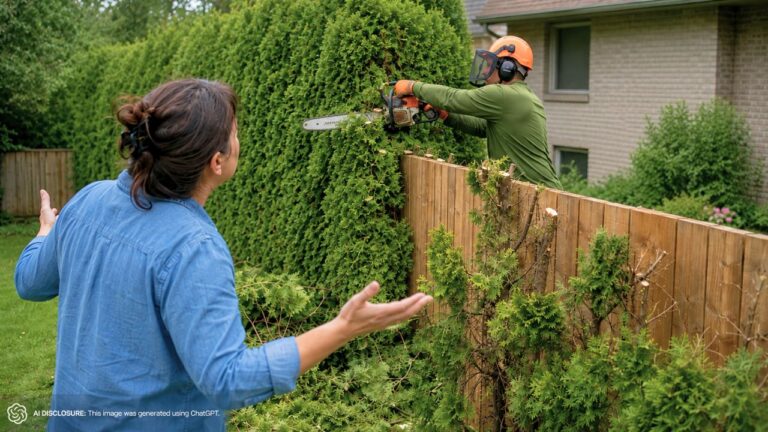
Instead, nearby neighbors pushed back hard. They didn’t just question where the line was; they acted like the parcel belonged to them and talked about making changes on it—specifically cutting down trees to reduce mosquito problems.
The new owner didn’t even disagree about the trees on principle. They said they weren’t fans of the vegetation either and believed the trees were invasive. But letting someone else “improve” land you just bought can invite a very specific kind of long-term headache.
When “we’ve lived here 12 years” becomes an argument
The homeowner’s worry wasn’t only about a few trees. It was about leverage. They were concerned that if neighbors started maintaining, clearing, or altering the parcel, it might give them a path to claim the land later through adverse possession—especially because the neighbors have lived there for 12 years.
The neighbors’ reasoning, at least from their perspective, came from how other nearby properties were laid out. According to the post, homes on the neighbors’ street typically own a separate strip or block of land behind them as its own parcel. That pattern, the homeowner said, breaks at the neighbors’ houses: they only have their house lot and maybe a small stretch behind it, with a driveway area between the houses and the rear parcels.
In other words, the neighbors were pointing at the “usual” layout on their street and assuming the same rule applied to them. The new owner was pointing at paperwork.
The paperwork said one thing, the neighbors said another
The homeowner tried to de-escalate it with facts. They explained that whatever arrangement exists behind other homes doesn’t automatically apply here—and that they had the deed and title to the disputed land.
To double-check, they looked up the neighbors’ names through the county recorder of deeds. They also checked the GIS map, which matched the parcel boundaries and referenced landmarks. The results, according to the post: each neighbor had a single deed describing only their house property, while the poster’s fiancée owned the rough parcel in question.
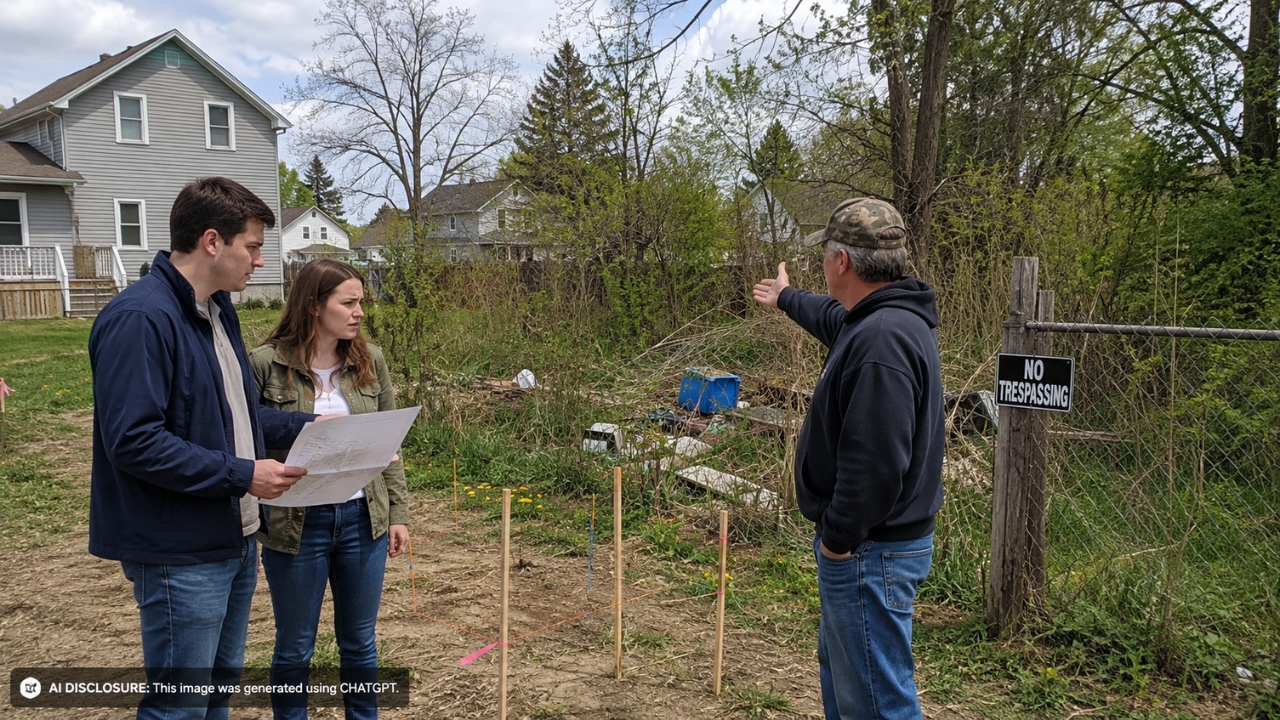
Even better, this wasn’t a fuzzy “well, the map looks like…” situation. The previous owner had placed survey stakes, and those stakes and pins were still in the ground. The ownership history of that parcel also never showed the neighbors’ names—or the names of prior owners of their home—attached to it.
But none of that made the argument go away.
A borough visit, a dumping problem, and the fear of “improvements”
The neighbors didn’t just disagree privately. One of them reportedly went to the borough council and came back claiming someone told her she owned part of the land. The poster believed that was erroneous, and pointed out that borough council isn’t where property title is determined in the first place.
Meanwhile, the new owners were dealing with actions, not just opinions. They put up “no trespassing” signs and asked the neighbors to stop dumping on the parcel after discovering that a neighbor’s son had been leaving things there.
The fear was that the next step wouldn’t be more trash—it would be chainsaws. Once trees come down, the damage is immediate, the cleanup is expensive, and the “we’ve always used this” narrative gets harder to shut down in everyday life. Even if you’re right on paper, you still have to live next door to the people who think you stole something from them.
Commenters leaned on the same playbook: document, deter, and don’t argue in the yard
The homeowner asked if there was any recourse that wouldn’t cost “an arm and a leg,” like paying for another survey or retaining a lawyer. They floated a few options: ignore the neighbors and proceed, go to council with evidence, or escalate with cameras and police reports if trespassing and dumping continued.
While the post didn’t include a full comment thread in the pasted material, the direction of the advice was clear from the homeowner’s own next steps: stop debating in person, treat it like a boundary enforcement problem, and gather proof in a way that holds up outside the neighborhood grapevine.
Cameras came up quickly in their thinking—especially a wired camera for a more reliable feed. So did a straightforward enforcement ladder: warnings and signage first, then police reports for trespass or dumping, and lawsuits if it kept going. It’s not about being dramatic; it’s about creating a clean record when someone is testing how much they can get away with.
The update: the survey was already done, and the next move is a fence
In an update, the homeowner clarified the biggest detail: they already have the survey that was conducted before the sale, and it shows the disputed land is “100% ours.” Stakes and pins are in place denoting the boundary.
They’re realistic about the social side of it—saying they doubt the neighbor will accept the survey—but they’re planning to proceed anyway. The next move is physical: fencing the area in, something they were already planning to do even before the dispute boiled over.
They also mentioned a deed restriction requiring that part of the land function as a shared driveway area with neighbors. Their plan is to clean a strip, shift part of the fence accordingly, and stay compliant. If the neighbors keep trespassing, dumping, or trying to remove trees, the response becomes formal: police report, then lawsuit if necessary.
For now, it’s a familiar kind of homestead stress—less about the land itself and more about stopping the slow creep of someone else’s entitlement. The survey stakes may be quiet, but the fence line won’t be, and that’s the point.
Like Fix It Homestead’s content? Be sure to follow us.