Property Owner Finds a Neighbor’s Deck Built Across the Property Line — Then a Lawyer’s Best Advice Is to Sell the Wedge of Land Away
Photo credit: AI-generated image created using ChatGPT. Illustrative only.
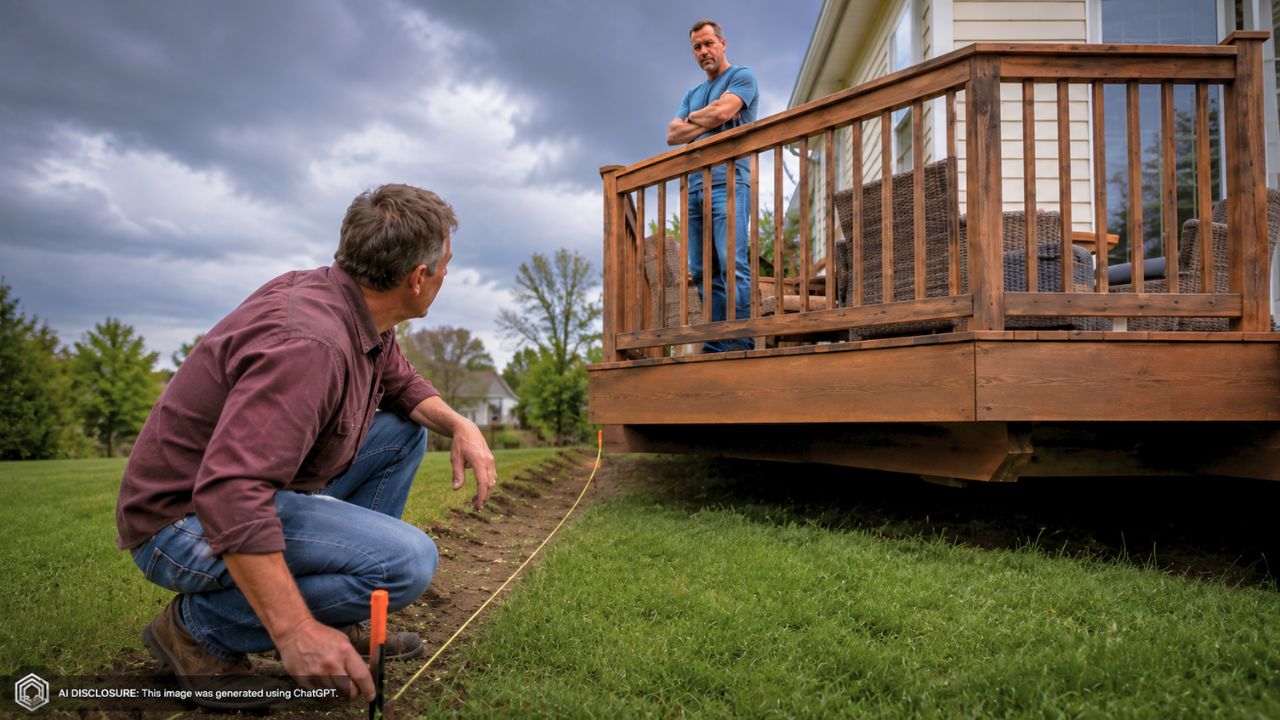
It starts as a line on a plat map and turns into a very real, very physical problem when someone else’s structure is sitting where your yard is supposed to be. In a recent homeowner update shared in the original post, a property owner described discovering that a neighbor’s deck crossed the property line—then getting advice that felt less like “fight for your land” and more like “make it go away.”
Their lawyer’s recommendation was bluntly practical: sell the small wedge of land to the neighbor or write an easement allowing use, mostly to avoid a long, expensive hassle. That’s the part that stings for a lot of homeowners—because it’s not just about square footage. It’s about what you can lose if you do nothing, and what you can spend if you do something.
A wedge of land turns into a full-time headache
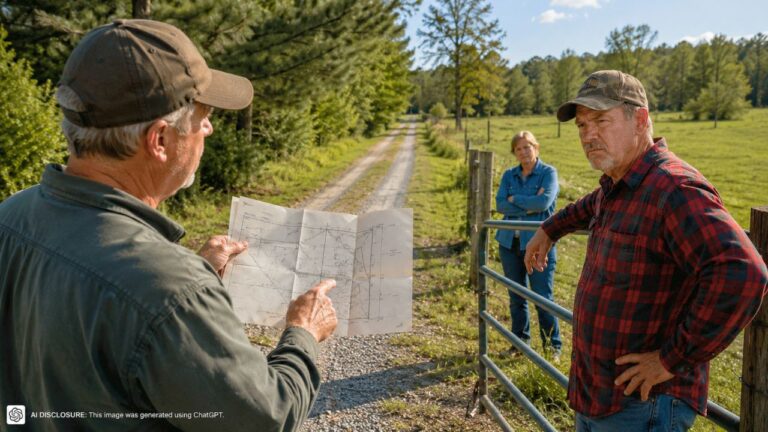
The homeowner had already been working through the normal “paperwork maze” that comes with property-line disputes. They said they’d provided the neighbor with a copy of the plat, trying to keep things factual and straightforward.
But nothing about the process felt straightforward once they started making calls. The bank wanted extensive information and a $250 processing fee just to review an application related to the issue. The title insurance company couldn’t even locate the policy at first until the homeowner provided the policy number, and then the case was transferred to another branch in their area.
Meanwhile, the deck wasn’t moving itself, and time has a way of changing the leverage in these disputes.
The lawyer’s “easy” route: sell it or sign it away
When the homeowner spoke with their lawyer, the advice wasn’t focused on dramatic courtroom wins. It was focused on reducing risk and friction: either sell the sliver of land to the neighbor or grant an easement of use if the homeowner wanted to avoid extra hassle.
In plain homeowner terms, that’s the “pick your poison” moment. Selling means you permanently give up the strip, likely with a formal lot-line adjustment or similar documentation depending on local rules. An easement keeps ownership but gives the neighbor legal rights to use that area, which can feel like a compromise—until you try to sell your house later and discover buyers, lenders, and title companies have opinions about encroachments and recorded easements.
The homeowner’s lawyer also nudged them toward documentation early: share the plat, put the line on paper, and keep things from devolving into a “he said, she said.”
The neighbor pushes back with an adverse possession claim
Once the homeowner finally got a real conversation with the neighbor, they heard something many property owners dread: the neighbor believed the area was already theirs through adverse possession. The neighbor said they bought their house in the 1980s and that a fence had been there since before they purchased it.
The neighbor also claimed they had spoken with a lawyer and a judge, and that both said it qualified as adverse possession. But according to the homeowner, there were no permits or proof on record with the city showing the fence had existed for all those years.
The homeowner’s own lawyer reportedly viewed adverse possession as a weak argument without proof, though the lawyer was willing to fight it if it came to that. That’s the tension point: adverse possession can be very fact-specific, and the facts live in old photos, old surveys, neighbor testimony, previous owner statements, and records that may or may not exist.
In other words, it’s not just a property dispute. It’s a time dispute.
When local politics enters your property line dispute
Then came the twist that makes a normal boundary problem feel a lot less normal: the homeowner learned the neighbor is an alderman in their town and owns other properties locally.
That doesn’t automatically change who is right or wrong, but it can change how a homeowner feels about the next steps. Boundary disputes are already awkward. Add in the possibility that your neighbor is connected, experienced, and comfortable with local processes, and it’s easy to picture the homeowner pausing before escalating anything.
The homeowner even admitted they might drop the issue to get on the neighbor’s good side—partly because they want to get into real estate investing someday and thought the neighbor could be a useful person to learn from. It’s an honest thought, and it highlights something people don’t like to say out loud: lots of homeowners “solve” problems socially, not legally, especially when the dollar value of the land seems small.
The neighbor also downplayed the money side, telling the homeowner the city sells land for around $20 per square foot and that the wedge wouldn’t be worth much or reduce property taxes much at all.
The hidden cost isn’t the land—it’s the paperwork and pressure
Even if the wedge is small, the homeowner was already feeling how fast the costs pile up. Between the bank’s fees and the time spent chasing down title insurance paperwork, this wasn’t staying in the “quick fix” category.
And it’s not just processing fees. If the homeowner decides to sell the wedge or record an easement, that can involve surveys, drafting documents, recording fees, and possibly lender involvement if there’s a mortgage. If the homeowner decides to fight, legal costs can outrun the value of the land in a hurry.
That’s why the lawyer’s advice—sell it or grant an easement—shows up so often in the real world. Not because it feels fair, but because it can be the cheapest off-ramp when the alternative is a long battle over a narrow strip of dirt.
But the homeowner’s lingering concern is the one that keeps people up at night: if a structure crosses your line and you let it sit, does that make it easier for the neighbor to claim rights later?
Homeowners reading along focused on proof and leverage
Even in this brief update, you can see what practical-minded homeowners latch onto first: documentation. The neighbor’s story depended heavily on the idea that a fence existed for decades, while the homeowner noted there were no permits or city proof to back that up.
That split—oral history versus paper trail—is where these disputes are often won or lost. Homeowners following stories like this tend to push for the unglamorous steps: get the plat, get the policy number, track down the title insurance file, and keep your lawyer in the loop before you concede anything in writing.
You can also feel the caution about power dynamics. When the neighbor has deeper local roots and claims to have already consulted legal authorities, it puts pressure on the homeowner to either come prepared or choose the “peaceful” option even if it tastes like defeat.
There’s no satisfying ending yet. The homeowner is still waiting to hear back from the title insurance company after their case was transferred, and they planned to update their lawyer about the neighbor’s adverse possession claim.
For now, the wedge of land is still a wedge in the homeowner’s mind—small on a map, big in consequences. Whether they sell, grant an easement, or fight, every option costs something. The only question is whether they’re paying with money, time, or the uncomfortable feeling of letting a boundary get rewritten.
Like Fix It Homestead’s content? Be sure to follow us.