Homeowner in an HOA Finds a Neighbor’s Old Deck Encroaching a Few Feet Into the Yard — Then Realizes It’s Gone Unquestioned for Years
Photo credit: AI-generated image created using ChatGPT. Illustrative only.
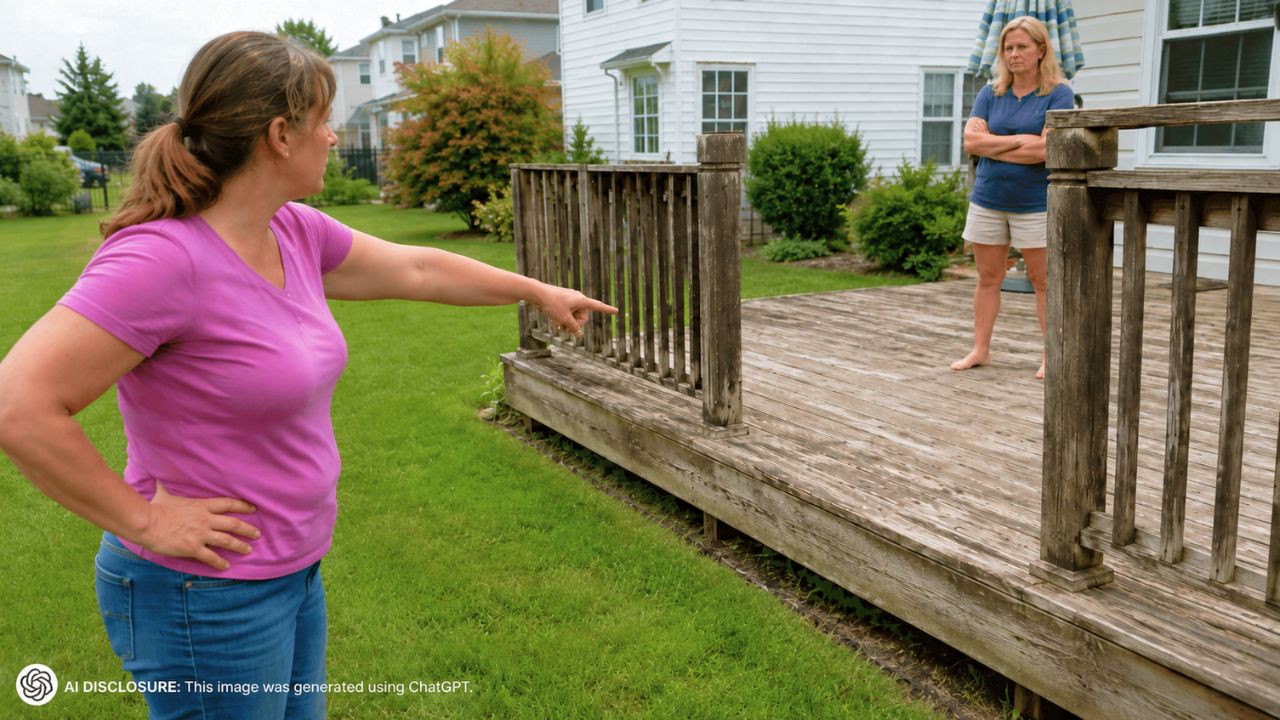
It started as one of those awkward neighbor discoveries that feels too small to blow up your life… until you realize it’s literally built into your yard. A homeowner in Georgia learned that the deck behind their house wasn’t fully on the neighbor’s lot. It extended a few feet over the property line and had apparently been sitting there that way for years.
The homeowner laid out the dilemma in the original post: everyone involved lived under the same HOA, the deck had been there for about a decade, and the neighbor was now planning to rebuild because the old structure was rotting. That rebuild is what turned an old, ignored boundary issue into a “fix it now” moment.
The first time they heard about it, it felt like a “later” problem
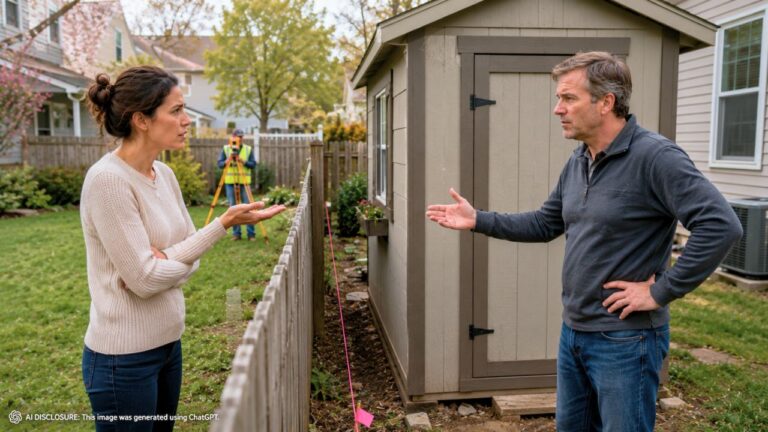
The homeowner didn’t discover the encroachment by measuring tape or a fence line argument. The neighbor himself brought it up after getting a survey done for an appraisal about a year earlier. According to the homeowner, the surveyor mapped out the original property lines and that’s when the neighbor realized the deck crossed into the homeowner’s backyard.
At the time, the neighbor “seemed nice about it,” and it was the middle of the pandemic. The homeowner was also juggling other outdoor headaches—trees and landscaping issues—so the conversation ended with a vague agreement to deal with it later. No one ripped anything out. No one drew a hard line. The deck stayed.
That’s how these things get cemented into place. A few feet doesn’t feel urgent until you imagine it staying that way forever.
Rotting boards and a rebuild plan changed the stakes
A year later, the homeowner was ready to improve the property line area—landscaping, cleanup, the kind of work that makes you look closely at where your yard begins and ends. At the same time, the neighbor’s deck had gotten worse. The homeowner described it as rotting, unsafe, and falling apart, and the neighbor wanted to rebuild.
That rebuild is where the polite pause ended. The homeowner saw it as the perfect chance to put the replacement deck fully on the neighbor’s side, honoring the correct line this time. The neighbor didn’t agree. He wanted the new deck the same size as the old one, pointing to how long it had already existed.
It wasn’t just about outdoor space anymore. A new structure built knowingly over the line feels different than an old one that’s been quietly tolerated. And once someone rebuilds, it can look like permission was granted—at least socially, even if not legally.
The homeowner’s real fear: rights, liability, and paperwork headaches
The homeowner wasn’t eager for a showdown. They were trying to keep it calm, but the questions piled up quickly: If the deck has been there for years, did the neighbor gain rights to that strip of yard? Would an HOA get involved? Would it become an insurance problem? Would it complicate the mortgage or future sale?
Those are the kinds of worries that hit homeowners right in the stomach. You’re not just defending grass. You’re defending a clean title, clear boundaries, and the ability to sell the house without surprise disclosures or neighbor drama resurfacing during escrow.
And there was another practical issue hiding under the surface: if the deck stays partly on the homeowner’s land, who’s responsible for what happens there? It’s the sort of question that keeps people up at night, because no one wants to be stuck in a blame game after an injury or structural failure—especially when an HOA is part of the neighborhood ecosystem.
Commenters pushed proof and boundaries, not a shouting match
The homeowner came looking for the “best option” and, just as importantly, a way to address it without turning it into a feud. The responses they received (as summarized by the homeowner afterward) gave them something more valuable than a tough-guy script: a plan and the confidence to use it.
The general thrust was simple: treat it like a real property issue, not a casual neighbor favor. That means leaning on documentation and clear property lines, because once someone rebuilds, the physical work makes the issue feel permanent. When wood gets replaced and footings get reset, the story becomes: “This was rebuilt this way on purpose.”
That kind of framing matters in HOA communities, where rules, approvals, and “it’s always been like that” can clash hard. A lot of people don’t want to be the neighbor who complains. But they also don’t want to be the neighbor who silently gives away part of their yard.
The conversation went better once “liability” entered the chat
Armed with what they’d learned, the homeowner talked to the neighbor again—this time more prepared. The neighbor confirmed he was going to rebuild because the existing deck was unsafe and deteriorating.
The homeowner responded with a firm request: rebuild it correctly, and add a fence or a barrier of trees to clearly mark the property line. They also used “liability” as the reason. Not as a threat, but as a practical justification that’s hard to argue with.
The neighbor tried anyway. He pushed back, saying he didn’t think liability would change based on where the deck sat. He also tried to reassure the homeowner that his family wouldn’t sue and that it “would never happen.” The homeowner didn’t budge.
That was the turning point. The homeowner’s update made it clear they sensed the neighbor knew he didn’t have “a leg to stand on.” When calm explanations didn’t move the line, the homeowner’s firmness did.
A new twist popped up: drainage complaints and a whiff of escalation
Once the deck argument wasn’t going the neighbor’s way, another issue surfaced. The neighbor claimed there was a grading problem and that water from the homeowner’s yard was flooding into his basement and causing damage.
The homeowner didn’t ignore it, but they didn’t accept it at face value either. They suggested bringing in both a landscaper and a lawyer to look at it. According to the update, the neighbor “backed down.”
Then came the emotional leverage: the neighbor suggested he might sell the house and move because he didn’t want a “tiny deck.” That’s a line designed to make someone feel guilty for insisting on their own property boundary. The homeowner didn’t take the bait. They left the conversation feeling like the neighbor had few options, even if they worried he might “try something sneaky.”
In the end, nothing about this reads like a dramatic shouting match. It reads like something more common—and more stressful: a homeowner realizing that being nice without being clear can quietly turn into permanent consequences. The deck may be wood and nails, but the real repair here was restoring the property line before the rebuild made the encroachment feel like it belonged.
Like Fix It Homestead’s content? Be sure to follow us.